Yana Skakun

Behind-the-Scenes Business Photography: Showing the Human Side of Your Brand
By Yana Skakun·10 July 2026·8 min read
Most business photography still defaults to the same handful of setups: a person standing against a plain backdrop, arms crossed, professional smile switched on. Useful, sometimes necessary, but it tells a client almost nothing about what it is actually like to work with you. Behind-the-scenes business photography takes a different approach. Instead of staging a moment, it documents one — the workshop mid-build, the studio at 8am before anyone else arrives, the team huddled around a screen laughing at something that went wrong. It is photography that shows the human side of a brand, and increasingly it is the images that businesses actually use, because they are the ones people respond to.
Why "Behind the Scenes" Works Where Posed Photography Doesn't
There is a specific kind of fatigue that sets in when someone scrolls past yet another photograph of a founder standing with folded arms in front of a exposed-brick wall. It is not that the photograph is bad; it is that it is interchangeable. Swap the face and the same image could represent almost any business in almost any sector. Behind-the-scenes photography avoids that trap by its nature — the workshop clutter, the specific tools, the particular way your team gathers round a table, none of that can be swapped out for someone else's business. It is specific to you, and specificity is what makes people trust what they are looking at.
This matters commercially, not just aesthetically. Customers and clients are, on some level, always trying to answer the question "can I trust this business?" before they hand over money or sign a contract. A polished, generic headshot answers a narrower question — does this person look professional? A behind-the-scenes photograph answers a bigger one: does this business actually do what it says it does, and does it feel like somewhere I'd want to deal with? Seeing real process, real people, real environment builds that trust faster than a studio portrait ever will.
What to Expect During a Session
A behind-the-scenes session does not look like a traditional photoshoot, and that is the point. I usually start by simply being in the space for the first twenty minutes or so without shooting much at all — watching how the day actually unfolds, where the light falls at different points of the room, which parts of the process are visually interesting and which are not. Once I have a sense of the natural rhythm, I start shooting around it rather than interrupting it. If your team has a stand-up meeting at 9am, I photograph that as it happens. If there is a moment where someone is deep in concentration over a piece of work, I photograph that quietly, without asking them to look up.
There is always a mix of genuinely candid moments and lightly directed ones. Pure candid work is unpredictable — sometimes the best moment happens when the camera is pointed the wrong way — so I also ask people to repeat a natural action (walking through a doorway, picking something up, talking with a colleague) so I can be positioned correctly and get a clean, well-lit frame of something that still looks completely unstaged. The skill is in making the directed moments indistinguishable from the candid ones once they are edited together.
A typical session runs two to four hours depending on the size of the business and how many distinct areas or activities there are to cover — a single-person studio needs less time than a business with several departments and a physical shopfront. You will end up with a broad set of images: environmental shots of the space, process shots of the work itself, genuine portraits of people caught mid-task rather than posing, and a handful of more classic individual portraits woven in for use on team pages or LinkedIn profiles.
Where This Kind of Photography Gets Used
The versatility is one of the strongest arguments for investing in it. Behind-the-scenes images work on an About page far better than a single team photo, because they let a visitor understand what a day at your business actually looks like before they have made contact. They work as a steady stream of social content — a well-shot library of twenty or thirty images can be drip-fed over months rather than needing constant new content. They work in pitch decks and press packs, where a photograph of the actual workshop or studio carries more credibility than a stock image ever could. And for recruitment, they do something almost nothing else does as effectively: they show a prospective employee what it would genuinely feel like to work there.
I often pair a behind-the-scenes session with a smaller set of more traditional headshots for the same clients, since the two serve different purposes and complement each other well — the environmental images build trust and tell the story, while individual headshots still matter for formal bios, email signatures, and directory listings.
Not sure what your business needs
Every business has a different rhythm and a different visual story to tell, so I generally start with a short conversation about how the space works, who is involved, and where the images will actually be used before planning a session. If you are weighing up behind-the-scenes photography against a more traditional headshot session — or think you might need both — get in touch and we can talk it through.
Get in touchHow to Prepare Without Over-Preparing
The instinct when a photographer is coming in is to tidy everything, brief the team on what to say, and generally polish the space until it no longer looks like itself. Resist most of that instinct. A slightly lived-in workspace with genuine clutter photographs more honestly than a space that has been staged to look aspirational, and most people can tell the difference on some level even if they can't articulate why. What is worth doing is a light tidy — clearing anything genuinely messy or distracting, making sure surfaces that will be in frame are reasonably clean — without trying to redesign the space for the camera.
It is also worth telling your team roughly what is happening and why, even if only briefly. People who know a camera might be pointed at them during the day behave more naturally than people who are caught completely off guard, which sounds counterintuitive but is consistently true in practice. A five-minute heads-up that says "we're getting some photographs of the studio today, just carry on as normal" does more for natural-looking results than any amount of posing instruction would.
Timing matters too. If your business has a particular time of day when it is most visually active or busiest — the morning rush in a cafe, the afternoon light in a workshop, an evening service in a restaurant — that is usually the right window to shoot in, even if it is less convenient than a quiet mid-morning slot. The energy in the room shows up in the photographs.
Small Business, Sole Trader, or Large Team — Different Approaches
A sole trader or small studio benefits from a slightly different treatment than a larger team. With one or two people, there is more room to include the person's own personality and working habits — the specific way they set up their tools, the corner of the room they always work from, the object on the desk that means something to them. With a larger team, the emphasis shifts toward capturing genuine interaction between people: conversations, collaborative moments, the general texture of a busy workplace, rather than trying to feature every individual equally in every shot.
For businesses that are still establishing themselves, behind-the-scenes photography can do useful early work alongside more standard branding photography, giving a new website or set of social profiles a much richer visual foundation than headshots alone would provide. For established businesses with a bigger footprint, it is often worth revisiting every year or two, since teams change, spaces evolve, and images that were accurate three years ago can start to feel slightly out of step with how the business actually looks and operates now.
Common Questions
Will this disrupt our working day? Some, inevitably, since a photographer moving through a space is a presence people notice. But a well-run session works around your existing schedule rather than asking you to invent activity for the camera, and most clients tell me the disruption is far smaller than they expected.
Do we need to prepare a shot list? A loose one is useful — knowing which areas, processes, or moments matter most to you helps me prioritise time well — but the best images in a behind-the-scenes set are frequently the ones nobody planned for in advance. I would rather have a general sense of priorities and stay responsive on the day than work through a rigid list that leaves no room for what actually happens.
How does this differ from event photography or product photography? Event photography documents a specific occasion; product photography isolates an object. Behind-the-scenes business photography sits between the two, documenting ongoing process and people rather than a single moment or a single item, and it is usually shot with a wider, more environmental approach so the surrounding context is part of the story.
Can this be combined with a wedding-style documentary approach for a work event? Yes — some of the same observational skills I use for wedding photography and documentary coverage apply directly to business events, launches, and away days, where the goal is genuine moments rather than posed ones. If your business has an event coming up, it is worth discussing whether that documentary style, rather than a traditional behind-the-scenes session, is the better fit.
Getting Started
Pricing for behind-the-scenes sessions depends on the length of the shoot, the number of locations or departments involved, and how many final edited images you need, so it is worth having a conversation before settling on a package — you can see general starting points on the pricing page, though most business sessions are quoted individually once I understand the brief. If you are also considering more traditional individual portraits alongside a behind-the-scenes set, it is often more efficient to combine both into a single visit.
Behind-the-scenes business photography is, at its core, an exercise in paying attention — noticing what is genuinely interesting or telling about how a business runs, and capturing it without disturbing it. Done well, it gives you a library of images that feel unmistakably like your business rather than like stock photography with your logo dropped in. I'm Yana Skakun, based in Cambridge and available for business photography across the UK; you can read more about my approach on the about page, or simply get in touch to talk through what your business needs and when might work.
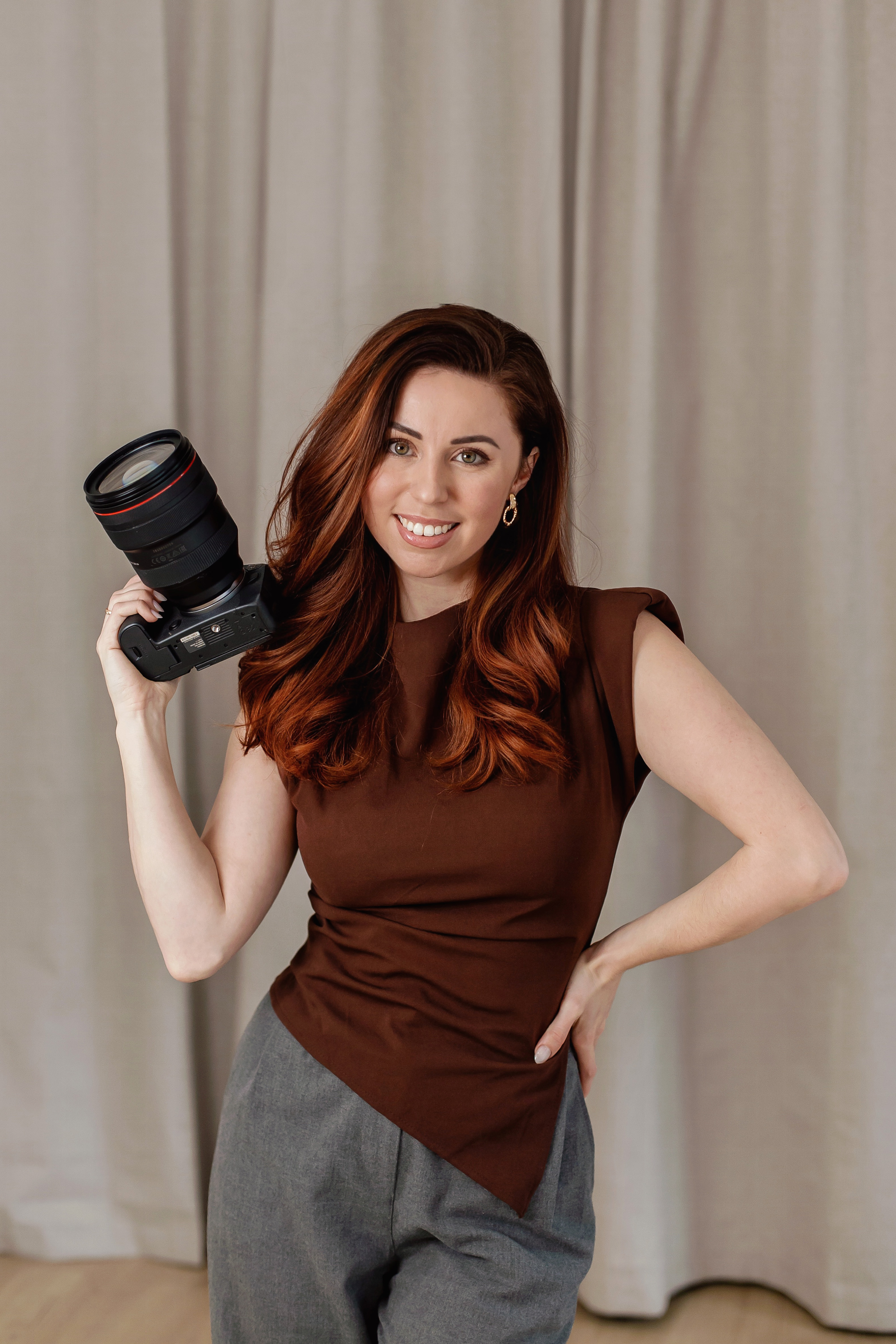
Yana Skakun
Photographer · England
Professional wedding, family and portrait photographer based in England. Passionate about capturing authentic emotions and timeless moments.
About Yana →behind the scenes business photographybrand photographyhuman side of brandcorporate photography Cambridgedocumentary business photographyteam photography
Business Headshots — Corporate Headshot Photography in Cambridge & England
Corporate photography with Yana Skakun covers individual headshots, team portraits, and event documentation — all delivered with the same consistent quality and professional tone. Available in Cambridge and across England for businesses of all sizes. This guide — Behind-the-Scenes Business Photography: Showing the Human Side of Your Brand — is part of the photography journal: practical, experience-based advice drawn from real sessions across England. Whether you arrived searching for behind the scenes business photography or brand photography, the same care and attention shapes every session Yana photographs.
Corporate Headshot Photography sessions are available year-round, with bookings open across Cambridge, Ely, Huntingdon, Peterborough, and further afield — East England, London, the Midlands, and beyond. If you have specific questions about human side of brand, mention it in your enquiry. Get in touch through the contact form above to check availability and discuss your session. Enquiries are welcomed from anywhere in the UK.
Frequently Asked Questions
What camera settings should I use for outdoor portraits?+
For outdoor portraits, shoot in aperture priority mode. Use a wide aperture (f/1.8–f/2.8) to blur the background and isolate your subject. Keep ISO as low as possible in good light. In bright conditions, use a neutral density filter or switch to manual to avoid overexposure at wide apertures.
What is the golden hour in photography?+
Golden hour is the period roughly 30–60 minutes after sunrise and before sunset. The sun is low in the sky, producing warm, soft, directional light that flatters skin tones and creates beautiful long shadows. It's widely considered the best natural light for portrait and outdoor photography.
How do you get sharp photos in low light?+
In low light, increase your ISO (accepting some grain), use the widest aperture your lens allows, and slow your shutter speed to the slowest you can hand-hold without camera shake (roughly 1/focal length as a guide). Use image stabilisation if available, and consider a tripod for static subjects.
What is the rule of thirds in photography?+
The rule of thirds divides the frame into a 3×3 grid. Placing your subject on one of the four intersection points — rather than dead centre — creates a more dynamic, visually interesting composition. It's a guideline, not a rule: some of the most powerful images break it deliberately.
How do you edit photos to look professional?+
Professional editing starts with shooting in RAW format. In Lightroom or similar software, correct exposure, white balance, and contrast first. Recover shadow and highlight detail. Apply gentle colour grading for mood. Be conservative with skin retouching — the goal is natural enhancement, not transformation. Consistency across a set of images is what separates professional from amateur editing.
Continue Reading
Related Articles
Business Headshots
Why professional business headshots are worth the investment in 2025
7 min read · Read Article
Business Headshots
The complete corporate headshot guide: What to expect and how to prepare
7 min read · Read Article
Business Headshots
LinkedIn headshot: What actually makes a profile photo work
7 min read · Read Article
Get in Touch
Ready to Book Your Session?
Get in touch to discuss your vision — I'll reply within 24 hours.