Yana Skakun

Best Time of Day for an Outdoor Summer Wedding Ceremony
By Yana Skakun·10 July 2026·8 min read
Every couple planning an outdoor summer wedding eventually asks me the same question: what time should the ceremony actually start? It is usually framed as a scheduling problem — caterers need a slot, the marquee company needs a get-out time, guests need to know when to arrive — but underneath it is really a question about light, comfort, and how the day will feel and look in the photographs. As a wedding photographer who works almost entirely outdoors through the British summer, I have watched the same mistake play out again and again: couples choose a ceremony time that suits the venue's standard slot rather than the sun, and then wonder why the confetti shots look washed out or why everyone was squinting through the vows.
There is no single universally correct hour, because it depends on your venue's orientation, the time of year within summer, and what you actually want from your day. But there is a reliable way to think it through, and that is what this article sets out to do.
Why Midday Is the Time Most Couples Should Avoid
Between roughly noon and 3pm in June and July, the sun in the UK sits close to its highest point in the sky. That might sound like the obvious choice for a sunny outdoor wedding, but it is actually the least flattering light of the entire day. High overhead sun creates hard, downward shadows under eyes, noses, and chins. Skin can look patchy rather than smooth, and anyone wearing a hat or standing under a tree ends up with dappled shadow across their face that no amount of editing fully corrects. It is also, simply, the hottest part of the day — guests in suits and dresses in direct midday sun for a thirty-minute ceremony are uncomfortable, and discomfort shows on faces in photographs whether people realise it or not.
If your venue only offers a midday slot, it is not a disaster, but it does change what I would recommend for the rest of the day. Shade becomes essential rather than optional, and I would push harder for a later couple portrait session in better light, which I will come back to below.
The Case for a Later Afternoon Ceremony
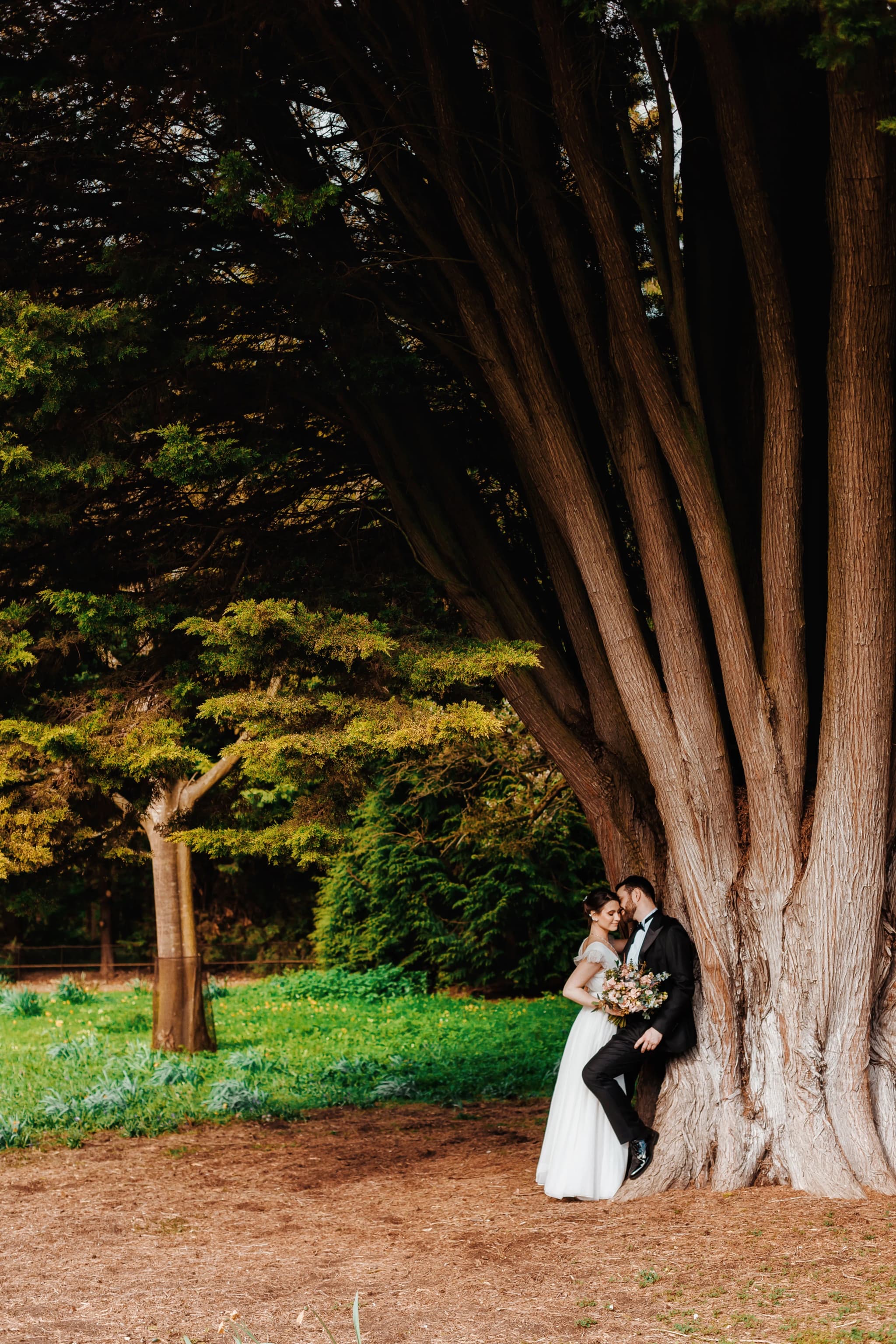
My general advice for a fully outdoor ceremony in June, July, or August is to aim for somewhere between 3pm and 5pm. By this point the sun has dropped enough that the light softens noticeably, shadows fall more naturally rather than straight down, and the temperature has usually eased from its early-afternoon peak. This timing also gives the ceremony itself lovely, warm, even light without requiring guests to sit outside in the harshest heat of the day.
A later afternoon ceremony also has a practical structural benefit: it compresses the gap between the vows and the golden hour, which in a British summer can run from around 7.30pm through to well past 9pm depending on the month and your latitude. A 4pm ceremony followed by drinks, speeches, and the wedding breakfast lands you naturally in beautiful early-evening light for portraits and group photographs, rather than everyone standing around at 5.30pm in flat, still-bright sun with the best light hours away.
This is one of the reasons I encourage every couple I work with, whether they are planning a large marquee wedding or a smaller elopement-style ceremony, to think about their whole timeline as a single arc of light rather than a series of separate slots to be filled in.
Golden Hour: What It Actually Means for Your Photographs
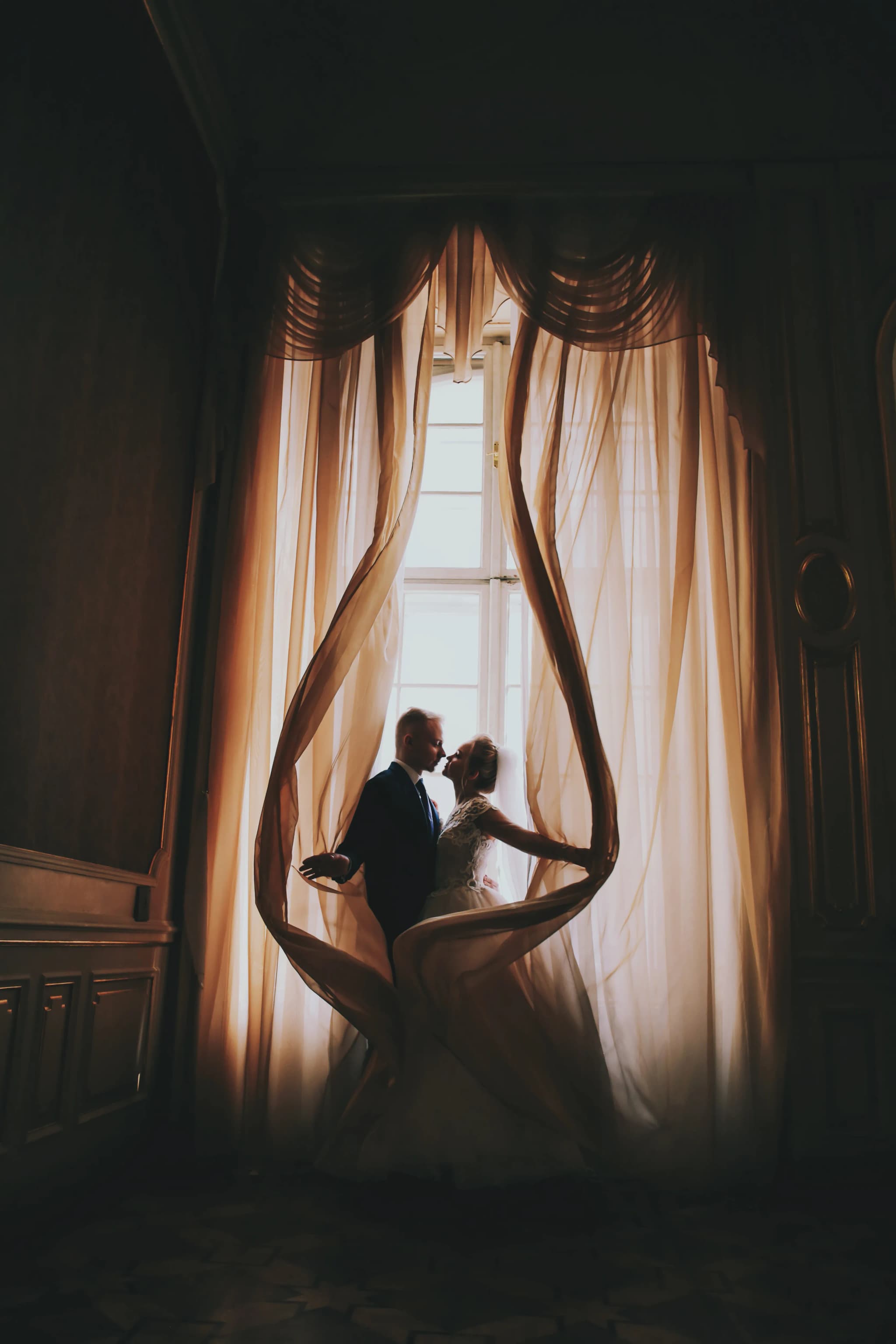
Golden hour refers to the period shortly before sunset (and, less commonly used by couples, shortly after sunrise) when the sun sits low on the horizon and its light travels through more atmosphere, scattering into warm, soft, golden tones. Shadows lengthen and soften, skin tones warm up naturally, and backlighting becomes possible — the kind of images with sun flare through hair or rim-lighting around a couple that so many people picture when they imagine their wedding photographs.
In the UK in high summer, golden hour is later than most couples expect. In late June, sunset in Cambridgeshire is close to 9.20pm, meaning genuinely golden light does not begin until around 8pm. In August it shifts earlier, closer to 7.30pm to 8pm as sunset creeps back towards 8.30pm. This matters enormously for planning: if you want a golden hour couple session, your timeline needs to build in a slot for it, ideally straight after the wedding breakfast and before speeches run long, or as a deliberate quiet twenty minutes pulled away from the reception once the light turns.
I always ask couples to trust me on timing this slot on the day itself rather than fixing it rigidly weeks in advance, because actual sunset time shifts by several minutes across the summer months and cloud cover changes how long the good light lasts. A flexible ten-minute window agreed with the wedding planner or venue coordinator on the day is far more useful than a fixed 8pm slot printed on the timeline that may miss the light entirely.
Planning your ceremony time
I build a personalised timeline for every couple I photograph, working backwards from sunset and forwards from your ceremony start time so the light works in your favour at every key moment of the day, not just for a few posed portraits at the end. If you are still deciding on timings with your venue, it is worth having that conversation before anything is locked in.
Get in touchMorning Ceremonies: An Underused Option
Morning ceremonies are far less common in the UK than afternoon ones, largely because of tradition and catering logistics, but they deserve more consideration than they usually get. A ceremony starting at 11am or even earlier gives you soft, clear morning light, cooler temperatures for guests, and — if your venue allows it — the possibility of a full day that ends with a proper golden hour session in the early evening after a long, relaxed reception, rather than a rushed one squeezed in before speeches.
The trade-off is that morning light, while gentle, is generally less dramatic than late afternoon or evening light, and a longer day means more hours to fill with catering and entertainment, which has cost implications many couples are not expecting. Morning ceremonies work particularly well for couples having a smaller, more intimate day, or for those planning an elopement or micro-wedding where the schedule is entirely their own to design rather than dictated by a large guest list and a venue's standard turnover time.
Working With Your Venue's Orientation
Ceremony timing cannot be decided in isolation from where your ceremony spot actually faces. A ceremony arch or arbour facing directly west means the sun will be behind the couple and in the guests' eyes for any afternoon slot, which is uncomfortable for everyone watching and creates strong silhouette lighting that is beautiful in small doses but not ideal for thirty minutes of vows where you want to see faces clearly. The same spot facing east or north tends to be far more forgiving across a wider range of times.
If you are still choosing a venue, or your venue has more than one possible ceremony location, it is genuinely worth asking your photographer to walk the site with you, or at minimum to look at photographs of the space at the approximate time of day and time of year you are marrying. I do this as standard for every couple booking an outdoor ceremony through my wedding photography services, because the difference between a well-oriented and poorly-oriented ceremony spot at 2pm in July is often the single biggest factor in how the ceremony photographs turn out, more significant than any equipment or editing decision I can make afterwards.
Building Weather Flexibility Into Your Timeline
British summer weather is not reliably sunny, and a sensible outdoor ceremony timeline has some give in it. Overcast conditions actually make midday ceremonies far more workable, since cloud cover diffuses the light and removes the harsh shadow problem almost entirely — on a grey July afternoon, timing matters much less than on a cloudless one. Conversely, a genuinely hot, clear afternoon benefits enormously from shade at the ceremony site itself: trees, a pergola, or simply positioning guest seating so the sun is not directly overhead on rows of seated guests in dark suits.
I always discuss a wet-weather and hot-weather contingency with couples in advance, including where photographs would move to and how the timeline would flex, so that if conditions on the day are not what anyone hoped for, the plan simply adjusts rather than falling apart. This is part of the planning conversation I have with every couple well before the wedding itself, alongside conversations about final deliverables like albums and prints, so nothing about the day's structure is being worked out for the first time on the morning itself.
A Practical Timeline Example
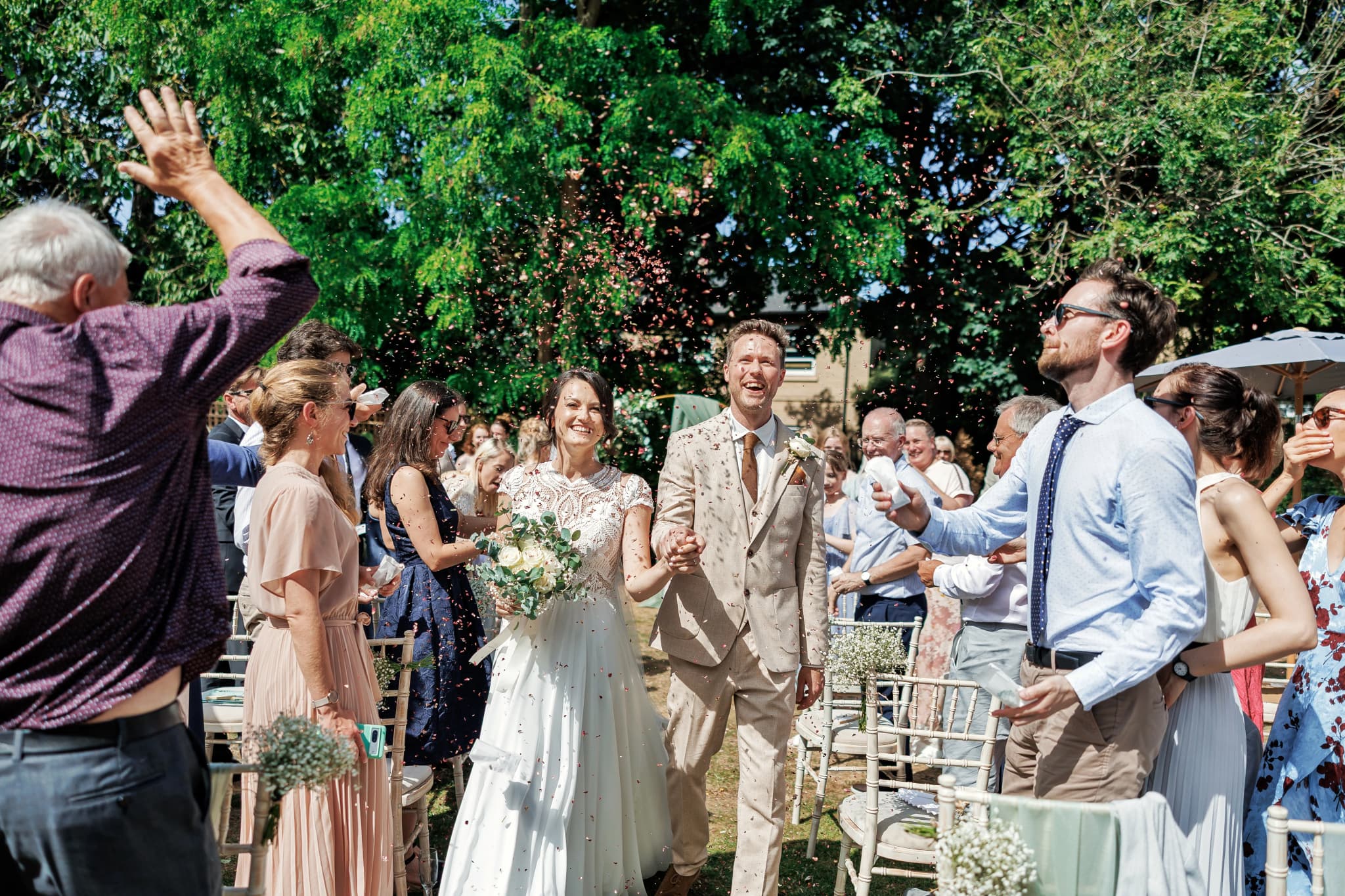
As a working example for a July wedding with an outdoor ceremony: guests arrive from 3.30pm, ceremony begins at 4pm and runs around thirty minutes, followed by drinks and confetti in early evening light from 4.30pm to 6pm, group photographs during that window, wedding breakfast and speeches from 6pm to roughly 7.45pm, and a short couple-only session pulled away from the reception at golden hour, around 8pm to 8.20pm, before returning for evening entertainment. This structure uses the best light for the two moments that matter most photographically — the ceremony itself and the golden hour portraits — without asking guests to sit through the harshest heat of the day.
For a June or August wedding the same principle applies with the golden hour slot shifted slightly earlier or later to match actual sunset time that month. What stays constant is the underlying approach: work backwards from when the light will genuinely be at its best, and build the rest of the day's schedule around protecting that window rather than treating it as an afterthought.
When to Have This Conversation
Ceremony timing is worth discussing with your photographer at the point you are agreeing timings with your venue, not weeks before the wedding once contracts and suppliers are already locked in. Many venues have a standard slot they offer by default, often around 1pm or 2pm, simply because it fits their turnover schedule for multiple weddings, not because it is the best time for your particular ceremony orientation or the season you are marrying in. It is entirely reasonable to ask for a later slot if the venue can accommodate it, and in my experience most venues can when asked directly and early.
If you are researching venues and photographers together, this is a good moment to look through real wedding galleries and notice which images were taken in which light, and to check general pricing and package details so timing conversations and budget conversations happen in parallel rather than one blocking the other.
Getting ceremony timing right is one of the quieter but most consequential decisions in planning an outdoor summer wedding. It costs nothing beyond a conversation with your venue, yet it shapes how every photograph from the day will look and how comfortable your guests will be throughout. I am always happy to talk through timing as part of planning your day with Yana Skakun Photography, well before the wedding itself, so the schedule works with the light rather than against it. If you would like to talk through your outdoor ceremony plans, get in touch and we can build a timeline around your venue, your season, and the photographs you actually want.

Yana Skakun
Photographer · England
Professional wedding, family and portrait photographer based in England. Passionate about capturing authentic emotions and timeless moments.
About Yana →best time summer wedding ceremonyoutdoor wedding ceremony timinggolden hour wedding photographyUK summer wedding planningwedding timeline lightCambridgeshire outdoor wedding
Wedding Tips — Wedding Photography in Cambridge & England
Yana Skakun is a professional wedding photographer based in Cambridge, covering weddings across England — from intimate elopements to full-day ceremonies at country houses, barns, and city venues. Every couple receives a relaxed, documentary approach that captures the day as it truly unfolds. This guide — Best Time of Day for an Outdoor Summer Wedding Ceremony — is part of the photography journal: practical, experience-based advice drawn from real sessions across England. Whether you arrived searching for best time summer wedding ceremony or outdoor wedding ceremony timing, the same care and attention shapes every session Yana photographs.
Wedding Photography sessions are available year-round, with bookings open across Cambridge, Ely, Huntingdon, Peterborough, and further afield — East England, London, the Midlands, and beyond. If you have specific questions about golden hour wedding photography, mention it in your enquiry. Get in touch through the contact form above to check availability and discuss your session. Enquiries are welcomed from anywhere in the UK.
Frequently Asked Questions
How much does a wedding photographer cost in England?+
Wedding photography in England typically ranges from £1,500 to £4,000+ for a full day. Price depends on experience, coverage hours, and whether albums or engagement shoots are included. Most photographers charge between £2,000–£3,000 for 8–10 hours of coverage.
How early should you book a wedding photographer?+
For peak season (May–September), book 12–18 months in advance. For autumn and winter weddings, 9–12 months is usually sufficient. Popular photographers at popular venues fill up fast — as soon as you have a date and venue confirmed, start reaching out.
How many photos do you get from a wedding photographer?+
Most professional wedding photographers deliver 400–800 edited images for a full-day wedding. The exact number depends on coverage hours, how many guests there are, and the photographer's editing style. Quality matters more than quantity — a curated gallery of 500 images tells the story better than 1,500 unedited files.
Do you need a second photographer at your wedding?+
A second photographer is helpful if you want simultaneous coverage of getting-ready moments in different locations, multiple angles during the ceremony, or more candid coverage during the reception. It adds cost but significantly increases the variety and completeness of your gallery.
What is the difference between documentary and editorial wedding photography?+
Documentary (reportage) wedding photography captures moments as they happen — the photographer observes and doesn't intervene. Editorial photography involves deliberate direction: placing you in good light, shaping compositions, creating intentional portraits. Most photographers blend both styles throughout the day.
Continue Reading
Related Articles

Wedding Tips
Sustainable Eco-Friendly Wedding Guide — Planning a Green Celebration
15 min read · Read Article
Wedding Tips
Trash the Dress Session — Complete Planning and Photography Guide
14 min read · Read Article
Wedding Tips
Client Communication for Photographers — From Enquiry to Gallery Delivery
15 min read · Read Article
Get in Touch
Ready to Book Your Session?
Get in touch to discuss your vision — I'll reply within 24 hours.