Yana Skakun

Brand Photography for Sole Traders: You Don't Need a Big Budget to Look Professional
By Yana Skakun·10 July 2026·8 min read
There is a version of brand photography that involves a full production crew, a studio hire, a stylist, and a bill that runs into four figures. That version exists, and it is right for some businesses. It is not, however, the only version, and it is certainly not the one most sole traders need. If you run your business on your own — a therapist with one consulting room, a florist with a market stall, a coach who works entirely online, a tradesperson who quotes jobs from their van — you do not need a big budget to get photography that makes you look properly professional. You need a photographer who understands what a small, self-funded business actually requires, and a session built around getting that efficiently rather than elaborately.
Why Sole Traders Put This Off Longer Than They Should
In years of shooting brand photography for small business owners, the pattern is consistent. Sole traders wait far longer than limited companies to get professional images done, and the reasons are almost always the same: they assume it will cost more than it does, they assume they need a fully formed brand and colour palette before they can even book a session, and they assume that because they are "just one person" the investment is not proportionate. Meanwhile they are using a phone photo taken by a friend at a networking event, a screenshot from a video call, or nothing at all — just a generic icon where a face should be on their website and LinkedIn profile.
The irony is that sole traders often need good photography more than larger businesses do. When you are the entire business, your face and your presence are the brand. A limited company can lean on a logo, a office space, a team photo. A sole trader's website visitor is deciding whether to trust a person, not an institution, and a blurry, poorly lit, several-years-out-of-date photo undermines that trust before a single word of your copy has been read.
What "Small Budget" Actually Looks Like in Practice
A realistic small-budget brand session for a sole trader is not a scaled-down version of a corporate shoot — it is a different shape of session entirely, designed from the ground up to be efficient. In practice this usually means a single location (often your own workspace, home office, or a favourite local café), a session length of sixty to ninety minutes, and a focused shot list built around what you actually need rather than an exhaustive catalogue of every possible pose and setting. Current UK rates for this kind of sole-trader-focused branding session generally sit well below what a full commercial or product shoot would cost, precisely because the scope is deliberately contained.
What keeps the cost sensible is not corner-cutting on quality — it is scope discipline. One outfit change instead of four. One or two locations instead of a full day moving between settings. A tight, purposeful shot list agreed in advance rather than an open-ended "let's see what we get" approach that eats hours. You can see current session structures and starting prices on the pricing page, and if your budget is genuinely tight, saying so upfront lets a photographer suggest the leanest version of a session that will still deliver what you need — rather than you assuming the whole category is out of reach and going without.
What You Actually Need as a Sole Trader (It's Less Than You Think)
Most sole traders overestimate how many images they need and underestimate how much a small, well-chosen set can do. A genuinely useful starting set is usually: one strong headshot-style image for your website "about" page and social profiles, two or three images of you actually doing the work — hands-on, in your environment, mid-task rather than posed and static — and a handful of detail or environment shots that give a sense of your space, tools, or product without you in frame. That is often eight to fifteen final images, not the eighty-image gallery a wedding client might receive.
Resist the urge to plan for every possible future use. It is tempting to try to cover a website hero image, an Instagram grid, a print flyer, and a conference badge all in one session, but chasing every format usually dilutes the session and leaves you with images that are each slightly wrong for their intended use rather than a small set that is exactly right. Better to nail the core set — a genuinely good headshot and a few working shots — and add to it in a future session once the business has grown, rather than trying to future-proof everything at once on a limited budget.
Using Your Own Space Instead of Paying for a Studio
One of the biggest cost levers for a sole trader is location, and the good news is that your own workspace is very often the best choice, not just the cheapest one. A studio backdrop photographs a person against nothing; your kitchen table where you actually write proposals, your workshop bench, your consulting room, your market stall, tells a visitor something true about how you work. It also removes studio hire entirely from the budget and removes travel time from the session, which means more of your paid hour is spent actually shooting rather than setting up.
The main preparation task on your side is simply tidying and decluttering the specific corners that will be in frame — you do not need to deep-clean an entire house or office, just the two or three spots the camera will actually see. A good photographer will also work with the natural light your space already has: a window that gets soft morning light, a spot near a doorway, an area away from harsh overhead strip lighting. Bringing a lamp or reflector is sometimes useful, but for most home offices and small workspaces, natural light through an existing window does most of the work for free.
Not sure what you actually need?
If you are a sole trader trying to work out the smallest, most useful session for your budget, that is a genuinely normal question and one worth asking before you book anything. Tell me what the images are for — a new website, LinkedIn, a rebrand, or simply replacing a photo that is years out of date — and I can suggest a session length and shot list that fits both the need and the budget, rather than defaulting to the biggest package.
Get in touchPreparing for the Session Without Overthinking It
Sole traders often arrive at a brand session having overprepared in the wrong areas and underprepared in the areas that matter. A full moodboard with dozens of pinned reference images is rarely necessary; a few honest sentences about how you want to come across — approachable, no-nonsense, warm, precise, whatever fits your actual working style — are usually more useful than an aspirational aesthetic borrowed from a much bigger, differently positioned business.
What genuinely matters: choose two or three outfits that you would actually wear to meet a client, avoiding anything with busy patterns or very small logos that pull the eye. Bring the tools or props that are genuinely part of your work — the specific equipment, the notebook you always carry, the product you make — rather than generic stock-style props. And think in advance about the one or two locations you will use, so the session time is spent shooting rather than deciding on the day. If you want more detail on outfit choices specifically, the guidance on what to wear for a professional headshot applies just as well to a broader brand session.
Getting Genuine, Un-Stiff Results on a Time Budget
The single biggest quality risk in a short, budget-conscious session is that it becomes rushed and stiff — a string of forced smiles captured quickly because there is no time to relax into it. The fix is not more time, usually; it is better use of the time available. Working shots — you mid-task, talking, gesturing, actually doing the thing you do — tend to look more natural far more quickly than posed, direct-to-camera shots, because you are focused on the task rather than on being photographed. I generally start a session there, warming up on working shots before moving to the more composed headshot-style frames once you have settled into the rhythm of being photographed at all.
It also helps enormously to talk during the session rather than pose in silence. A genuine laugh at something said mid-shoot photographs completely differently from an instructed smile, and it costs nothing extra in time or budget — it is simply a different way of directing the same sixty minutes. Sole traders who have never been professionally photographed before are often surprised by how quickly this settles once the first few slightly awkward frames are out of the way.
Common Questions from Sole Traders Booking Their First Shoot
Do I need professional hair and makeup? Not necessarily. For most sole trader brand sessions, arriving as you would for an important client meeting — done properly but by yourself — is entirely sufficient. Hair and makeup becomes worth adding for higher-stakes uses such as a major rebrand launch or press images, but it is an optional extra, not a prerequisite.
What if I hate photos of myself? This is close to universal, not a personal failing, and it is usually a sign that the only existing photos are candid, unlit, unflattering snapshots rather than genuinely well-lit, well-composed images. A proper session, even a short one, tends to change this reaction more than people expect.
Can I split the cost across a few months? Worth simply asking. Payment structures vary and many photographers, myself included, can be flexible about timing for a small, clearly-scoped session, particularly for a new or early-stage sole trader business. For a broader look at how these sessions differ from a full personal branding package, the personal branding photographer page and the dedicated small business photographer page both cover the range of session types available.
Looking professional as a sole trader does not require pretending to be a bigger business than you are — it requires clear, well-lit, genuinely representative images of you and your work, gathered efficiently in a session scoped to your actual budget and actual needs. Yana Skakun Photography is based in Cambridge and works with sole traders and small business owners across the UK on exactly this kind of focused, budget-conscious brand session. If you are ready to talk through what a session could look like for your business, get in touch.
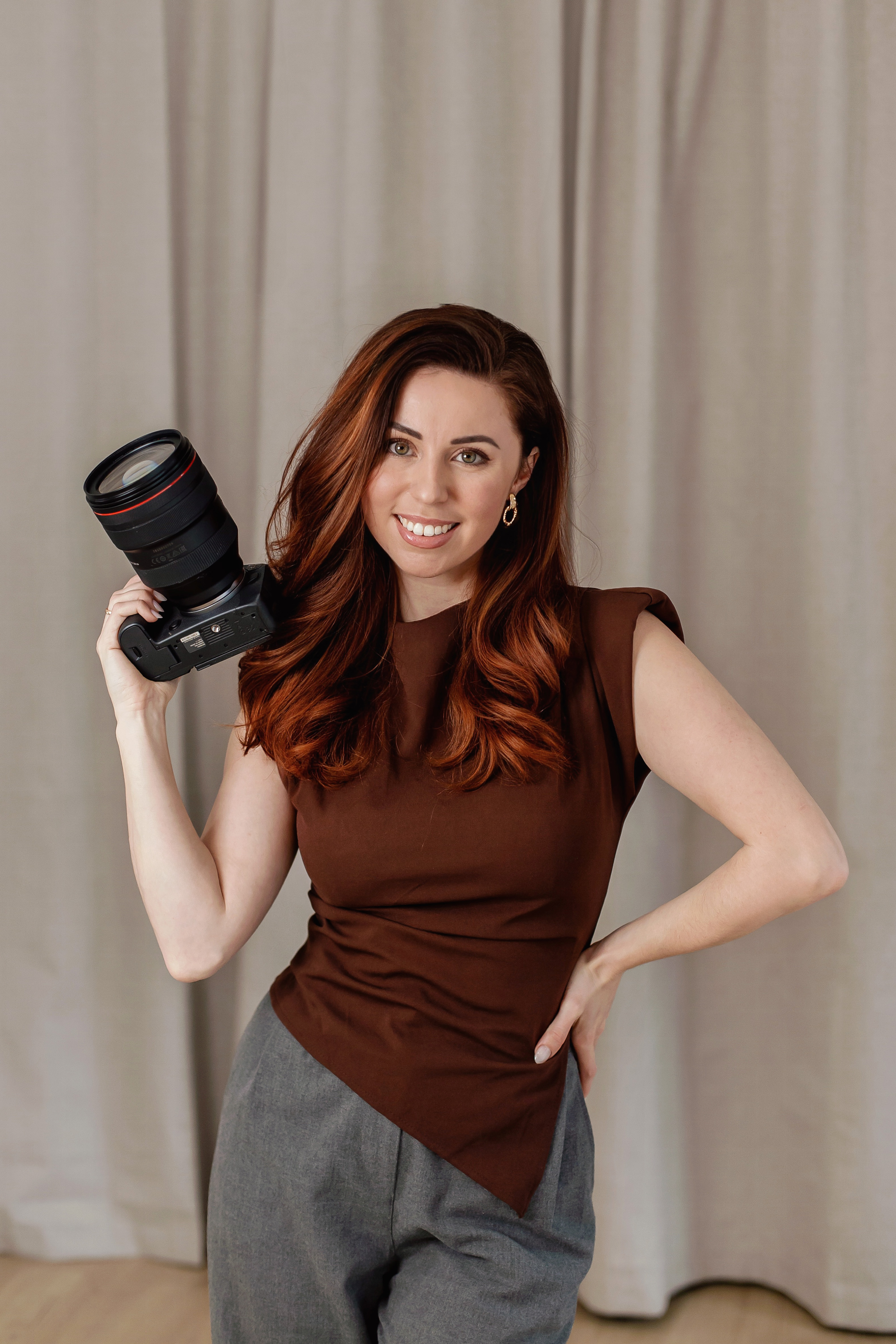
Yana Skakun
Photographer · England
Professional wedding, family and portrait photographer based in England. Passionate about capturing authentic emotions and timeless moments.
About Yana →brand photography sole traderssmall business branding photographybudget brand photoshoot UKsole trader headshotspersonal branding photography Cambridgesmall business photographer
Business Headshots — Corporate Headshot Photography in Cambridge & England
Corporate photography with Yana Skakun covers individual headshots, team portraits, and event documentation — all delivered with the same consistent quality and professional tone. Available in Cambridge and across England for businesses of all sizes. This guide — Brand Photography for Sole Traders: You Don't Need a Big Budget to Look Professional — is part of the photography journal: practical, experience-based advice drawn from real sessions across England. Whether you arrived searching for brand photography sole traders or small business branding photography, the same care and attention shapes every session Yana photographs.
Corporate Headshot Photography sessions are available year-round, with bookings open across Cambridge, Ely, Huntingdon, Peterborough, and further afield — East England, London, the Midlands, and beyond. If you have specific questions about budget brand photoshoot uk, mention it in your enquiry. Get in touch through the contact form above to check availability and discuss your session. Enquiries are welcomed from anywhere in the UK.
Frequently Asked Questions
What camera settings should I use for outdoor portraits?+
For outdoor portraits, shoot in aperture priority mode. Use a wide aperture (f/1.8–f/2.8) to blur the background and isolate your subject. Keep ISO as low as possible in good light. In bright conditions, use a neutral density filter or switch to manual to avoid overexposure at wide apertures.
What is the golden hour in photography?+
Golden hour is the period roughly 30–60 minutes after sunrise and before sunset. The sun is low in the sky, producing warm, soft, directional light that flatters skin tones and creates beautiful long shadows. It's widely considered the best natural light for portrait and outdoor photography.
How do you get sharp photos in low light?+
In low light, increase your ISO (accepting some grain), use the widest aperture your lens allows, and slow your shutter speed to the slowest you can hand-hold without camera shake (roughly 1/focal length as a guide). Use image stabilisation if available, and consider a tripod for static subjects.
What is the rule of thirds in photography?+
The rule of thirds divides the frame into a 3×3 grid. Placing your subject on one of the four intersection points — rather than dead centre — creates a more dynamic, visually interesting composition. It's a guideline, not a rule: some of the most powerful images break it deliberately.
How do you edit photos to look professional?+
Professional editing starts with shooting in RAW format. In Lightroom or similar software, correct exposure, white balance, and contrast first. Recover shadow and highlight detail. Apply gentle colour grading for mood. Be conservative with skin retouching — the goal is natural enhancement, not transformation. Consistency across a set of images is what separates professional from amateur editing.
Continue Reading
Related Articles
Business Headshots
Why professional business headshots are worth the investment in 2025
7 min read · Read Article
Business Headshots
The complete corporate headshot guide: What to expect and how to prepare
7 min read · Read Article
Business Headshots
LinkedIn headshot: What actually makes a profile photo work
7 min read · Read Article
Get in Touch
Ready to Book Your Session?
Get in touch to discuss your vision — I'll reply within 24 hours.