Yana Skakun

Lighting 101: Why You Must Get Your Makeup Done Near a Window
By Yana Skakun·10 July 2026·7 min read
Of all the small decisions that go into wedding morning planning, where the bride sits to have her hair and makeup done is one of the most overlooked and one of the most consequential for how the getting-ready photographs actually turn out. I have photographed brides in beautifully styled hotel suites where every candle and flat lay was considered in detail, and still ended up with makeup photographs that look muddy and flat because the chair was positioned with its back to the only window in the room. Lighting is not a technical afterthought I fix later. It is the difference between images that glow and images I have to work hard to rescue.
Why Window Light Beats Every Other Option
Natural daylight coming through a window is, quite simply, the most flattering light source available on a wedding morning, and it is also the light your makeup artist is relying on to see true colour. Overhead spotlights and ceiling downlights, which are standard in most hotel rooms and many home bedrooms, cast light from directly above. That angle drops shadows under the eyes, under the nose, and under the chin — exactly the shadows a makeup artist is trying to soften and exactly the shadows that read as tired or unflattering in a photograph. Warm tungsten bulbs and yellow-toned lamps, meanwhile, shift skin tones towards orange and make foundation shades look different from how they will appear later in daylight at the ceremony.
Window light is soft, directional, and colour-neutral. It wraps around the face rather than carving hard shadows into it, and because it is the same light that will be present for most of the rest of the day, what your makeup artist sees and matches in that chair is what will actually be true once you are outside walking down the aisle or standing for confetti photographs. This is the single reason professional makeup artists in the UK almost universally ask for a seat by the window, and it is worth prioritising even above a mirror with a perfect view or a spot near the plug sockets.
What Actually Happens Without It
When makeup is applied under artificial light only, a few things tend to go wrong that are hard to spot in the moment but very visible in photographs afterwards. Foundation and powder can look correctly blended under a warm lamp and then appear patchy or grey once the bride steps outside into daylight, because the artist was colour-matching against a light source that was lying about the true tone. Contouring that looked subtle under a soft ceiling light can suddenly look heavy and stripy in flat window light or outdoor light later in the day, because the shadows the artist was working with were not the shadows that would actually be present once the sun (or an overcast sky, which is very common in the UK) became the dominant source.
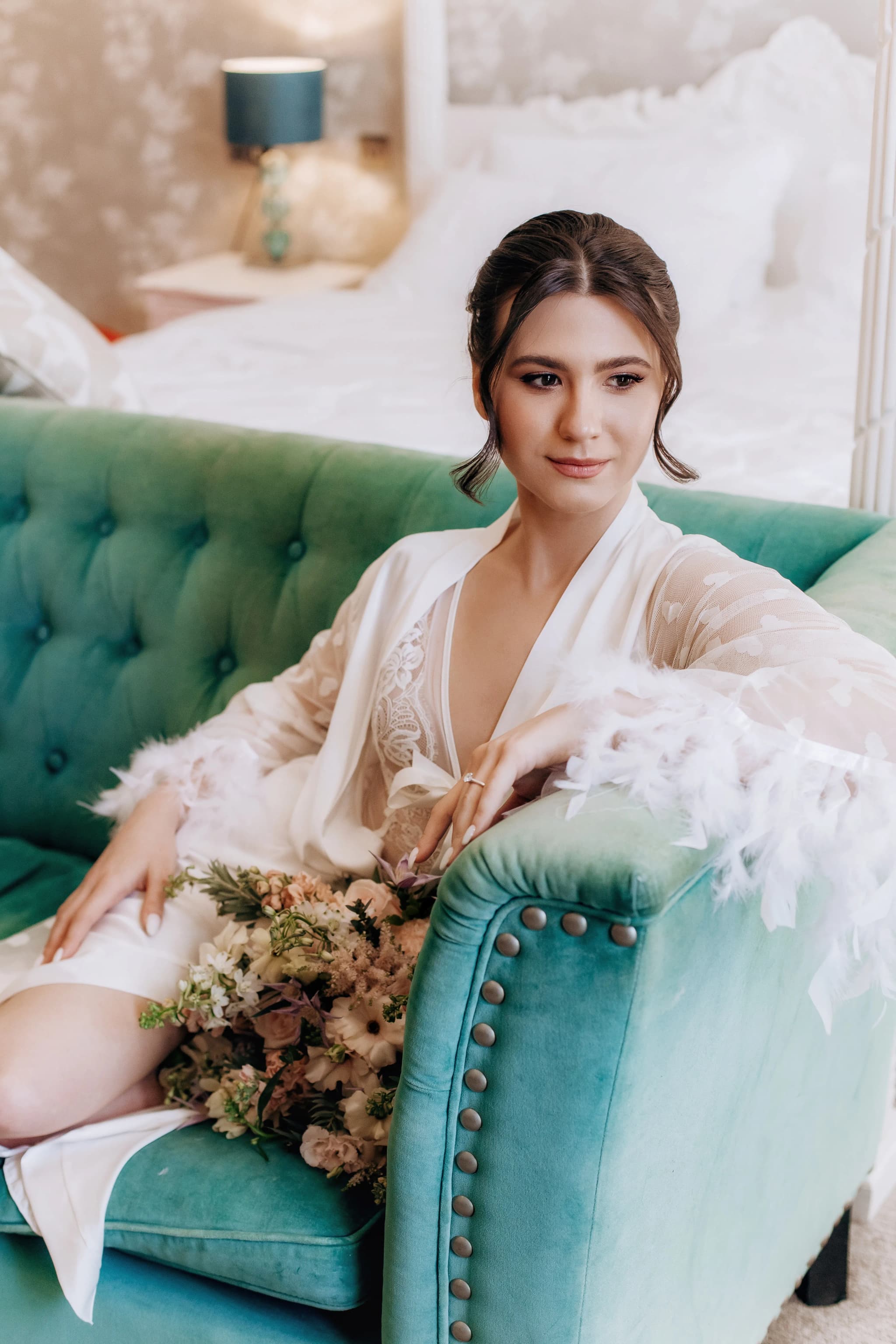
For me as the photographer, poor lighting during getting-ready also means I lose one of the most reliably beautiful sequences of the whole day. The images of a bride with her eyes closed while a brush sweeps colour across her lids, or the quiet concentration on a makeup artist's face while she works, depend entirely on soft, directional light to look painterly rather than flat. Under a ceiling spotlight those same moments photograph with hard shadows under the brow bone and a slightly greenish or yellow cast to the skin that takes real effort to correct afterwards, and even then never looks quite as good as it would have straight out of camera.
How to Set Up the Chair Correctly
The ideal setup has the bride facing the window, or at a gentle angle to it, rather than sitting with her back to it or side-on with the light hitting only one cheek harshly. Facing the light directly, with the window a few feet away rather than right up against the glass, gives the most even, wraparound illumination across the whole face. If the room only has a window to one side, angling the chair around forty-five degrees so the light falls across the face at a diagonal, rather than straight along one side, avoids one half of the face falling into shadow while the other is overexposed.
Distance matters more than people expect. Light falls off quickly the further you move from a window, so a chair positioned six feet back in a large hotel suite may be receiving barely a fraction of the light available right at the glass. I generally suggest positioning the makeup chair within about three to four feet of the window if the room allows it. If there are sheer curtains, keep them open or pulled back during the makeup application — they diffuse harsh direct sun beautifully on a bright day, but on an overcast British morning, which is common for much of the year, you want as much of that soft grey daylight reaching the chair as possible, not muffled through fabric.
It is also worth checking what direction the window faces and what time the makeup slot falls, if you have any influence over the schedule. A west-facing room can be quite dim in the early morning and only brighten later, while an east-facing room may have beautiful early light that fades by late morning. If you are working with your venue or planning your morning timeline, this is a genuinely useful detail to factor in alongside the more obvious considerations like ceremony time and travel between locations.
A quick check for the morning of
When you arrive at the getting-ready location, before hair and makeup begin, take a moment to stand in the room at the time your makeup artist will actually be working and see which window gives the most even, brightest light. Move the chair there rather than leaving it wherever it happens to be set up, and turn off any overhead lights if the daylight alone is bright enough. It takes two minutes and makes a genuine difference to every photograph taken in that room for the rest of the morning.
Get in touchChoosing a Getting-Ready Room With Light in Mind
If you are still choosing where to get ready, whether that is a room at your venue, a hotel suite, or a family home, it is worth walking the space in person, or at minimum requesting photographs of it, with window light specifically in mind. Look for a room with at least one reasonably large window that is not obstructed by a building opposite or heavy trees right outside. South and east-facing rooms tend to be the most reliable across a UK wedding season, since they generally receive the most consistent daylight through the morning hours when hair and makeup are typically happening.
Many of the venues I photograph at across Cambridgeshire and the surrounding counties have a bridal suite that was clearly designed with this in mind, with a dressing table or seating area already positioned near a window. Others do not, and in those cases I will often suggest simply moving furniture for the hour or two that makeup is happening, then returning it before the room is used for anything else. If you are choosing between two possible getting-ready rooms and everything else is roughly equal, I would generally recommend picking the one with better natural light over the one with a more decorative interior. You can style a flat lay and dress detail shot almost anywhere; you cannot easily fix flat, shadowy light on a face after the fact.
What This Means for Your Photographs Later in the Day
The benefit of getting this right extends well past the getting-ready photographs themselves. Makeup that has been applied and checked in genuine daylight will read accurately in every other setting the day moves through — the ceremony, the confetti moment, portraits in the garden, and the golden hour images as the light softens in the evening. Makeup applied under warm artificial light, by contrast, can shift noticeably once you step outside, sometimes looking slightly orange or unevenly blended in a way that was invisible in the hotel room but becomes obvious in bright, honest daylight. Since so much of a wedding day's photography happens outdoors or in naturally lit spaces, whether that is during a full day at a countryside venue or a smaller, more intimate elopement, getting the makeup right under true light in the first place saves everyone from a mismatch later.
This is also part of why I ask couples about their getting-ready room and rough timeline when we are first planning the day together. It is a small detail, but it sits alongside the bigger decisions — which rooms are being used, what time hair and makeup start, where I will be positioned to capture the morning without getting in the way — that together shape whether the whole day's photographs feel considered or simply happened by chance.
A Note for Bridesmaids and Mothers Too
This advice is not only for the bride. Bridesmaids, mothers, and anyone else having hair and makeup done in the same room benefit from the same principle, and a well-lit room means everyone's photographs from that morning look consistent and genuinely flattering rather than some faces glowing by the window and others looking dull further back in the room. If the space is large enough, it is worth rotating who sits closest to the window through the morning, rather than one person claiming the good spot for the whole session while everyone else works in dimmer light further back.
If you are planning your wedding morning and want to talk through timings, room choices, or anything else that affects how the day will be photographed, I always find these conversations are best had well in advance rather than worked out on the morning itself. Details like this one are exactly the kind of thing covered when we talk through your day as part of planning, alongside the practical questions couples usually ask about coverage and pricing.
Good light is free, and it is available in almost every room that has a window, but it only helps if the chair is actually positioned to use it. As a Cambridge-based wedding photographer, I spend a good part of every getting-ready session gently repositioning chairs and pulling back curtains before a single frame is taken, because it is one of the few things on a wedding morning that is entirely within our control and makes a visible difference to the finished images. If you are planning a wedding and would like to talk through how the morning will work, from getting ready through to the final album, I would love to hear from you — get in touch and we can talk through the details of your day at Yana Skakun Photography.
Yana Skakun
Photographer · England
Professional wedding, family and portrait photographer based in England. Passionate about capturing authentic emotions and timeless moments.
About Yana →bridal makeup lighting photoswedding morning photographygetting ready photosnatural window light makeupUK wedding photographer tipsbridal makeup chair placement
Wedding Tips — Wedding Photography in Cambridge & England
Yana Skakun is a professional wedding photographer based in Cambridge, covering weddings across England — from intimate elopements to full-day ceremonies at country houses, barns, and city venues. Every couple receives a relaxed, documentary approach that captures the day as it truly unfolds. This guide — Lighting 101: Why You Must Get Your Makeup Done Near a Window — is part of the photography journal: practical, experience-based advice drawn from real sessions across England. Whether you arrived searching for bridal makeup lighting photos or wedding morning photography, the same care and attention shapes every session Yana photographs.
Wedding Photography sessions are available year-round, with bookings open across Cambridge, Ely, Huntingdon, Peterborough, and further afield — East England, London, the Midlands, and beyond. If you have specific questions about getting ready photos, mention it in your enquiry. Get in touch through the contact form above to check availability and discuss your session. Enquiries are welcomed from anywhere in the UK.
Frequently Asked Questions
How much does a wedding photographer cost in England?+
Wedding photography in England typically ranges from £1,500 to £4,000+ for a full day. Price depends on experience, coverage hours, and whether albums or engagement shoots are included. Most photographers charge between £2,000–£3,000 for 8–10 hours of coverage.
How early should you book a wedding photographer?+
For peak season (May–September), book 12–18 months in advance. For autumn and winter weddings, 9–12 months is usually sufficient. Popular photographers at popular venues fill up fast — as soon as you have a date and venue confirmed, start reaching out.
How many photos do you get from a wedding photographer?+
Most professional wedding photographers deliver 400–800 edited images for a full-day wedding. The exact number depends on coverage hours, how many guests there are, and the photographer's editing style. Quality matters more than quantity — a curated gallery of 500 images tells the story better than 1,500 unedited files.
Do you need a second photographer at your wedding?+
A second photographer is helpful if you want simultaneous coverage of getting-ready moments in different locations, multiple angles during the ceremony, or more candid coverage during the reception. It adds cost but significantly increases the variety and completeness of your gallery.
What is the difference between documentary and editorial wedding photography?+
Documentary (reportage) wedding photography captures moments as they happen — the photographer observes and doesn't intervene. Editorial photography involves deliberate direction: placing you in good light, shaping compositions, creating intentional portraits. Most photographers blend both styles throughout the day.
Continue Reading
Related Articles

Wedding Tips
Sustainable Eco-Friendly Wedding Guide — Planning a Green Celebration
15 min read · Read Article
Wedding Tips
Trash the Dress Session — Complete Planning and Photography Guide
14 min read · Read Article
Wedding Tips
Client Communication for Photographers — From Enquiry to Gallery Delivery
15 min read · Read Article
Get in Touch
Ready to Book Your Session?
Get in touch to discuss your vision — I'll reply within 24 hours.