Yana Skakun

Bridesmaid Duties Revealed: Who Holds the Dress When You Pee?
By Yana Skakun·10 July 2026·8 min read
Every bride I have photographed has, at some point on the morning of the wedding, needed someone to hold her dress while she uses the loo. It is not glamorous, it rarely makes the highlight reel, and nobody puts it on the official timeline — but it is one of the most reliable, recurring moments of any wedding morning I document. It also happens to be a perfect illustration of what a maid of honour and bridesmaids actually do, because the real job is rarely the pretty bit in the group photo. It is the practical, slightly chaotic, entirely necessary support role that keeps the day running and keeps the bride calm. If you have just been asked to be a maid of honour or bridesmaid for a UK wedding, or you are a bride trying to work out who should do what, this is a genuine breakdown of what the role involves, from the months of planning through to the toilet-related logistics of the big day itself.
Maid of Honour vs Bridesmaid: What Is the Actual Difference?
In UK weddings, the maid of honour (or matron of honour, if she is married) is the bride's chief bridesmaid — usually her sister or closest friend — and takes on a coordinating role above the rest of the bridal party. Where bridesmaids generally support on request, the maid of honour is expected to be proactive: organising the hen do, being the main point of contact for the bride's side of the planning, managing the other bridesmaids, and standing closest to the bride during the ceremony, often holding the bouquet during the vows and signing as a witness on the marriage schedule if asked.
It is a role with real responsibility attached, not just a title. A good maid of honour is essentially an unpaid, unofficial wedding planner's assistant, working alongside whatever supplier team the couple has — the venue coordinator, the celebrant, and, on the day itself, the photographer. I always ask early in the planning process who the maid of honour is, because she is usually the person I coordinate with directly on the morning for timings, for gathering the bridal party for photographs, and for knowing where things actually are when the bride is too preoccupied to remember.
Before the Wedding: The Planning Duties Nobody Warns You About
The bulk of bridesmaid duties happen long before the wedding day, and this is the part that catches a lot of newly appointed bridesmaids off guard. Typical pre-wedding responsibilities include helping the bride choose and try on dresses, attending fittings, contributing to decisions on flowers, favours, or table decor if asked, and generally being available as a sounding board through what can be a genuinely stressful eighteen months to two years of planning.
The hen do is usually the single biggest task, and it typically falls to the maid of honour to organise it, sometimes with input from the other bridesmaids and sometimes entirely solo. Budget is the thing that causes the most friction here — UK hen dos range from a low-key afternoon in a nearby city to a multi-day trip abroad, and it is worth having an honest, early conversation about what everyone in the group can actually afford, rather than assuming. A maid of honour who plans a weekend in Portugal without checking budgets first often ends up with bridesmaids who cannot come, which helps nobody.
Bridesmaids are also frequently asked to help address invitations, assemble favours, or run errands in the final weeks before the wedding when the to-do list gets long and the bride's time gets short. None of this is compulsory — every bridal party is different — but it is worth going into the role expecting some genuine logistical labour, not just a nice dress and a few photographs.
The Speech: Yes, You Might Have to Give One
Traditionally in the UK, wedding speeches are given by the father of the bride, the groom, and the best man, with the maid of honour's speech a more recent but now extremely common addition, particularly at weddings where the couple wants to move away from an all-male speech lineup. If you are maid of honour, it is worth asking the couple early — not assuming either way — whether a speech is expected, because writing a genuinely good three-minute speech takes longer than people think, and nobody wants to be drafting it in the taxi to the venue.
The best maid of honour speeches I have heard at weddings I have photographed share a few things in common: they are short (three to five minutes is plenty), they include one or two specific, well-chosen stories rather than a vague list of the bride's good qualities, and they end warmly rather than trying to build to some huge comedic punchline. If you are nervous about public speaking, writing it out in full and practising aloud, ideally in front of at least one other person, makes an enormous difference on the day.
On the Morning: The Real, Unglamorous Job Description
This is where the title of this article comes from. On the wedding morning, bridesmaid duties become intensely practical. Someone needs to hold the dress while the bride uses the bathroom — a genuinely awkward manoeuvre with a full-length gown, a corset back, or a bustle, and one that is far easier with a second pair of hands who already knows how the dress works. Someone needs to keep track of small items that are easy to lose in the chaos of a getting-ready room: rings before the best man collects them, the bride's phone, her going-away outfit, the card with her vows if she has written her own.
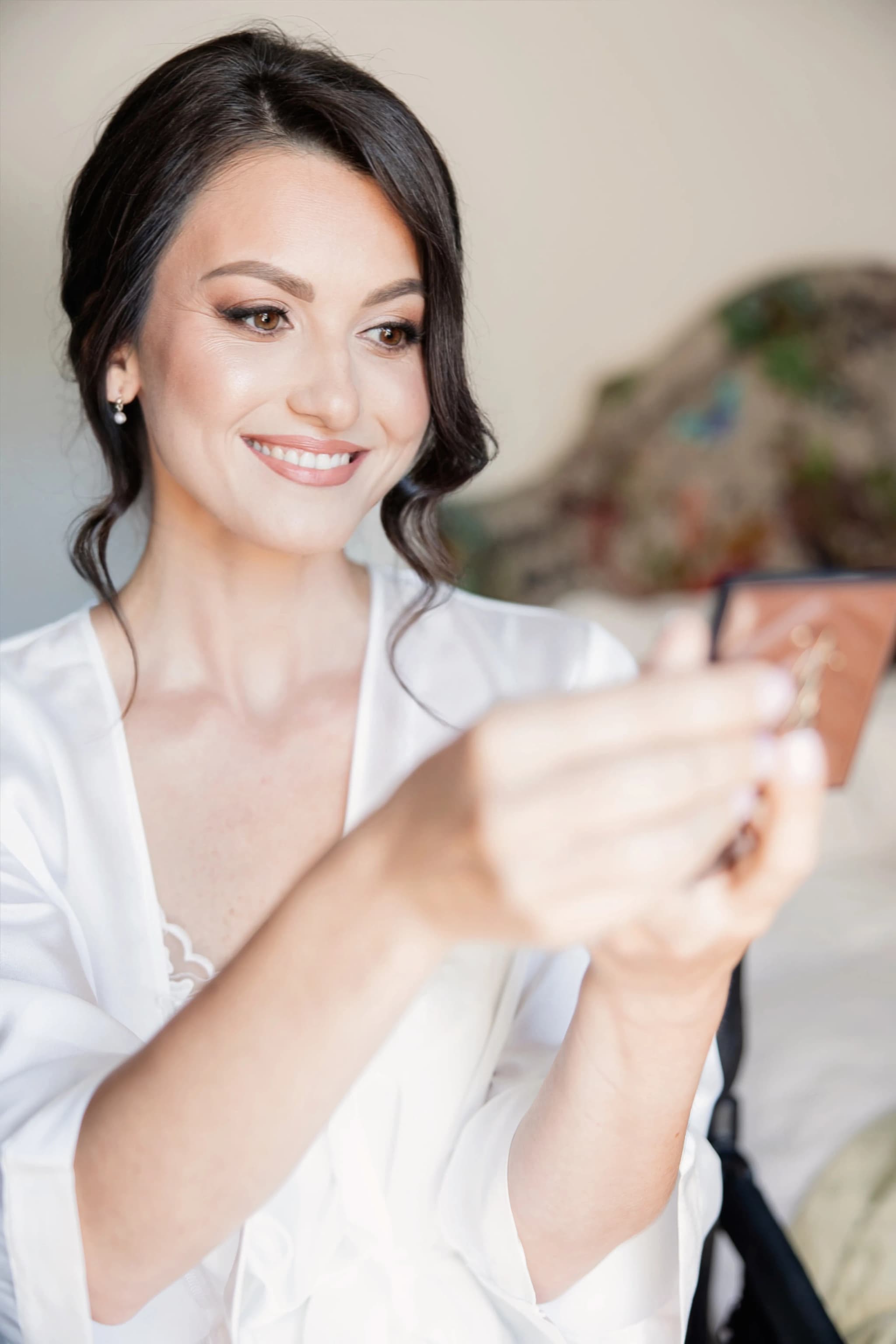
Someone needs to manage the timeline gently — not by nagging, but by quietly keeping an eye on the clock and letting the bride know when hair and makeup are running behind, or when it is time to start getting dressed, without turning the morning into a stressful countdown. I work closely with whoever is managing this on the day, because getting-ready photography depends entirely on timing going roughly to plan. A maid of honour who flags early that hair is running forty minutes late gives me the chance to adjust the shot list, rather than losing the best light of the morning to a scheduling problem nobody mentioned until it was too late.
Bridesmaids are also often the ones fielding questions from other guests and family members on the morning — where to park, what time the ceremony starts, whether Auntie Jean has arrived yet — freeing the bride from having to think about anything beyond getting ready and enjoying the morning. If you are shooting for calm, unhurried wedding photography that actually captures genuine emotion rather than tension, a bridal party who has these logistics handled makes a visible difference to the images.
A note for brides planning the morning timeline
If you want relaxed, natural getting-ready photographs rather than a rushed sequence of people staring at the clock, build in more time than you think you need and make sure your maid of honour knows the running order in advance. A calm morning photographs beautifully; a stressed one is harder to hide, however good the light is. I am always happy to talk through timeline planning with couples and their bridal party ahead of the day.
Get in touchDuring the Ceremony and Reception
During the ceremony itself, the maid of honour typically walks down the aisle immediately ahead of the bride, stands closest to her at the front, holds her bouquet during the vows and ring exchange, and may act as a legal witness, signing the marriage schedule alongside the best man. Bridesmaids generally process in an agreed order — often eldest to youngest or by height, though there is no fixed rule and couples increasingly do whatever feels right for their particular group — and take up a position at the front during the ceremony.
At the reception, duties become lighter but do not disappear entirely. Bridesmaids often help usher guests between the ceremony and reception spaces, keep an eye on the bride's dress during the meal and dancing (bustling a train after the ceremony is a genuinely fiddly job that is worth practising in advance, ideally at the final dress fitting), and generally make sure the bride has what she needs without being asked. It is also, frankly, meant to be enjoyable — the day should not be entirely about service, and a couple who genuinely want their bridal party to relax and celebrate will say so.
What Bridesmaids Should Expect to Pay For
UK wedding etiquette around bridesmaid costs varies enormously by family and by couple, so this is genuinely worth discussing openly and early rather than assuming. Traditionally, bridesmaids cover their own dress, shoes, and any hair and makeup costs on the day, along with travel and accommodation if the wedding is a destination event, while contributing to the hen do. Increasingly, though, couples cover the bridesmaid dresses themselves, particularly when they have chosen a specific style or colour and want to remove the financial pressure from friends who did not choose to buy that dress.
If cost is a genuine concern — and for many people asked to be part of two or three bridal parties in the same year, it is — it is entirely reasonable to raise it directly and kindly with the bride rather than saying nothing and quietly resenting the expense. Most brides would rather know early that a hen do location or a dress budget is a problem than find out a bridesmaid has been struggling in silence. This is exactly the kind of conversation the maid of honour is often best placed to start on behalf of the group.
Getting the Group Photographs Right
From a photography perspective, a well-briefed bridesmaid party makes an enormous practical difference. I always ask the maid of honour, in advance, to help me gather the bridal party quickly for group shots after the ceremony — she generally knows everyone by name and face in a way I, meeting the group for the first time, do not, and a familiar voice calling people together works far better than a photographer shouting into a crowd of relative strangers. Building a short list of must-have combinations in advance (bride with each bridesmaid individually, the full bridal party, bridesmaids with the couple) and sharing it with your wedding photographer ahead of time means this part of the day takes minutes rather than half an hour of standing around in the cold working out who is missing.
If your wedding is smaller, or you are planning an intimate ceremony without a traditional-sized bridal party, the same principles still apply on a smaller scale — even a single close friend acting informally as maid of honour benefits from a quick conversation about timings and photo priorities beforehand. Couples planning an elopement or very small wedding often still bring one close friend along in this support capacity, and the role works just the same, just with less of the group-photo logistics.
Making the Role Actually Enjoyable
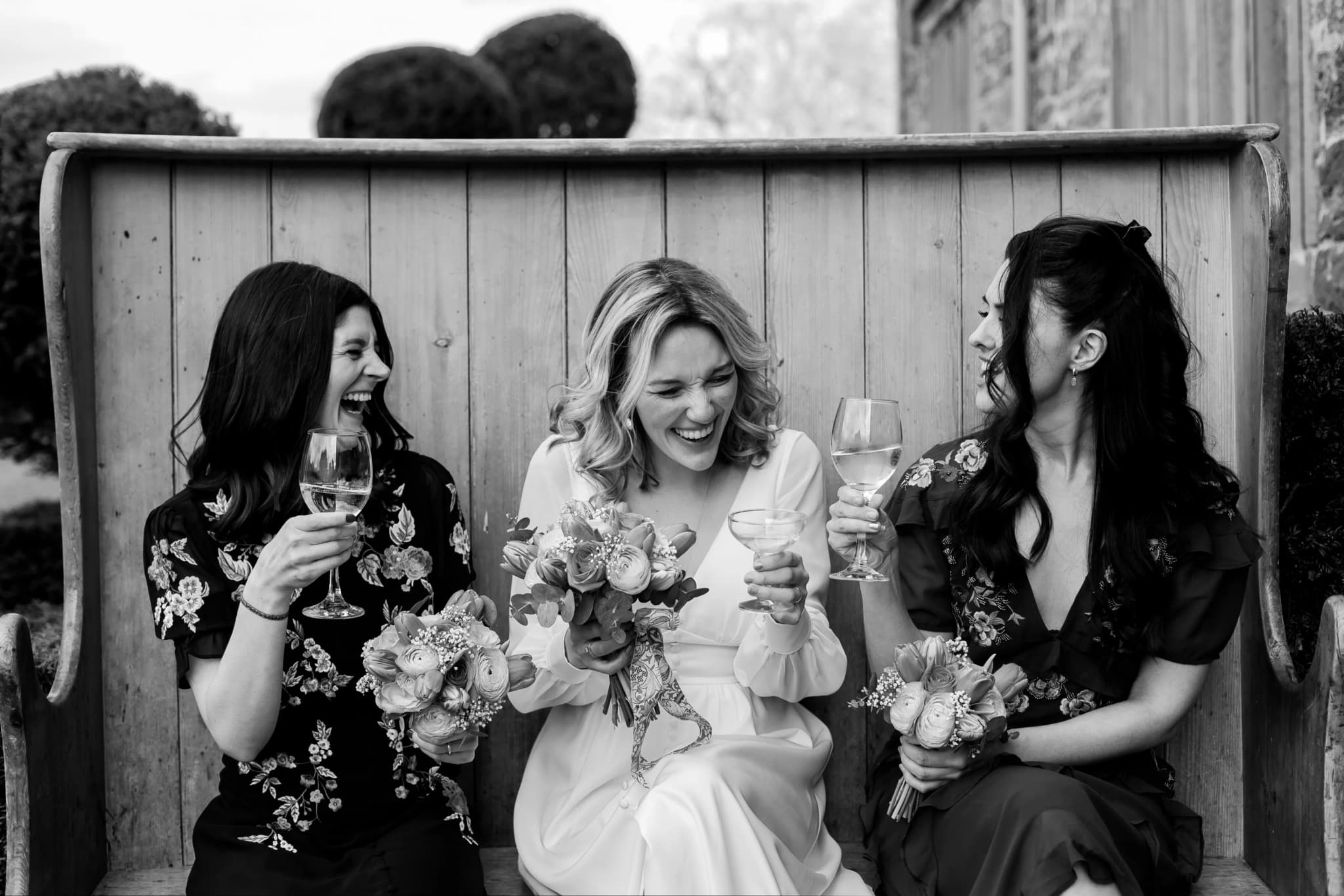
Being a bridesmaid or maid of honour is, underneath all the logistics, meant to be a genuine privilege — a close friend or family member trusting you to be part of one of the biggest days of their life. The practical duties matter, but so does simply being present, being calm, and being genuinely happy for the person you are supporting, particularly in the hour before the ceremony when nerves tend to peak. Some of the most beautiful, unposed photographs I take all day come from a bridesmaid making the bride laugh in the five minutes before she walks down the aisle, or a quiet hug shared in a getting-ready room with nobody performing for the camera.
If you are a bride putting together your bridal party, be clear and kind about what you actually need from each person, do not assume everyone knows the unwritten rules, and remember that the people around you on the morning shape the mood of the whole day far more than any item on the timeline. Those relationships, captured honestly, are often what couples treasure most when they look back through their wedding album years later — not the posed group shot, but the bridesmaid holding the dress, laughing, in the two minutes before everything officially began.
Whether you are planning the morning timeline, working out your bridal party budget, or simply want a photographer who understands how to document the real, slightly chaotic warmth of a wedding morning rather than a stiff, staged version of it, Yana Skakun Photography is based in Cambridge and covers weddings across the UK. Take a look at current pricing and packages, or get in touch to talk through your day.
Yana Skakun
Photographer · England
Professional wedding, family and portrait photographer based in England. Passionate about capturing authentic emotions and timeless moments.
About Yana →maid of honour duties ukbridesmaid dutieswedding morning timelineUK wedding etiquettehen do planningbridal party responsibilities
Wedding Tips — Wedding Photography in Cambridge & England
Yana Skakun is a professional wedding photographer based in Cambridge, covering weddings across England — from intimate elopements to full-day ceremonies at country houses, barns, and city venues. Every couple receives a relaxed, documentary approach that captures the day as it truly unfolds. This guide — Bridesmaid Duties Revealed: Who Holds the Dress When You Pee? — is part of the photography journal: practical, experience-based advice drawn from real sessions across England. Whether you arrived searching for maid of honour duties uk or bridesmaid duties, the same care and attention shapes every session Yana photographs.
Wedding Photography sessions are available year-round, with bookings open across Cambridge, Ely, Huntingdon, Peterborough, and further afield — East England, London, the Midlands, and beyond. If you have specific questions about wedding morning timeline, mention it in your enquiry. Get in touch through the contact form above to check availability and discuss your session. Enquiries are welcomed from anywhere in the UK.
Frequently Asked Questions
How much does a wedding photographer cost in England?+
Wedding photography in England typically ranges from £1,500 to £4,000+ for a full day. Price depends on experience, coverage hours, and whether albums or engagement shoots are included. Most photographers charge between £2,000–£3,000 for 8–10 hours of coverage.
How early should you book a wedding photographer?+
For peak season (May–September), book 12–18 months in advance. For autumn and winter weddings, 9–12 months is usually sufficient. Popular photographers at popular venues fill up fast — as soon as you have a date and venue confirmed, start reaching out.
How many photos do you get from a wedding photographer?+
Most professional wedding photographers deliver 400–800 edited images for a full-day wedding. The exact number depends on coverage hours, how many guests there are, and the photographer's editing style. Quality matters more than quantity — a curated gallery of 500 images tells the story better than 1,500 unedited files.
Do you need a second photographer at your wedding?+
A second photographer is helpful if you want simultaneous coverage of getting-ready moments in different locations, multiple angles during the ceremony, or more candid coverage during the reception. It adds cost but significantly increases the variety and completeness of your gallery.
What is the difference between documentary and editorial wedding photography?+
Documentary (reportage) wedding photography captures moments as they happen — the photographer observes and doesn't intervene. Editorial photography involves deliberate direction: placing you in good light, shaping compositions, creating intentional portraits. Most photographers blend both styles throughout the day.
Continue Reading
Related Articles

Wedding Tips
Sustainable Eco-Friendly Wedding Guide — Planning a Green Celebration
15 min read · Read Article
Wedding Tips
Trash the Dress Session — Complete Planning and Photography Guide
14 min read · Read Article
Wedding Tips
Client Communication for Photographers — From Enquiry to Gallery Delivery
15 min read · Read Article
Get in Touch
Ready to Book Your Session?
Get in touch to discuss your vision — I'll reply within 24 hours.