Yana Skakun

Christmas Wedding Ideas: Capturing the Magic of December
By Yana Skakun·10 July 2026·8 min read
December weddings have a completely different atmosphere to a June garden ceremony, and that is precisely their appeal. The light is low and golden for a matter of hours rather than a whole afternoon, candlelight becomes a genuine necessity rather than a decorative flourish, and there is a warmth to a room full of guests coming in from the cold that summer weddings simply cannot replicate. Couples who choose to marry in the run-up to Christmas are usually drawn to exactly this — the cosiness, the drama of an early sunset, the sense of celebration that is already in the air. As a wedding photographer who has shot December weddings across Cambridgeshire and beyond, I want to share what actually works, what to plan for, and how to make the most of the season's particular magic rather than fighting against it.
Working With December's Light, Not Against It
The single biggest adjustment for a December wedding is daylight. In Cambridgeshire, the sun sets around half past three in the afternoon by mid-December, and civil twilight is finished by around half past four. That sounds alarming if you are used to thinking about summer weddings where the light lasts until nine or ten in the evening, but it is entirely workable once the day is planned around it rather than against it.
My strong recommendation for December couples is to bring the ceremony forward as early as the venue and your guests can manage — midday or even earlier if possible — so there is a proper window of usable daylight for couple portraits and group photographs straight afterwards. A ceremony at noon leaves roughly three hours of daylight, including a genuinely beautiful low winter golden hour around half past two, before the light fades. A ceremony at two o'clock leaves almost none, and portraits end up being rushed or pushed entirely into candlelight and flash, which is a different look rather than a worse one, but it is worth being a deliberate choice rather than an accident of timing.
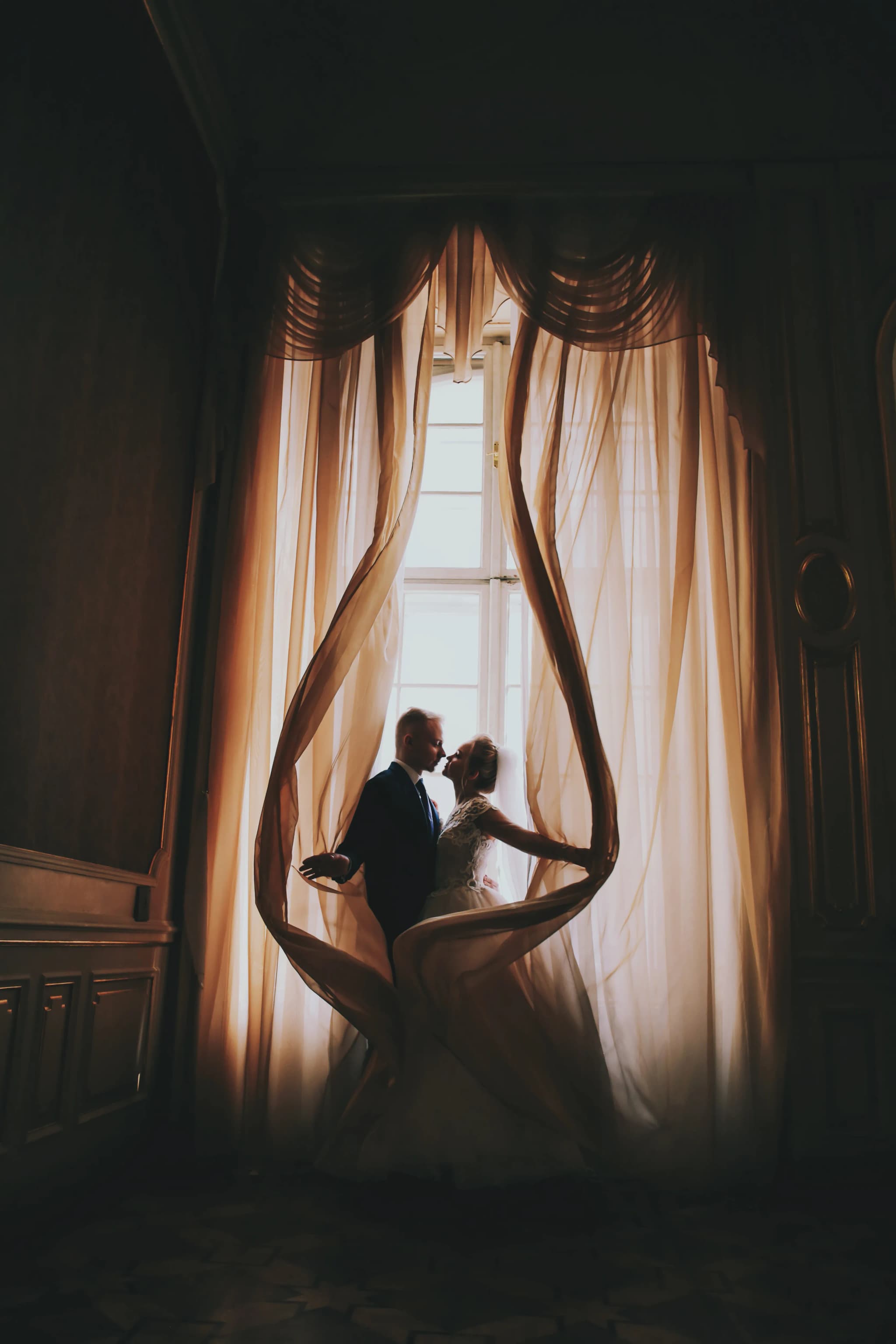
Winter sun sits low in the sky all day, which actually works in your favour photographically. That low, warm light is the same quality photographers chase during golden hour in summer, except in December you get several hours of it rather than twenty minutes. Frosty mornings, bare trees, and low sun together produce some of the most striking wedding images I take all year — there is a clarity and a warmth to winter light that flatters skin tones and adds real depth to outdoor portraits.
Choosing a Venue That Embraces the Season
Not every venue suits a December wedding equally well, and it is worth thinking about this at the booking stage rather than after. Venues with substantial fireplaces, exposed beams, warm wood panelling, or generous natural light from large windows tend to photograph beautifully in winter because they hold candlelight and low sun so well. Country houses and barns with open fires are a particularly strong match for December — the fire becomes both a genuine source of warmth for guests and a wonderful photographic focal point during the reception.
I would also encourage couples to think carefully about the walk between ceremony and reception spaces, and between any outdoor photograph locations and the warm indoors. December weather in the East of England is unpredictable — some years bring crisp, dry, blue-sky days that are a photographer's dream, and other years bring persistent grey drizzle that makes outdoor portraits much harder. A venue with a genuinely lovely interior as a fallback, not just a marquee extension, means the day is never at the mercy of the forecast. If you are still choosing a venue, my guide to finding a wedding photographer across the UK covers some of the regional variation in what is available, from Cambridgeshire manor houses to coastal venues further afield.
Candlelight, Fairy Lights, and Getting the Exposure Right
December weddings lean into artificial light far more than summer ones, and that is a genuine creative opportunity rather than a compromise. Candlelight on tables, strings of warm fairy lights through greenery, and the glow of a real fire all add a texture and richness to reception photographs that flat daylight cannot match. The trick, from a photography standpoint, is exposing correctly for that mixed and often quite dim light without losing the atmosphere it creates — over-brightening a candlelit room in post-processing flattens exactly the mood you were trying to capture.
I always ask venues in advance about their lighting setup and any restrictions on real flame, because this genuinely changes how a reception will look and feel. If naked flame is not permitted, good quality LED candles and warm-toned festoon or fairy lighting achieve almost the same visual effect. I would gently steer couples away from very cool white LED lighting, which reads as clinical in photographs and clashes with the warmth everything else in a winter wedding is working to create.
Planning a winter wedding?
December dates fill quickly, particularly the weekends closest to Christmas itself, and the shorter days mean the timeline needs a little more careful planning than a summer wedding. I am always happy to talk through ceremony timings, venue lighting, and how to build a schedule that makes the most of the season's light before you commit to a date.
Get in touchStyling Ideas That Suit the Season
December weddings can lean as festive or as understated as you like, and both approaches photograph beautifully if they are considered rather than accidental. On the festive end, deep green foliage, trailing ivy, holly with its berries left on, dried orange slices, cinnamon sticks tucked into buttonholes, and touches of deep red or burgundy in the florals all read as seasonal without tipping into pastiche. Pampas grass and dried florals have become popular for winter weddings too, partly because they hold up through a long day without wilting and partly because their pale, textural quality photographs wonderfully against dark green foliage and candlelight.
For a quieter, more understated winter palette, think in terms of the season's natural colours rather than Christmas ones specifically — ivory, deep forest green, soft grey, dusky blue, and warm gold accents. This gives you a wedding that feels wintery and atmospheric without becoming a Christmas party, which matters if your date happens to fall in December but you would rather the day did not read as explicitly festive in photographs you will look back on regardless of the time of year.
Whichever direction you take, bring warm layers into the styling deliberately rather than as an afterthought. A beautifully tailored wool coat, a faux fur stole, or a tweed jacket over a wedding dress is not a compromise on the day — it photographs as a genuine style choice, and it means you are actually warm enough to enjoy any outdoor portraits rather than gritting your teeth through them. I keep a small kit of hand and toe warmers in my camera bag for December weddings for exactly this reason, and I would recommend any December bride do the same.
Making the Most of Frost, Bare Trees, and Winter Landscapes
If your venue has any grounds at all, a hard frost is one of the most beautiful conditions a December wedding can have. Frosted grass, bare-branched trees rimed with white, and breath visible in cold air all add a texture to portraits that is completely unique to the season. I always build in a short window — ten to fifteen minutes is genuinely enough — for the two of you to step outside together, even briefly, if conditions allow. These are consistently among the images couples treasure most from their winter wedding, precisely because they could not have been taken at any other time of year.
That said, I never push couples out into genuinely miserable weather for the sake of a photograph. If it is sheeting with rain or bitterly windy, there is no shame in keeping portraits indoors near a large window or under a covered porch or doorway, using the architecture and the ambient light from outside rather than standing directly in it. A well-lit doorway or an orangery with tall windows can produce portraits every bit as striking as an open field, and considerably more comfortable for everyone involved.
Building a Realistic Winter Wedding Day Timeline
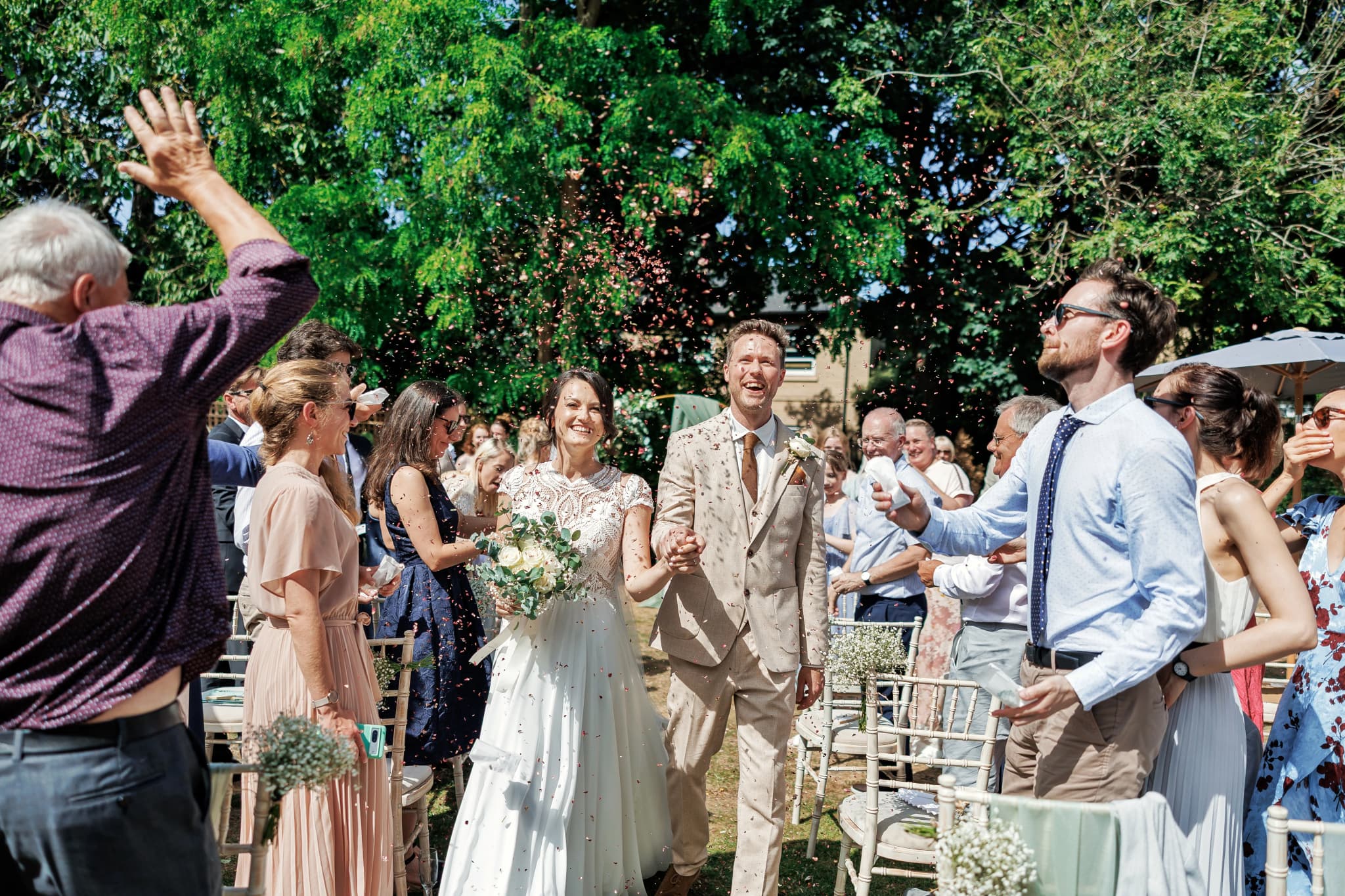
Because daylight is so limited, the day's schedule matters more in December than at almost any other time of year. I generally recommend getting ready photographs start earlier than couples initially expect, simply because everything after the ceremony needs to happen before roughly half past three or four in the afternoon if any of it is to use natural light. A rough shape that works well: hair and makeup finishing by late morning, ceremony at midday to half past twelve, confetti and group photographs immediately after in the remaining daylight, couple portraits using the golden hour window around half past two, and then everyone moves inside for the reception exactly as the light drops away outside.
Group photographs deserve particular attention in winter planning. They take longer to organise than most couples expect, and losing daylight while wrangling extended family into position is a common and avoidable frustration. I always ask for a group shot list in advance for any wedding, but it becomes especially important in December, when there may only be a genuinely usable thirty or forty minutes of decent outdoor light after the ceremony to get through confetti, families, and full group photographs before everyone needs to be back in the warm.
Guests, Warmth, and Practical Comfort
A detail couples sometimes overlook is how much more comfortable guests are, and consequently how much more relaxed and genuine they look in photographs, when they are actually warm. Blankets over the backs of outdoor ceremony chairs, a flask of mulled wine or hot chocolate offered during the drinks reception if there is any time outside, and a heated marquee or covered walkway between spaces all make a tangible difference to how the day feels and how it photographs. Guests hunched against the cold do not photograph the same way as guests genuinely enjoying themselves, however lovely the setting.
If you are drawing up a smaller, more intimate December wedding rather than a large one, the shorter days actually work strongly in your favour — there is less pressure to fit an enormous timeline into a short window, and a smaller group can move between spaces quickly and stay warm more easily. Couples considering this route sometimes find it useful to look at what an elopement or intimate wedding can offer in terms of flexibility, since a pared-back winter celebration often suits December's constraints better than trying to run a full 150-guest day on a four-hour daylight budget.
Choosing Your Photography Package and Coverage for a Winter Wedding
Because so much of a December wedding's photography happens indoors under artificial light — getting ready, the ceremony if it is not outdoors, the whole of the reception — it is worth discussing coverage hours with your photographer with this in mind rather than assuming a summer-shaped day will simply transpose. I generally recommend couples marrying in December look closely at coverage that runs comfortably into the evening, since first dance, speeches, and evening reception are where a large proportion of the day's genuine emotion happens once the light outside has long since gone. My wedding photography packages are built with this flexibility in mind, and I am always glad to talk through what a realistic winter timeline looks like before you settle on hours.
It is also worth thinking ahead to how you will keep and display the images from a winter wedding. A candlelit reception, frosted grounds, and the particular quality of December light tend to produce a set of photographs with real visual cohesion — they often suit a printed wedding album beautifully, since the warm, moody tones of a winter day hold together as a body of work in a way that is genuinely satisfying to look through years later, long after the tree has come down and the decorations are packed away.
December weddings ask for a little more planning than their summer counterparts, but they reward it generously — candlelight, frost, early sunsets, and the particular warmth of a room full of people gathered in from the cold all combine into something genuinely distinctive. If you are planning a Christmas or winter wedding anywhere in Cambridgeshire or further afield and want to talk through timings, venues, or coverage, I would love to hear from you. Take a look through more of my wedding photography work, and get in touch to start planning your December day with Yana Skakun Photography.

Yana Skakun
Photographer · England
Professional wedding, family and portrait photographer based in England. Passionate about capturing authentic emotions and timeless moments.
About Yana →christmas wedding photography ideasdecember weddingwinter wedding photography UKcandlelit wedding receptionwinter wedding timelineCambridgeshire winter wedding
Wedding Tips — Wedding Photography in Cambridge & England
Yana Skakun is a professional wedding photographer based in Cambridge, covering weddings across England — from intimate elopements to full-day ceremonies at country houses, barns, and city venues. Every couple receives a relaxed, documentary approach that captures the day as it truly unfolds. This guide — Christmas Wedding Ideas: Capturing the Magic of December — is part of the photography journal: practical, experience-based advice drawn from real sessions across England. Whether you arrived searching for christmas wedding photography ideas or december wedding, the same care and attention shapes every session Yana photographs.
Wedding Photography sessions are available year-round, with bookings open across Cambridge, Ely, Huntingdon, Peterborough, and further afield — East England, London, the Midlands, and beyond. If you have specific questions about winter wedding photography uk, mention it in your enquiry. Get in touch through the contact form above to check availability and discuss your session. Enquiries are welcomed from anywhere in the UK.
Frequently Asked Questions
How much does a wedding photographer cost in England?+
Wedding photography in England typically ranges from £1,500 to £4,000+ for a full day. Price depends on experience, coverage hours, and whether albums or engagement shoots are included. Most photographers charge between £2,000–£3,000 for 8–10 hours of coverage.
How early should you book a wedding photographer?+
For peak season (May–September), book 12–18 months in advance. For autumn and winter weddings, 9–12 months is usually sufficient. Popular photographers at popular venues fill up fast — as soon as you have a date and venue confirmed, start reaching out.
How many photos do you get from a wedding photographer?+
Most professional wedding photographers deliver 400–800 edited images for a full-day wedding. The exact number depends on coverage hours, how many guests there are, and the photographer's editing style. Quality matters more than quantity — a curated gallery of 500 images tells the story better than 1,500 unedited files.
Do you need a second photographer at your wedding?+
A second photographer is helpful if you want simultaneous coverage of getting-ready moments in different locations, multiple angles during the ceremony, or more candid coverage during the reception. It adds cost but significantly increases the variety and completeness of your gallery.
What is the difference between documentary and editorial wedding photography?+
Documentary (reportage) wedding photography captures moments as they happen — the photographer observes and doesn't intervene. Editorial photography involves deliberate direction: placing you in good light, shaping compositions, creating intentional portraits. Most photographers blend both styles throughout the day.
Continue Reading
Related Articles

Wedding Tips
Sustainable Eco-Friendly Wedding Guide — Planning a Green Celebration
15 min read · Read Article
Wedding Tips
Trash the Dress Session — Complete Planning and Photography Guide
14 min read · Read Article
Wedding Tips
Client Communication for Photographers — From Enquiry to Gallery Delivery
15 min read · Read Article
Get in Touch
Ready to Book Your Session?
Get in touch to discuss your vision — I'll reply within 24 hours.