Yana Skakun

The Confetti Bed Jump: How to Get That Famous Pinterest Shot
By Yana Skakun·10 July 2026·8 min read
You have almost certainly seen the shot: the bride sitting in the middle of a hotel bed strewn with confetti or petals, surrounded by her bridesmaids mid-air, arms flung wide, veils and dresses caught in freeze-frame chaos, everyone laughing at something that clearly has nothing to do with the camera. It is one of the most requested images on every mood board I am sent, and for good reason — done well, it is joyful, a little irreverent, and completely unlike the posed formal portraits that make up the rest of a wedding gallery. It is also one of the images most likely to go wrong if nobody has thought about it in advance. This guide is everything I tell my brides when the confetti bed jump comes up in planning, from the practical logistics through to the technical reasons some of these shots look magazine-ready and others look like a scramble.
Why This Shot Works So Well
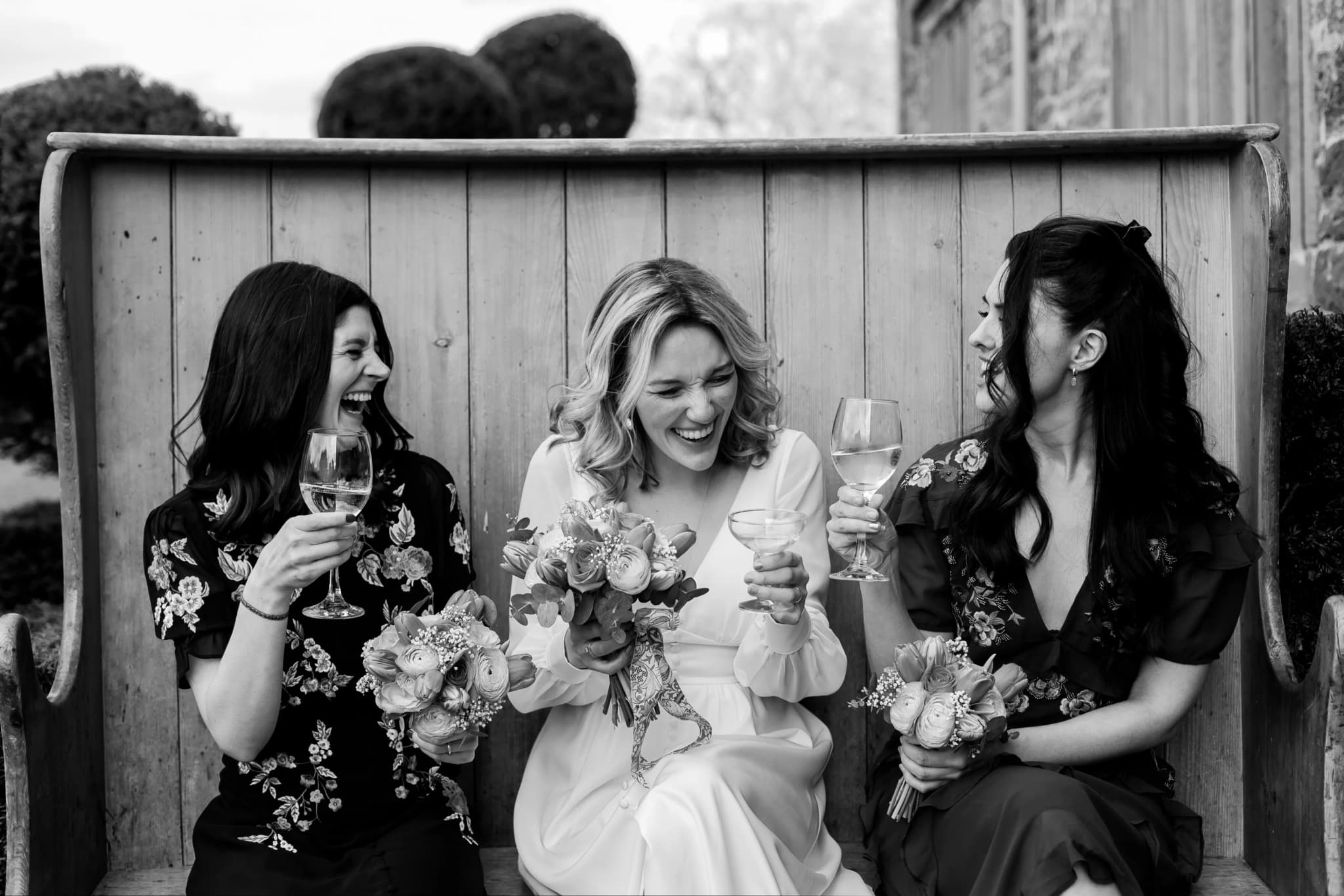
The bed jump earns its place on Pinterest boards because it breaks every rule the rest of the wedding day follows. Everything else is composed, timed, and at least a little formal — the ceremony, the family groups, the couple portraits. The bed jump is the one moment in the whole gallery where a bride gets to be genuinely, physically silly with the people she has known longest, usually in her underwear or a robe, usually still half in hair and makeup, usually laughing so hard the photograph barely needs editing. Photographically, movement frozen mid-air also does something static portraits cannot: it captures real, involuntary expressions. Nobody can fake the face they pull while airborne. That authenticity is exactly what separates a bed jump photo people love from one that looks staged and a bit try-hard.
It also tends to land well in a gallery sequence. Placed among getting-ready images, it is a burst of energy and laughter before the quieter, more composed portraits of the ceremony and reception. If you are building your day around a strong wedding photography narrative rather than a checklist of individual shots, this is one of the images that does the most narrative work for the least time spent.
When to Actually Schedule It
The single biggest reason this shot fails is timing. It gets tacked onto the end of an already packed getting-ready schedule, everyone is being rushed out the door to the ceremony, and the resulting images look exactly like what they were: five seconds squeezed in between hairspray and the car arriving. Confetti bed jumps need their own slot, even if that slot is only five minutes, built into the timeline deliberately rather than hoped for opportunistically.
I schedule it after hair and makeup is finished on the bridal party but before the bride puts on her dress, robes or matching pyjamas still on, which also happens to be one of the more relaxed points in the morning. Everyone is dressed but not yet precious about their outfits, nobody is worried about creasing a gown, and there is usually still music playing and prosecco being poured, which does more to generate genuine laughter than any direction I could give. If your morning schedule is tight, tell your planner or your photographer at the outset that you want this shot, and it will get a proper slot rather than being an afterthought.
Confetti, Petals, or Something Else
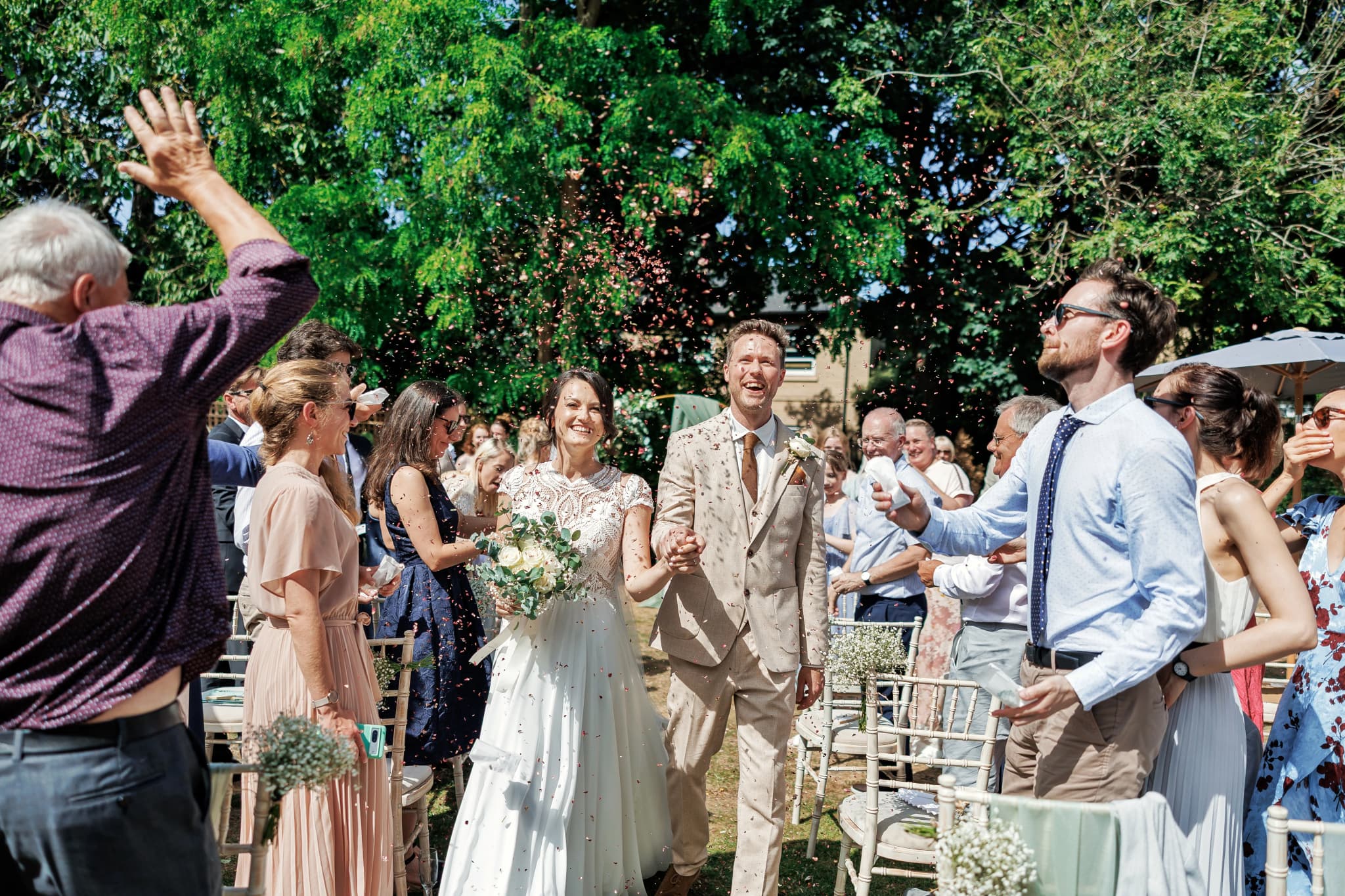
What actually goes on the bed matters more than most couples expect. Biodegradable petal confetti is the safest and most photogenic option — delphinium petals and rose petals in particular catch light beautifully and photograph as soft blurred colour when frozen mid-throw, rather than as hard little specks. Paper confetti can look great too, but check with the venue first: many hotels and historic properties in and around Cambridge explicitly prohibit paper confetti indoors because it gets into carpets, radiators, and soft furnishings and is a nightmare for housekeeping. A quick message to the venue coordinator beforehand saves an awkward conversation on the morning itself.
A generous but not overwhelming amount goes further than people expect. A standard confetti cone or two, tossed by two or three bridesmaids simultaneously rather than dumped in one go, gives a scattered, in-motion look across several frames. Too much thrown at once tends to just fall as a heavy curtain in front of faces in the first frame and leave nothing for the second. I usually ask for a countdown and a second, smaller top-up toss a beat later so I have more than one clean frame to choose from.
Getting the Jump Itself Right
The actual choreography is simpler than it looks in the finished photograph. The bride sits or kneels centrally on the bed, and the bridesmaids jump from a standing position rather than a run-up, which keeps everyone roughly in frame and stops anyone landing awkwardly off the edge. I count down from three so that everyone leaves the ground at the same instant — a jump where people are staggered by even half a second looks messy, with some subjects at the peak of the jump and others already coming back down.
Genuine expressions beat directed ones every time. Rather than asking for enthusiastic smiles, which produces a slightly manic, identical look across five faces, I ask everyone to shout something silly on the count of three, or I have someone off to the side say something unexpected right as they leave the ground. The resulting laughter, mid-scream faces, and slightly chaotic limbs are what make the image feel alive rather than performed. Do two or three jumps in a row rather than one attempt — the second or third is almost always the best, once everyone has relaxed into it and stopped worrying about how they look.
A note on hotel beds
Not every hotel room bed is built for six people jumping on it at once. Divan beds with a solid base generally hold up fine; older sprung frames or antique beds in period properties sometimes do not, and I have seen a wooden slat give way mid-shoot. If you are getting ready in a heritage venue, it is worth checking with the venue in advance whether jumping on the beds is permitted at all, and choosing the sturdiest bed in the room rather than the prettiest one. If you would like help planning this into your morning timeline, I am happy to talk it through.
Get in touchThe Technical Side: How I Actually Freeze the Motion
This is where the difference between a crisp, editorial-looking bed jump and a blurry, disappointing one really comes down to camera settings, and it is worth understanding even if you are not the one holding the camera. Freezing bodies mid-air and confetti mid-fall requires a fast shutter speed, generally 1/1000th of a second or quicker. Hotel rooms are rarely bright enough for that shutter speed without either a wide aperture, a boosted ISO, or additional light, so I usually bring an off-camera flash into the room specifically for this shot, positioned to one side rather than pointed straight at the bed, to avoid flattening everyone and blowing out the white bedding.
Continuous or burst shooting mode is essential. A single frame per jump is a gamble; shooting a burst of six or eight frames through each jump means I have a genuine choice afterwards between the frame where everyone is at the peak, eyes open, mouths mid-laugh rather than mid-blink. I also shoot slightly wider than the final crop, because bodies in mid-air move unpredictably and a wider frame gives room to crop tightly afterwards without cutting off a foot or an elbow that has flown further than expected.
White bedding and window light are usually enough on their own for a naturally lit version of this shot, which some couples prefer over the flash-lit, punchier look. If your room has strong natural light from a large window, I will often shoot both versions and let you choose in the final gallery which mood suits the rest of your images better.
Making It Comfortable for Everyone Involved
Not every bridesmaid is thrilled about jumping in front of a camera, and that is worth acknowledging rather than steamrolling past. I always frame this shot as entirely optional and genuinely low-pressure — nobody needs to be a gymnast, nobody is being judged on how high they jump, and a bridesmaid who would rather sit on the edge of the bed laughing at everyone else than jump herself produces just as good a photograph in the final set. The energy of the shot comes from genuine enjoyment, and forcing someone who is uncomfortable rarely photographs as well as letting them opt into a role that suits them.
Practically, ask bridesmaids to wear something they are happy moving freely in for this part of the morning. Robes with a tie belt, matching pyjama sets, or slips all work well and photograph better than anything with a fitted waistband that will ride up mid-jump. If your bridesmaids are getting hair and makeup done in a particular order, try to schedule the bed jump for a point when at least most of the group is finished, rather than doing it with two people mid-curling-iron and three fully ready — the mismatch shows up clearly in photographs.
Where This Fits Alongside Your Other Getting-Ready Photographs
The confetti bed jump is one moment among many in a typical getting-ready sequence, and it works best as a deliberate contrast to quieter images taken either side of it — a mother doing up buttons, a grandmother's handkerchief, a first look at the dress in the mirror. If you are planning your day around a smaller, more intimate guest list, the same idea scales down easily; even an elopement or micro-wedding with one or two close friends present can include a version of this shot, just with fewer people in the air. Couples working from a Pinterest board built around this exact image are usually also drawn to a documentary-style approach for the rest of the morning, which is worth mentioning to your photographer early so the whole wedding day coverage has a consistent feel rather than one standout styled shot surrounded by a completely different visual language.
It is also worth deciding in advance whether this image is one you want printed large for your home or included in your wedding album. Bed jump photographs tend to work particularly well as a spread across two album pages, given the width of the composition and the amount of movement across the frame, so flagging it as an album favourite before your final edit is worth mentioning if you already know you love the concept.
A Few Things That Commonly Go Wrong
The most common disappointment I hear about from couples who attempted this shot with a friend on a phone rather than a photographer is blur — either from a shutter speed too slow to freeze the jump, or from low light forcing a longer exposure. The second most common issue is timing: someone still doing their teeth, someone's dress not yet on, someone called away to deal with a delivery, all of which chip away at the group being fully present and ready at the same moment. The third is space: cramming eight bridesmaids onto a double bed produces a genuinely chaotic, hard-to-read image where nobody's face is visible. If your bridal party is large, consider doing it in two smaller groups, or choosing a room with the biggest bed available specifically for this part of the morning.
None of these are difficult to avoid once you know to expect them, which is really the point of planning this shot rather than hoping it happens spontaneously. A few minutes of deliberate planning, a clear moment carved out of the timeline, and someone directing traffic on the morning itself is the difference between the photograph you saved to your mood board and a slightly blurry attempt you delete from your phone a week later.
If the confetti bed jump is on your must-have list, mention it when we first talk through your day — it is a five-minute addition to a getting-ready timeline that pays off completely disproportionately to the time it takes, and I always build in the flash setup and burst timing in advance rather than trying to improvise it on the morning. Yana Skakun Photography covers weddings across Cambridge and the wider region, and this is exactly the sort of detail worth discussing at the planning stage. Get in touch and we can talk through your morning timeline together.
Yana Skakun
Photographer · England
Professional wedding, family and portrait photographer based in England. Passionate about capturing authentic emotions and timeless moments.
About Yana →bridesmaid bed jump photoconfetti bed jumpwedding getting ready photosbridal party photo ideasCambridge wedding photographerwedding morning timeline
Wedding Tips — Wedding Photography in Cambridge & England
Yana Skakun is a professional wedding photographer based in Cambridge, covering weddings across England — from intimate elopements to full-day ceremonies at country houses, barns, and city venues. Every couple receives a relaxed, documentary approach that captures the day as it truly unfolds. This guide — The Confetti Bed Jump: How to Get That Famous Pinterest Shot — is part of the photography journal: practical, experience-based advice drawn from real sessions across England. Whether you arrived searching for bridesmaid bed jump photo or confetti bed jump, the same care and attention shapes every session Yana photographs.
Wedding Photography sessions are available year-round, with bookings open across Cambridge, Ely, Huntingdon, Peterborough, and further afield — East England, London, the Midlands, and beyond. If you have specific questions about wedding getting ready photos, mention it in your enquiry. Get in touch through the contact form above to check availability and discuss your session. Enquiries are welcomed from anywhere in the UK.
Frequently Asked Questions
How much does a wedding photographer cost in England?+
Wedding photography in England typically ranges from £1,500 to £4,000+ for a full day. Price depends on experience, coverage hours, and whether albums or engagement shoots are included. Most photographers charge between £2,000–£3,000 for 8–10 hours of coverage.
How early should you book a wedding photographer?+
For peak season (May–September), book 12–18 months in advance. For autumn and winter weddings, 9–12 months is usually sufficient. Popular photographers at popular venues fill up fast — as soon as you have a date and venue confirmed, start reaching out.
How many photos do you get from a wedding photographer?+
Most professional wedding photographers deliver 400–800 edited images for a full-day wedding. The exact number depends on coverage hours, how many guests there are, and the photographer's editing style. Quality matters more than quantity — a curated gallery of 500 images tells the story better than 1,500 unedited files.
Do you need a second photographer at your wedding?+
A second photographer is helpful if you want simultaneous coverage of getting-ready moments in different locations, multiple angles during the ceremony, or more candid coverage during the reception. It adds cost but significantly increases the variety and completeness of your gallery.
What is the difference between documentary and editorial wedding photography?+
Documentary (reportage) wedding photography captures moments as they happen — the photographer observes and doesn't intervene. Editorial photography involves deliberate direction: placing you in good light, shaping compositions, creating intentional portraits. Most photographers blend both styles throughout the day.
Continue Reading
Related Articles

Wedding Tips
Sustainable Eco-Friendly Wedding Guide — Planning a Green Celebration
15 min read · Read Article
Wedding Tips
Trash the Dress Session — Complete Planning and Photography Guide
14 min read · Read Article
Wedding Tips
Client Communication for Photographers — From Enquiry to Gallery Delivery
15 min read · Read Article
Get in Touch
Ready to Book Your Session?
Get in touch to discuss your vision — I'll reply within 24 hours.