Yana Skakun

Brand Photography for Estate Agents: The Visual Identity of a Property Business
By Yana Skakun·17 April 2026·9 min read
Estate agency is a trust business dressed up as a property business. Sellers hand an agent responsibility for what is usually their single largest financial asset. Buyers rely on an agent's guidance through one of the most stressful decisions most people ever make. In both directions, the relationship depends on a quick, largely unconscious judgement about whether this person and this company can be trusted — and that judgement starts forming before anyone has met, at the moment a photograph is seen on a website, a for-sale board, or a Rightmove profile.
Why Brand Photography Matters More in Estate Agency Than Most Industries
Every estate agent in a given town appears in the same Rightmove and Zoopla search results, often selling genuinely comparable properties, at genuinely comparable fees. When the product and the pricing are hard to differentiate, the way the agency and its people present themselves becomes one of the few remaining levers available. A polished, consistent, professionally photographed brand signals competence before a single conversation has taken place. A patchwork of mismatched phone photos signals the opposite, however good the agency's actual service might be.
This is not a cosmetic concern. Sellers choosing between three agents to instruct, and buyers choosing which agent to trust with their offer, are making rapid, largely visual judgements. Brand photography is one of the few areas of estate agency marketing where a modest, one-off investment produces a benefit that compounds across every listing, every board, every profile, for years afterwards.
Professional Headshots: The Single Most-Seen Image
Of all the image categories an estate agency needs, the individual headshot is used most often and seen by the most people. It appears on Rightmove and Zoopla agent profiles, on the agency website, on Google Business Profile, on business cards, and frequently on the for-sale board itself outside the property. A headshot that reads as warm, approachable, and genuinely competent has a measurable effect on whether a prospective seller picks up the phone.
The mistake many independent agents make is treating the headshot as an afterthought — a phone photo taken in the office on a quiet afternoon, or an old image kept in circulation for years after it stopped looking like the person. A proper headshot session, planned and lit with intention, produces an image that holds up across every one of those touchpoints simultaneously, rather than one that only works in a single context.
Team Photography and the Cohesion It Signals
Estate agency runs on relationships more than almost any other property-adjacent business, and the team page of an agency website is often where a prospective client forms their first real impression of what working with the company will actually feel like. A team photographed to a consistent standard — same lighting quality, same tonal treatment, same general framing — reads as a unified, well-run business. A collection of headshots taken at different times, in different styles, by different people, reads as exactly what it is: a team that has never been photographed together with any intention.
I schedule team photography as a single coordinated session wherever possible, moving efficiently through each member of staff with the same lighting setup and backdrop already in place. This keeps disruption to a working office to a minimum while producing a set of images that sit together coherently on a website, in a brochure, or across a set of social media profiles.
For agencies with multiple branches, extending the same visual consistency across every office matters just as much. A client browsing between branch pages should never be able to tell, from the photography alone, that they were shot months apart by different people.
Agency Environment and Lifestyle Content
If the agency has a physical branch, the interior itself is part of the brand story. Clean, well-lit images of the reception area, meeting spaces, and working environment communicate a standard of professionalism that reinforces everything else in the marketing. Agents photographed at their desk, mid-conversation with a colleague, or reviewing a property file in their own working environment add a layer of contextual credibility that a plain studio headshot cannot provide on its own.
Beyond the static brand assets, agencies increasingly need a working library of lifestyle content for Instagram and LinkedIn — candid-feeling images of viewings, valuations, key handovers, and everyday office life. This is the content that keeps a local audience engaged between listings, and it benefits enormously from being shot in the same session as the more formal brand photography, so the whole visual identity feels like one coherent thing rather than several unrelated projects.
Matching Wardrobe and Setting to Market Position
Estate agency presentation varies considerably depending on the market an agency actually operates in, and the photography should reflect that rather than following a generic template. A premium country house agency working across rural Cambridgeshire presents very differently to a high-volume city-centre residential agency, and both present differently again to a commercial or corporate property specialist whose clients expect the formality of the corporate world they themselves operate in.
I talk this through with agencies before the session so wardrobe, background, and tone are all aligned to how the agency actually wants to be perceived, rather than defaulting to a single generic corporate look that may undersell a more premium positioning or feel needlessly stiff for a younger, contemporary urban brand.
A note on planning an agency shoot
The best results come from planning individual headshots, team photography, environment shots, and lifestyle content as a single coordinated project rather than as separate, disconnected bookings. If you run or manage an estate agency in Cambridge or across Cambridgeshire and want a consistent visual identity across every platform your business appears on, I would be glad to talk through what a session for your team could look like.
Get in touch about agency photographyMaking the Images Work on Rightmove and Zoopla
Property portal profile photographs are almost always displayed small, often as a thumbnail sitting alongside a row of competing agents from other agencies. At that size, subtlety is lost. What survives is contrast, clarity, and a genuine, open expression. Very dark clothing against a dark background tends to disappear into an indistinct blur at thumbnail size, and an expression that reads as forced or stiff in a full-size image reads as actively off-putting when reduced to a small square.
I shoot with this end use in mind from the start, checking how an image holds up when scaled down rather than only judging it at full resolution. It is a small technical consideration that makes a real difference to how an agent is perceived by someone scrolling quickly through search results looking for a reason to click through — or a reason to move on to the next listing.
The same principle applies to website hero images and any photography used in paid social advertising, where an agency is often paying to put an image in front of a cold audience that has never heard of the brand before. In that context, the photograph is carrying the entire first impression on its own, with no accompanying context to soften a weak image, which makes the investment in genuinely strong brand photography pay for itself many times over across a single advertising campaign.
How Often to Refresh Agency Photography
Brand photography is not a one-off purchase to make once and forget. Staff join and leave, market positioning shifts, and even a strong set of images gradually starts to look dated as visual trends move on around it. A general guide is to refresh individual headshots every two to three years, or immediately when a new agent joins the team, and to revisit the wider brand and environment photography every three to four years, or sooner if the agency rebrands, moves premises, or repositions itself in the market.
Treating photography as an ongoing part of the marketing budget, rather than a single project ticked off once, keeps an agency's visual identity consistently current. It also means that when a new starter needs a headshot, or a particular campaign needs fresh lifestyle content, there is already an established visual standard in place to match rather than having to start from nothing.
If your agency is due a refresh of its visual identity, whether that means new headshots for a single agent, a full team photo day, or a broader library of environment and lifestyle content, get in touch and we can talk through what would work best for your branches and your brand.

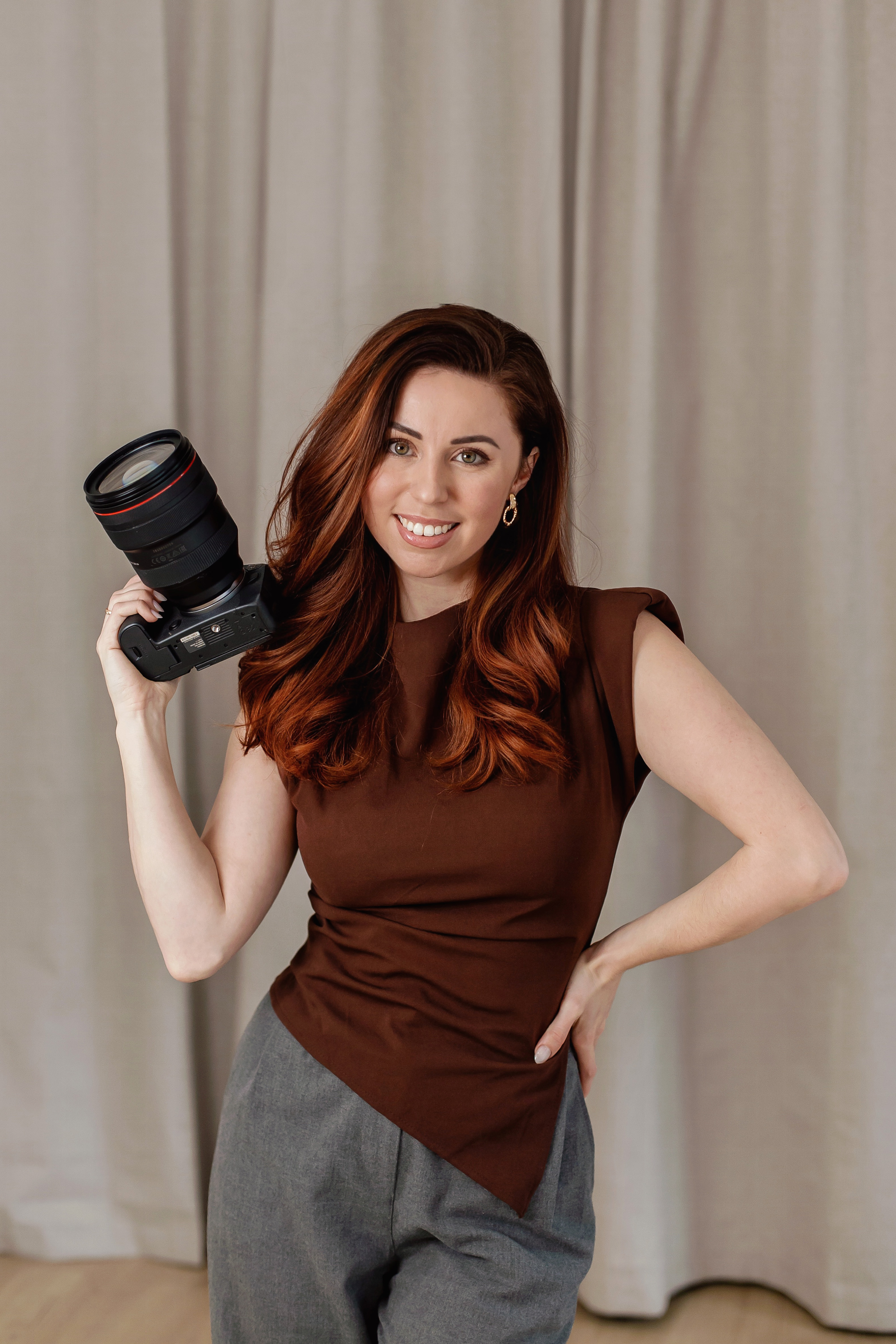
Yana Skakun
Photographer · England
Professional wedding, family and portrait photographer based in England. Passionate about capturing authentic emotions and timeless moments.
About Yana →estate agent brand photography UKestate agent headshot UKproperty agent professional photosRightmove Zoopla agent headshot UKestate agency team photography UKCambridge estate agent photographer
Business Headshots — Corporate Headshot Photography in Cambridge & England
Corporate photography with Yana Skakun covers individual headshots, team portraits, and event documentation — all delivered with the same consistent quality and professional tone. Available in Cambridge and across England for businesses of all sizes. This guide — Brand Photography for Estate Agents: The Visual Identity of a Property Business — is part of the photography journal: practical, experience-based advice drawn from real sessions across England. Whether you arrived searching for estate agent brand photography uk or estate agent headshot uk, the same care and attention shapes every session Yana photographs.
Corporate Headshot Photography sessions are available year-round, with bookings open across Cambridge, Ely, Huntingdon, Peterborough, and further afield — East England, London, the Midlands, and beyond. If you have specific questions about property agent professional photos, mention it in your enquiry. Get in touch through the contact form above to check availability and discuss your session. Enquiries are welcomed from anywhere in the UK.
Frequently Asked Questions
What camera settings should I use for outdoor portraits?+
For outdoor portraits, shoot in aperture priority mode. Use a wide aperture (f/1.8–f/2.8) to blur the background and isolate your subject. Keep ISO as low as possible in good light. In bright conditions, use a neutral density filter or switch to manual to avoid overexposure at wide apertures.
What is the golden hour in photography?+
Golden hour is the period roughly 30–60 minutes after sunrise and before sunset. The sun is low in the sky, producing warm, soft, directional light that flatters skin tones and creates beautiful long shadows. It's widely considered the best natural light for portrait and outdoor photography.
How do you get sharp photos in low light?+
In low light, increase your ISO (accepting some grain), use the widest aperture your lens allows, and slow your shutter speed to the slowest you can hand-hold without camera shake (roughly 1/focal length as a guide). Use image stabilisation if available, and consider a tripod for static subjects.
What is the rule of thirds in photography?+
The rule of thirds divides the frame into a 3×3 grid. Placing your subject on one of the four intersection points — rather than dead centre — creates a more dynamic, visually interesting composition. It's a guideline, not a rule: some of the most powerful images break it deliberately.
How do you edit photos to look professional?+
Professional editing starts with shooting in RAW format. In Lightroom or similar software, correct exposure, white balance, and contrast first. Recover shadow and highlight detail. Apply gentle colour grading for mood. Be conservative with skin retouching — the goal is natural enhancement, not transformation. Consistency across a set of images is what separates professional from amateur editing.
Continue Reading
Related Articles
Business Headshots
Why professional business headshots are worth the investment in 2025
7 min read · Read Article
Business Headshots
The complete corporate headshot guide: What to expect and how to prepare
7 min read · Read Article
Business Headshots
LinkedIn headshot: What actually makes a profile photo work
7 min read · Read Article
Get in Touch
Ready to Book Your Session?
Get in touch to discuss your vision — I'll reply within 24 hours.