Yana Skakun
Family Photography Trends 2027
By Yana Skakun·1 October 2026·6 min read
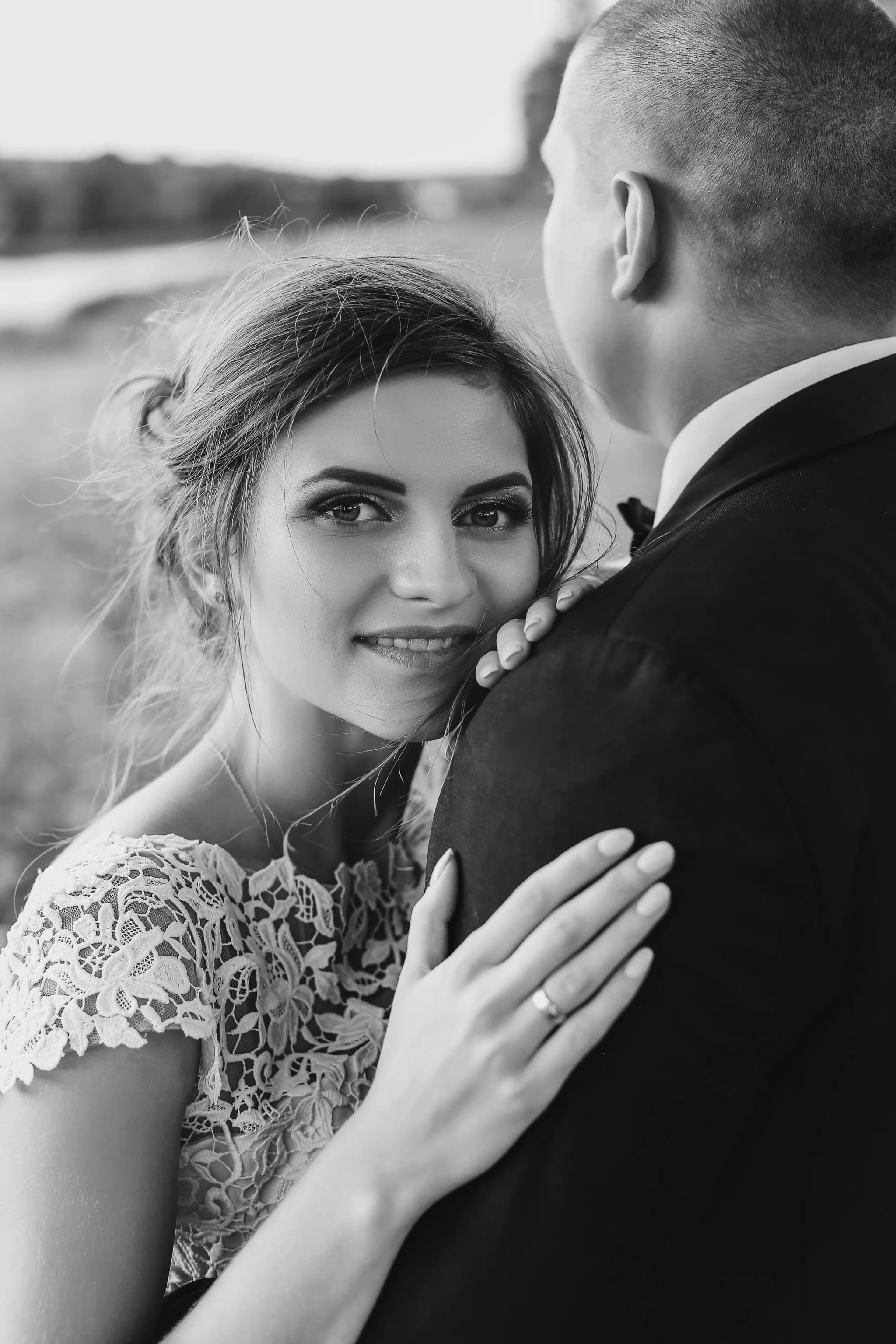
Family photography in 2027 is moving decisively away from the white-backdrop studio and the tightly co-ordinated matching outfits that defined the genre for so long, and toward sessions that feel much more like the families themselves — movement, noise, actual children behaving like children rather than small adults arranged for a portrait. The single most requested style change I've heard from clients over the last three years has been simple and consistent: "don't make it look forced."
Documentary and Lifestyle Sessions
The dominant shift in family photography right now is towards documentary-style sessions: families photographed doing something real, rather than posed against a neutral backdrop. Baking together in the kitchen, walking the dog along a familiar route, reading books on the sofa, the particular chaos of a Saturday morning with everyone half-dressed and nobody quite ready to leave the house. These sessions ask families to simply carry on with something they'd be doing anyway, with a photographer working quietly around the edges of it rather than directing from the centre.
What makes this approach work is that it removes the single biggest source of stiffness in traditional portraits: the awareness of being watched. When a family is genuinely absorbed in an activity, that self-consciousness fades within a few minutes, and the resulting photographs capture something closer to how the family actually looks and behaves together on an ordinary day, rather than how they look when specifically asked to perform togetherness for a camera.
This doesn't mean a documentary session is unplanned or entirely left to chance. Part of my job is still choosing a location, a time of day, and an activity that's likely to produce good images, and gently steering things when needed. The difference from a traditional posed session is that the direction happens through suggestion — "why don't you two race to that tree" — rather than instruction — "stand here and smile." The family is always doing something; they're just rarely aware of being told exactly how to do it.
Movement Over Stillness
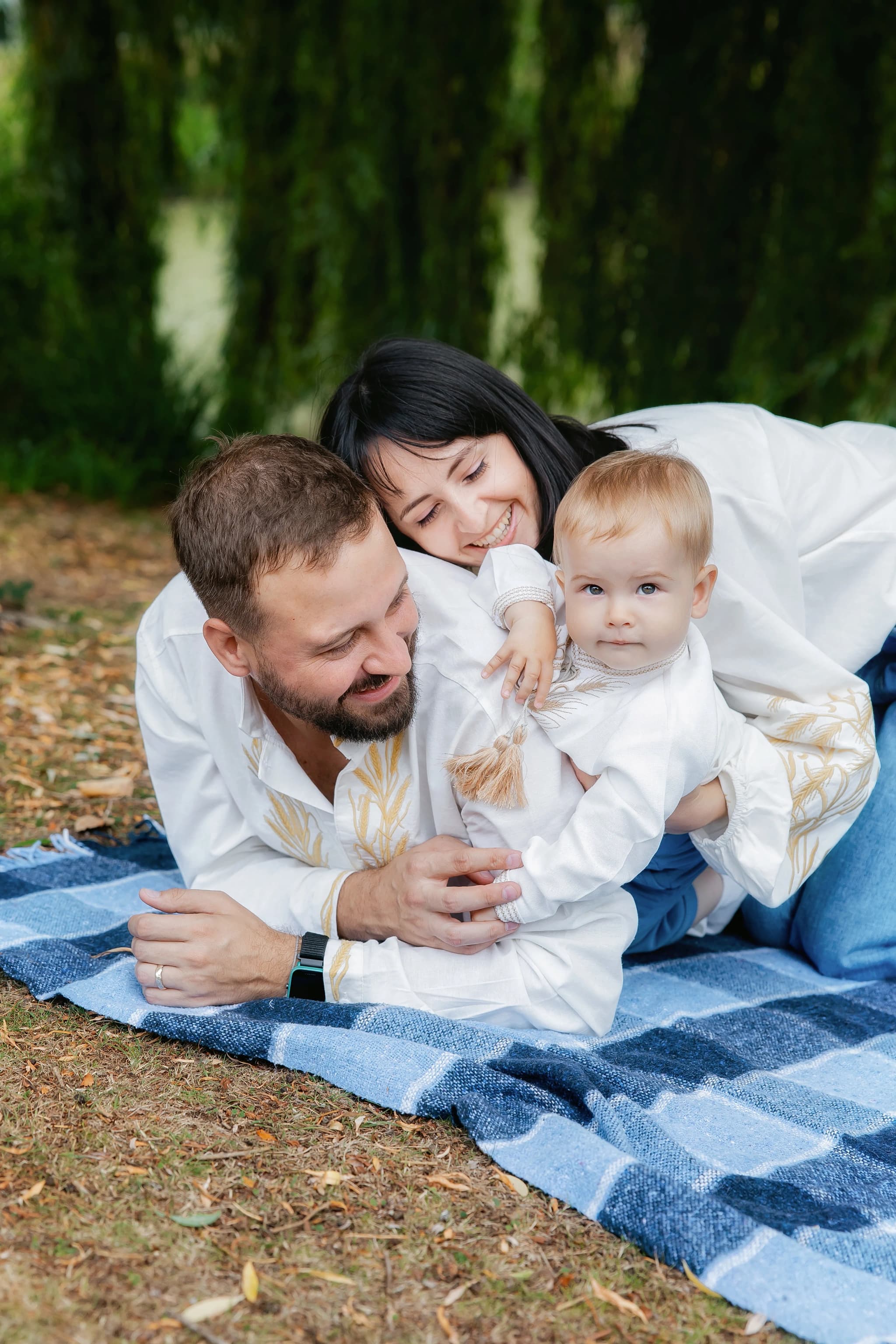
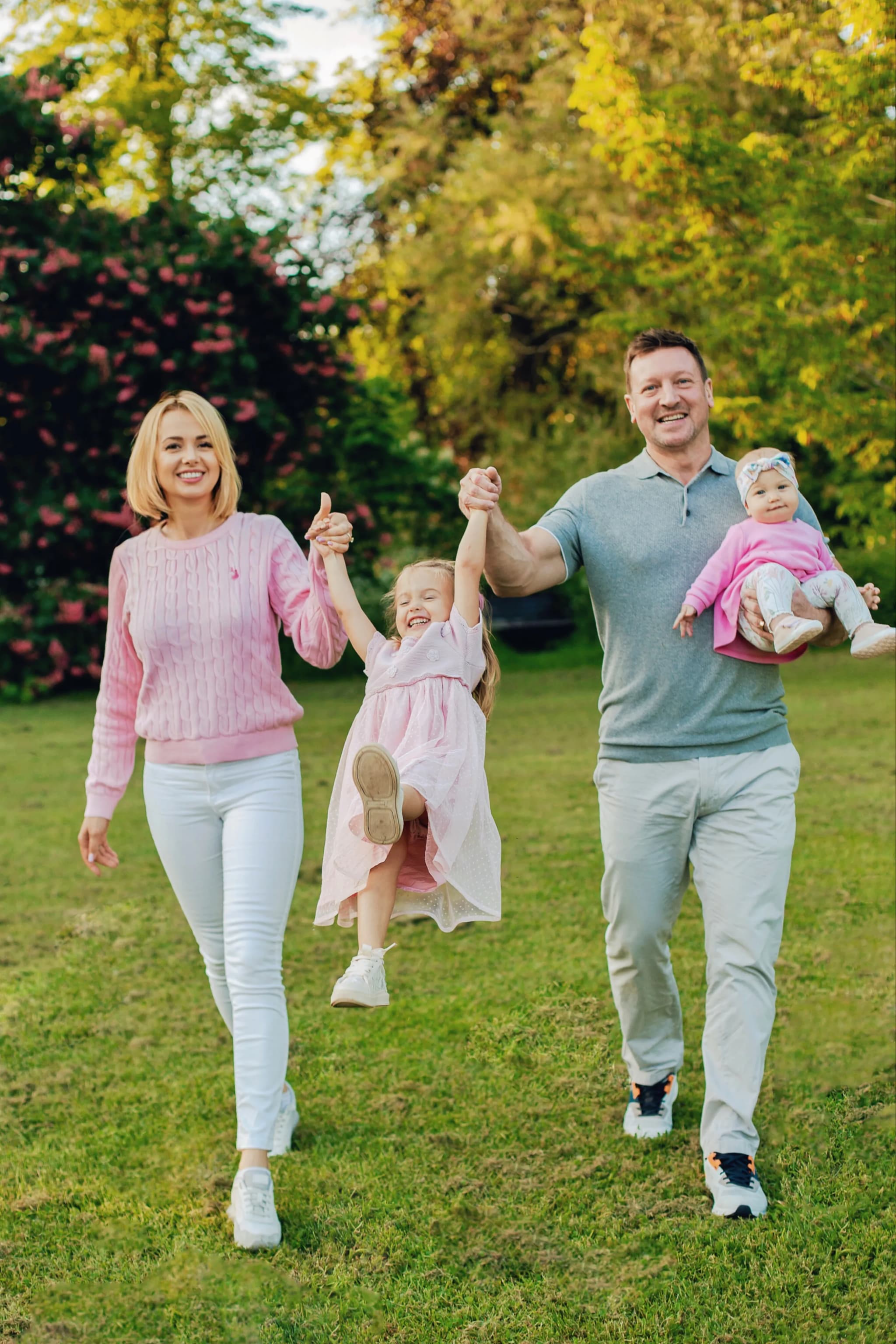
Children caught mid-run, mid-jump, or being thrown into the air by a parent have become far more sought after than children standing still long enough for a shutter to fire cleanly. Improvements in camera autofocus and burst shooting have made this technically far easier to achieve reliably than it was even a few years ago, and client expectations have followed the technology — families now expect and specifically ask for images with genuine motion in them, rather than the perfectly still, perfectly composed portraits that used to be the default request.
This shift also changes how a session is directed on the day. Rather than asking a family to hold a pose, I'm far more likely to suggest an activity with built-in movement — a race to a particular tree, being spun around, jumping off a low wall — and photograph the genuine reactions that movement produces. The resulting images have an energy that a static pose simply cannot replicate, however carefully composed.
Parents have noticed this shift too, and it changes what they ask for at the booking stage. Where a few years ago a typical request was "can you get everyone looking at the camera together," the request I hear far more often now is some version of "can you just capture what they're actually like" — a subtle but important difference in what a family considers a successful photograph.
Outdoor Settings Over the Studio
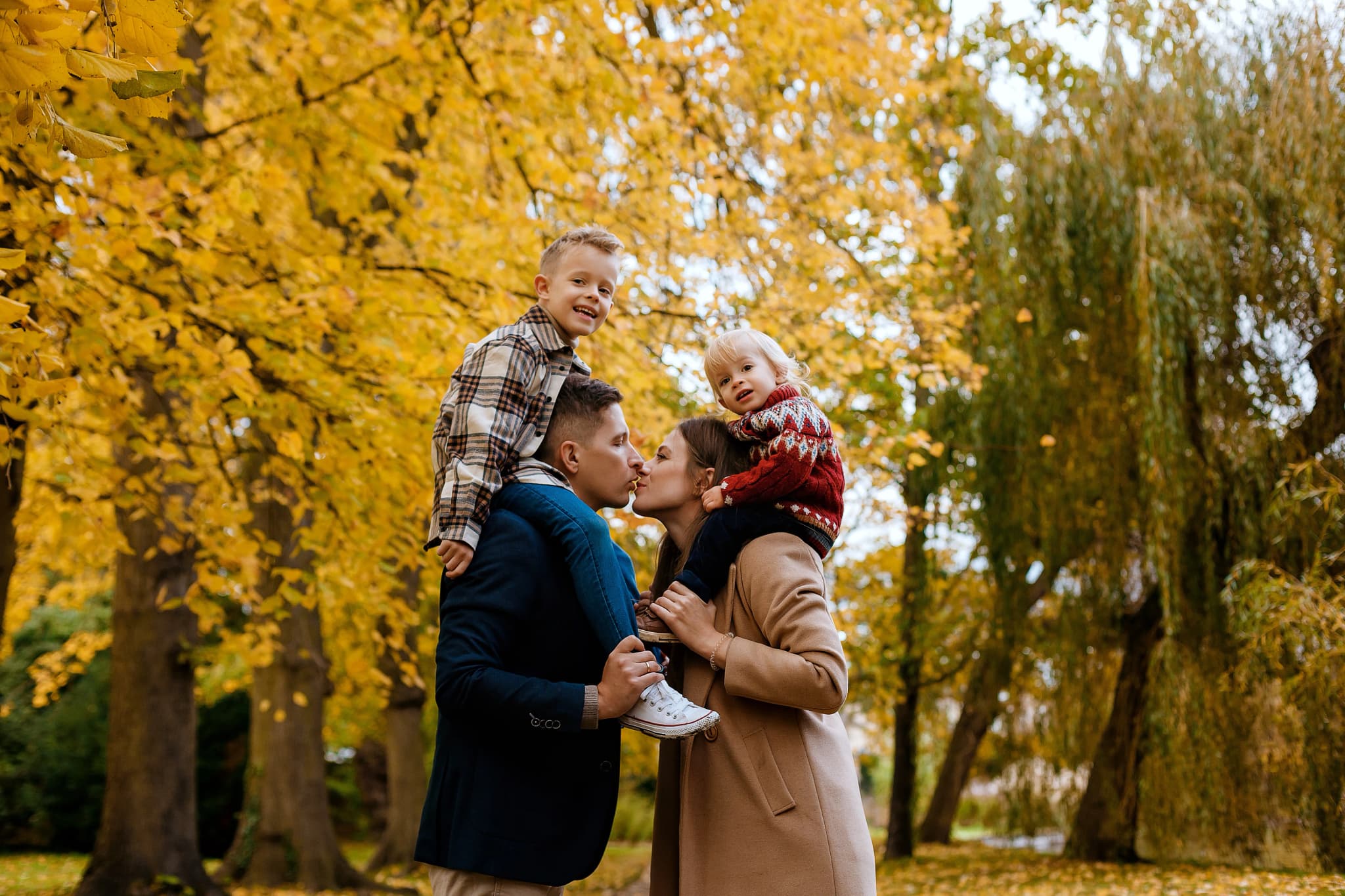
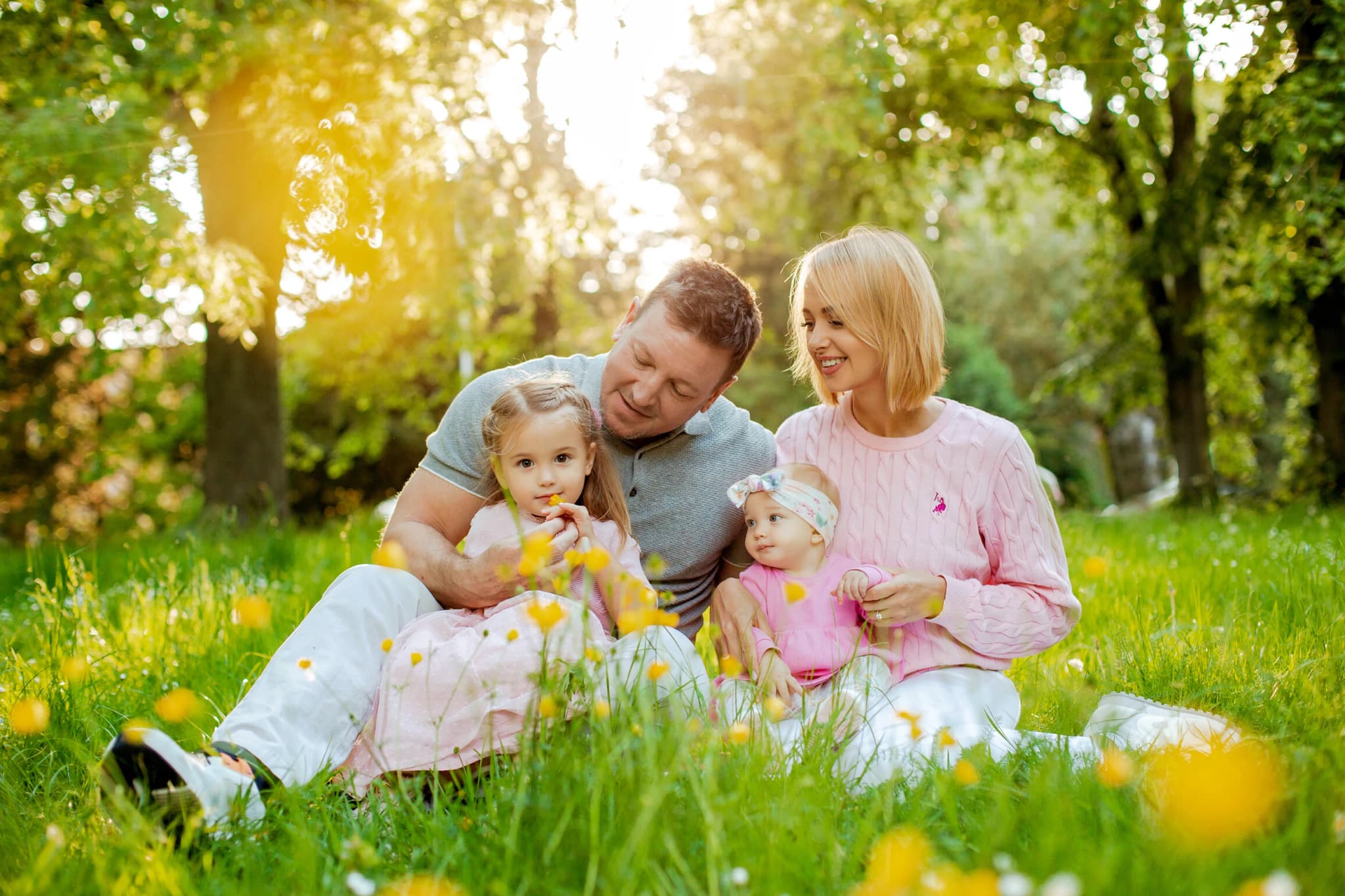
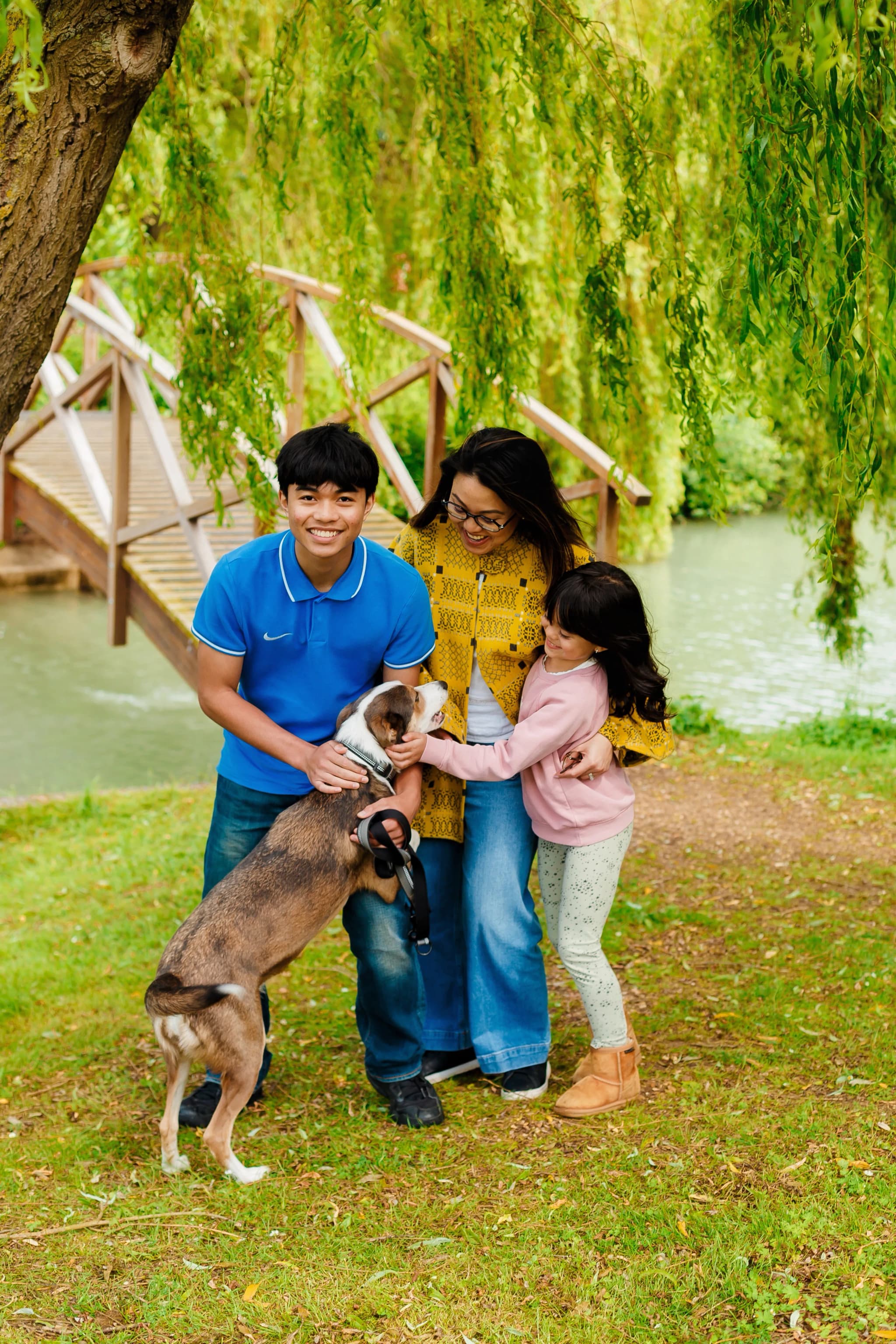
Natural settings — parks, woodland, beaches, or simply a family's own garden — have increasingly replaced the controlled studio environment as the default choice for family sessions. Outdoor light is generally softer and more forgiving than studio lighting, and outdoor spaces give children room to move and explore in a way a studio floor never can, which in turn produces less stiff, less self-conscious reactions throughout the session.
There is also something specific about a family being photographed in a place that means something to them — a local park, a favourite stretch of beach, their own back garden — that a neutral studio backdrop can never provide. The setting becomes part of the story the photographs tell, rather than simply a blank space the family happens to be standing in front of.
A note on how I photograph families
My own sessions have followed this same shift over the years: outdoor, documentary in feel, built around genuine movement and real locations rather than posed studio portraits. If that approach sounds like what you're after, I'd love to talk it through with you.
Get in touch about a sessionWeather has always been a consideration for outdoor sessions, but families are increasingly comfortable embracing rather than avoiding it. Overcast skies, light drizzle, even a properly grey British afternoon are no longer automatic reasons to postpone — soft, even light on an overcast day is often more flattering than harsh midday sun, and a family genuinely happy to be photographed in slightly imperfect weather usually produces warmer, more relaxed images than one stiffly waiting for the "perfect" conditions that rarely arrive on schedule anyway.
Multi-Generational Sessions
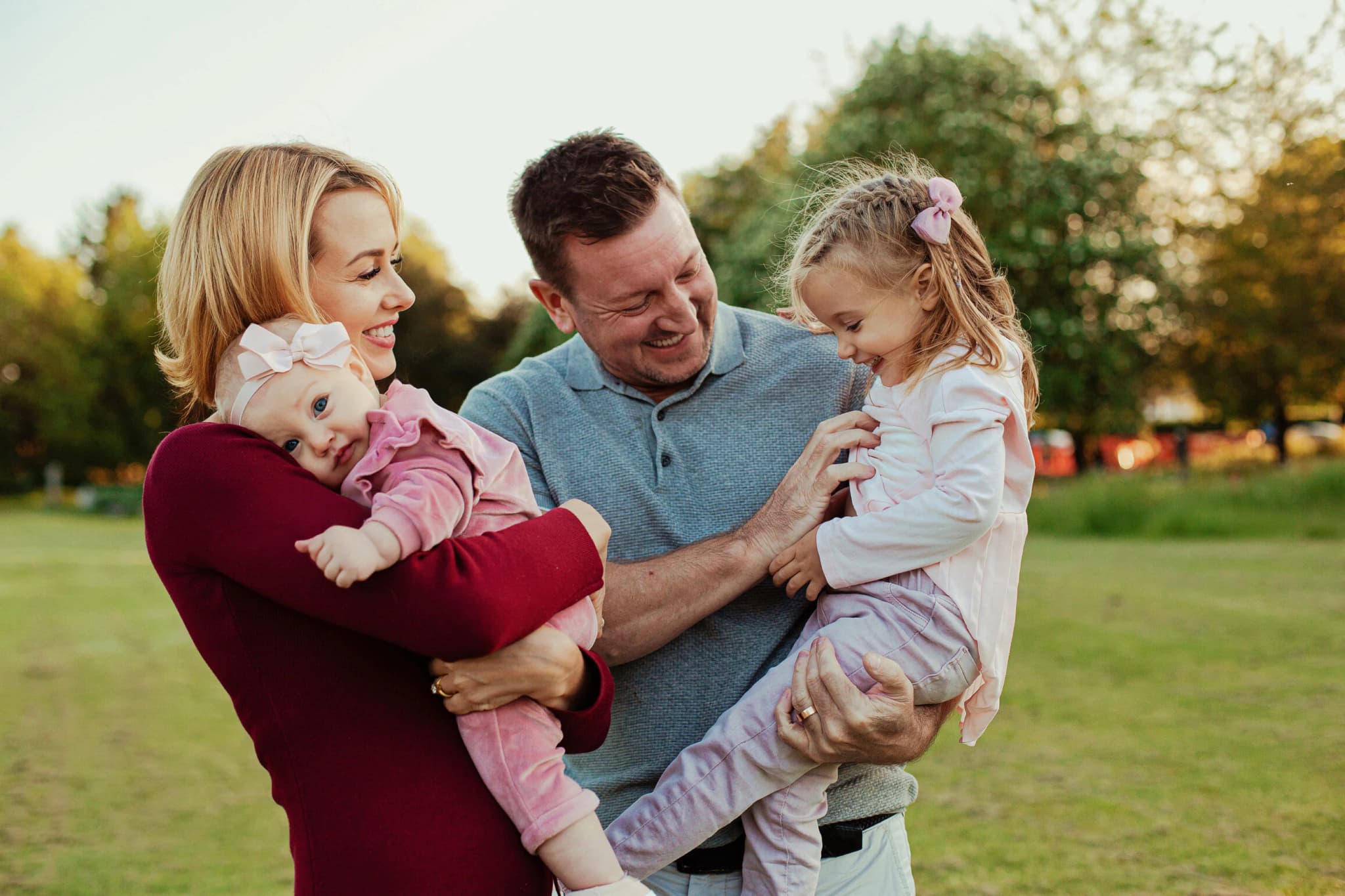
Grandparents are being included far more deliberately than they were even a few years ago. There is a growing, quite candid awareness among families that the window for photographing grandparents alongside young grandchildren is genuinely finite, and more families are acting on that awareness rather than putting the session off for "next year." Multi-generational sessions bring their own logistical considerations — older relatives generally need a slower pace and more frequent rest, and mobility can shape where a session can practically take place — but the resulting images, spanning three generations in a single frame, are consistently among the most valued a family will ever own.
Planning these sessions well means building in more time than a standard family shoot, choosing a location with good level access and somewhere to sit, and being honest in advance about any mobility considerations so the session can be shaped around them rather than working around them awkwardly on the day.
There's also been a shift in how these sessions are composed: rather than a single formal group shot with everyone lined up by height, families increasingly want a mix of the whole group together, smaller pairings — a grandparent with just one grandchild, siblings together without parents — and candid moments of interaction between specific family members that wouldn't exist in a single posed arrangement.
Shorter Sessions and Real Locations
Sessions running thirty to forty minutes are consistently outperforming the traditional two-hour session for families with young children, in the sense that they produce better images with far less exhaustion and far fewer meltdowns along the way. Most of the strongest images from any session tend to come from the first twenty minutes, before tiredness and diminishing patience set in, so a shorter, more focused session often delivers a stronger final gallery than a longer one that runs well past the point everyone is enjoying themselves.
Alongside this, there's a clear move towards real, meaningful locations over generically "nice" backgrounds: the playground a family visits every week, the local park they know well, the beach they holiday at every summer. These places carry meaning that a beautiful but unfamiliar backdrop never can, and families increasingly recognise that the setting itself is part of what makes the photographs feel personal rather than interchangeable with anyone else's.
Editing and delivery have shifted alongside all of this, too. Families increasingly want a slightly larger, less tightly curated final gallery than the traditional small set of perfect, heavily retouched images — a reflection of wanting the full, honest story of the session rather than only its single best, most polished moment.
This preference for real locations over generic beauty extends to how families think about wardrobe too. The heavily co-ordinated, colour-matched outfits that once defined a "professional" family photograph are giving way to clothing that actually reflects what a family wears day to day — loosely co-ordinated rather than matched, comfortable rather than formal, and rarely brand new. The resulting photographs look less like a staged event and more like a genuine record of a specific family at a specific point in their lives, which is, in the end, exactly what most people are actually hoping to end up with.
None of these shifts are really about technique or fashion — they're about families wanting photographs that look and feel like their actual lives, imperfections included, rather than a polished performance of family life staged for the camera. If that's the kind of session you're after, get in touch and we can talk about what it would look like for your family.
Yana Skakun
Photographer · England
Professional wedding, family and portrait photographer based in England. Passionate about capturing authentic emotions and timeless moments.
About Yana →family photography trends 20272027 family portrait stylesfamily photography forecast 2027family photos 2027 uk
Family Tips — Family Photography in Cambridge & England
Yana Skakun offers natural, relaxed family photography sessions across Cambridge, Cambridgeshire, and the wider East of England. Sessions take place outdoors — in parks, woodland, and countryside — or at your family home, wherever everyone feels most at ease. This guide — Family Photography Trends 2027 — is part of the photography journal: practical, experience-based advice drawn from real sessions across England. Whether you arrived searching for family photography trends 2027 or 2027 family portrait styles, the same care and attention shapes every session Yana photographs.
Family Photography sessions are available year-round, with bookings open across Cambridge, Ely, Huntingdon, Peterborough, and further afield — East England, London, the Midlands, and beyond. If you have specific questions about family photography forecast 2027, mention it in your enquiry. Get in touch through the contact form above to check availability and discuss your session. Enquiries are welcomed from anywhere in the UK.
Frequently Asked Questions
How do you prepare children for a family photoshoot?+
Keep it low-key beforehand — don't over-explain or build it up too much. Make sure children are fed and rested. Bring a snack and a favourite toy or comfort item. Let them warm up at their own pace rather than forcing poses from the start. The best family photos happen when children forget there's a camera.
What should a family wear for photos?+
Choose a colour palette — 2–3 complementary tones — rather than identical outfits. Earthy neutrals, blues and greens, or cream and blush all work beautifully outdoors. Avoid large logos, neon colours, and very small patterns that create visual noise. Dress for the location and season, and make sure everyone is comfortable.
When is the best time for an outdoor family photoshoot?+
The golden hour — the first hour after sunrise or the last hour before sunset — gives the softest, warmest light. Overcast days are also excellent: the cloud acts as a natural diffuser, eliminating harsh shadows. Midday summer sun is the most challenging light to shoot in.
How long does a family photography session take?+
Most family sessions last 45–75 minutes. Mini sessions (30–40 minutes) work well for smaller families and toddlers who have shorter attention spans. Larger extended family groups may need 90 minutes to cover everyone comfortably.
How many photos will I get from a family photoshoot?+
A standard 60-minute family session typically produces 30–60 edited images delivered in a private online gallery. Mini sessions deliver 15–25 images. All images are colour-corrected, naturally edited, and ready for printing.
Continue Reading
Related Articles

Family Tips
Blended Family Photography: A Sensitive Guide to Step-Families, Co-Parenting & Group Portraits
11 min read · Read Article
Family Tips
Baby Milestone Photography: Capturing Every Stage of the First Year
10 min read · Read Article
Family Tips
Maternity Photography in England: When to Book, What to Wear & Where to Shoot
11 min read · Read Article
Get in Touch
Ready to Book Your Session?
Get in touch to discuss your vision — I'll reply within 24 hours.