Yana Skakun

Gymnastics Photography: Capturing Grace, Strength & Mid-Air Moments
By Yana Skakun·10 July 2026·8 min read
Gymnastics is one of the hardest sports to photograph well, and one of the most rewarding when it comes together. A single routine contains dozens of distinct shapes — a handstand held for a fraction of a second longer than expected, a twist mid-air where the body is a blur to the naked eye but frozen and readable through a fast shutter, a landing where every muscle in the legs is visibly working to stick it. Unlike a portrait session, where I am building the moment together with the person in front of the camera, gymnastics photography is entirely reactive. The moment exists whether or not I am ready for it, and the job is to be ready anyway. This is action and competition photography in its purest form, and it draws on a different set of skills than the portrait, wedding, and family work that makes up most of what I do — but the underlying instinct for timing, light, and genuine expression is the same one I bring to every session.
Why Gymnastics Deserves Serious Photography
Gymnasts train for years to produce movements that last seconds. A beam routine is over in ninety seconds; a vault run and landing is over in under five. The amount of strength, flexibility, and precision compressed into that short window rarely gets the visual record it deserves, because most of what happens in a gym or competition hall is witnessed only by parents in the stands, coaches with a stopwatch, and judges scoring technical execution rather than capturing the moment for its own sake. A well-timed photograph does something none of those vantage points can: it isolates a single frame from a routine that otherwise exists only in memory, and lets you actually see the shape a body makes at the top of a leap, the pointed toes and straight line through a handstand, the concentration on a young athlete's face in the split second before a dismount.
For families, these images become a genuine record of a childhood spent in the gym — the hours of conditioning, the setbacks, the competitions, the progression from a wobbly first cartwheel to a competition-ready routine. For gymnasts themselves, particularly older athletes building a portfolio for club promotion, scholarship applications, or simply their own record of achievement, strong action images carry real value beyond sentiment. I approach gymnastics photography with the same care I bring to any commission, whether that is a wedding, a set of professional headshots, or a family portrait session: the goal is always an honest, well-composed image that actually looks like the person and the moment, not a generic sports snapshot.
What to Expect During a Gymnastics Session
Gymnastics photography generally falls into two categories, and they require quite different approaches. The first is competition or display coverage, where I am working from the sidelines or a designated photography area, shooting routines as they happen with no control over timing, lighting, or repetition. The second is a dedicated studio or gym session, arranged specifically for photography, where a gymnast performs selected skills on request and I can reposition, adjust lighting, and take a second attempt if the first did not land cleanly.
For competition coverage, I arrive early enough to understand the layout of the hall, identify where the light is strongest and most even, and work out sightlines to each apparatus before the first athlete takes the floor. Gym lighting is frequently a genuine technical challenge — a mixture of overhead fluorescent and sports hall LED that can shift colour temperature or flicker in a way that is invisible to the eye but very visible in a fast burst of frames. I shoot in continuous high-speed mode through key moments, using a fast shutter speed to freeze motion cleanly rather than relying on blur to suggest movement, which tends to read as a mistake rather than an artistic choice in this context.
For a dedicated session, whether in a gym hired for an hour outside normal training or in a suitable indoor space, I work with the gymnast and, where relevant, their coach to identify the two or three skills that best represent their current level and that they can repeat reliably and safely several times. We are not asking anyone to attempt something beyond their training level for the sake of a photograph — safety and the athlete's own judgement always come first, and I would rather have a clean image of a skill performed well within someone's ability than push for something riskier.
How to Prepare for a Session
The single most useful thing a gymnast or parent can do ahead of a session is to think in advance about which skills to feature. A list of three to five specific elements — a particular leap, a handstand on beam, a specific vault, a tumbling pass on floor — gives structure to the time available and means we are not trying to capture everything at once. Skills that hold a clear, readable shape at their peak tend to photograph better than skills defined mostly by speed or rotation; a split leap or a scale reads instantly in a still image, where a fast series of connected tumbling elements can be harder to isolate into a single compelling frame.
Leotards and kit should be freshly laundered and free of obvious wear, and it is worth checking grips, wrist supports, and hair are exactly as they would be for competition if that is the look being aimed for. I would rather photograph a gymnast looking like themselves, properly warmed up and confident, than in a state that does not reflect how they actually train or compete. A short warm-up before we start shooting matters more for photography than people often expect — a gymnast who is not warmed up will not hit full extension or full height, and that shows immediately in the images.
For competition coverage specifically, checking with the venue and the organising club about photography permissions ahead of time avoids any awkwardness on the day. Some competitions restrict flash photography entirely, which affects how I set exposure and shutter speed, and some require photographers to be accredited or positioned only in specific areas. Sorting this in advance, rather than discovering it once the first routine is underway, makes for much smoother coverage.
The Technical Side: Freezing Motion Without Losing Life
Freezing a gymnast mid-air convincingly requires a genuinely fast shutter speed, generally somewhere in the region of 1/1000 of a second or faster for the quickest elements like tumbling and vault, dropping slightly for slower, more sustained positions like a held handstand or a beam scale. Getting a fast enough shutter without sacrificing image quality means working with a wide aperture and, in most indoor gym lighting, a higher ISO than would ever be needed outdoors. Modern cameras handle high ISO far better than they did even a few years ago, and a slightly noisier image that is sharp and well-timed will always beat a clean image that is soft from motion blur.
Timing is the part that cannot be taught from a manual, only built through repetition and familiarity with the sport. Every skill has an apex — the top of a leap, the peak height of a vault, the moment of full extension in a handstand — and that apex is where the body is briefly, almost imperceptibly, at its stillest point even mid-flight. Anticipating that split second, rather than reacting to it after the fact, is what separates an image that captures the shape of a skill from one that catches the athlete already falling out of it. This comes from watching a huge amount of gymnastics, understanding the rhythm of each apparatus, and shooting in continuous bursts through the peak rather than trying to time a single perfect frame.
Framing matters just as much as shutter speed. Leaving space in the direction a gymnast is moving or facing, keeping the horizon level despite subjects who are frequently upside down or rotating, and choosing an angle low enough to emphasise height on leaps and vaults all shape how dynamic the final image feels. I try to vary angles through a session rather than shooting everything from the same spot, because a slightly different perspective on a familiar skill often produces the most striking image of the set.
Planning a gymnastics shoot or competition coverage
Whether you need coverage of a club competition, a dedicated session to build a portfolio for trials or scholarship applications, or simply a set of strong images to mark a season of hard training, I am happy to talk through timings, venue access, and the specific skills you would like featured. Based in Cambridge and available across the UK for competition and gym-based sessions.
Get in touchCapturing Personality, Not Just Skill
The strongest gymnastics photographs are not always the highest leap or the most technically difficult skill — they are often the images that also carry some sense of the athlete as a person. The focus and calm on a face before a beam routine, the relief and joy of a coach's hug after a clean landing, the quiet concentration of chalking hands before vault, the camaraderie of a team cheering each other on from the sidelines. I try to work these moments into every session and every competition I cover, because a portfolio made up entirely of mid-air action, however technically strong, misses the emotional context that makes gymnastics photography actually meaningful to the people in it. This is the same instinct that shapes how I approach family portraits and wedding photography — the posed and the technically perfect moment matters, but so does the unguarded one either side of it.
For younger gymnasts especially, parents often find that the images they treasure most years later are not the competition podium shots but the candid ones — stretching before a session, laughing with teammates, the particular expression of a child who has just landed a skill they have been working on for months. I keep an eye out for these throughout a session or competition day rather than treating them as an afterthought to the action shots.
Frequently Asked Questions
Do you need to know gymnastics to photograph it well? A working understanding of the sport genuinely helps. Knowing that a tumbling pass typically ends in a particular landing position, or that a beam routine has predictable transition points, means I can anticipate rather than simply react. I spend time before any competition or session understanding the routines or skills being performed.
Can you photograph recreational gymnasts, not just competitive ones? Absolutely. Some of the most enjoyable sessions I have done have been with recreational gymnasts who train for the love of it rather than for competition placings. The technical approach is identical — strong light, fast shutter, good timing — regardless of the level being photographed.
How many images do you typically deliver? This depends heavily on the length of the session or competition and the number of athletes involved, but a dedicated individual session usually produces a curated set of twenty to forty final edited images, covering the requested skills plus candid and warm-up moments. Competition coverage varies with the number of routines and athletes on the day.
What about photographing my child alongside their sport, more generally? If you are also looking for a more traditional family portrait or a set of individual portraits away from the gym, that is very much within the kind of work I do day to day — you can see more about that on the about page or get a sense of pricing for different types of sessions via the pricing page.
Gymnastics photography sits a little outside the wedding and portrait work that forms the core of what I do as Yana Skakun Photography, but the underlying discipline is the same: understanding a moment well enough to be ready for it, and treating the people in front of the camera — whether a bride on her wedding day, a family at a portrait session, or a young gymnast mid-vault — with the same seriousness and care. I am based in Cambridge and available for sessions and competition coverage across the UK. If you have a competition coming up or would like to arrange a dedicated gymnastics session, get in touch and we can talk through what would work best.
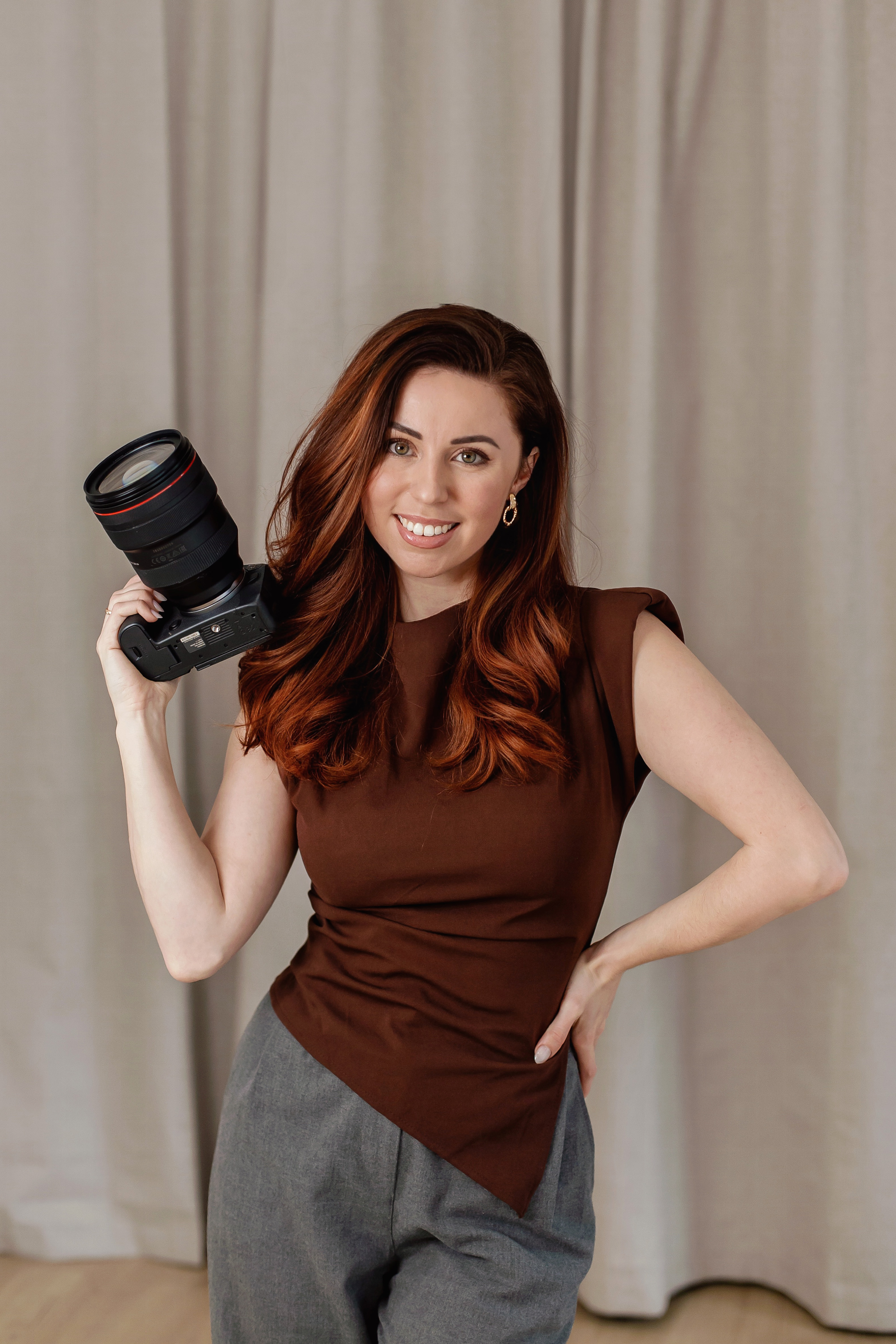
Yana Skakun
Photographer · England
Professional wedding, family and portrait photographer based in England. Passionate about capturing authentic emotions and timeless moments.
About Yana →gymnastics photographyaction competition photographysports photography UKgym session photography Cambridgefreezing motion photographyyouth sports portraits
Photography Tips — Professional Photography in Cambridge & England
Yana Skakun is a professional photographer based in Cambridge, specialising in wedding, family, and portrait photography across England. Every session is personal — planned around your story, your people, and the moments that matter most. This guide — Gymnastics Photography: Capturing Grace, Strength & Mid-Air Moments — is part of the photography journal: practical, experience-based advice drawn from real sessions across England. Whether you arrived searching for gymnastics photography or action competition photography, the same care and attention shapes every session Yana photographs.
Professional Photography sessions are available year-round, with bookings open across Cambridge, Ely, Huntingdon, Peterborough, and further afield — East England, London, the Midlands, and beyond. If you have specific questions about sports photography uk, mention it in your enquiry. Get in touch through the contact form above to check availability and discuss your session. Enquiries are welcomed from anywhere in the UK.
Frequently Asked Questions
What camera settings should I use for outdoor portraits?+
For outdoor portraits, shoot in aperture priority mode. Use a wide aperture (f/1.8–f/2.8) to blur the background and isolate your subject. Keep ISO as low as possible in good light. In bright conditions, use a neutral density filter or switch to manual to avoid overexposure at wide apertures.
What is the golden hour in photography?+
Golden hour is the period roughly 30–60 minutes after sunrise and before sunset. The sun is low in the sky, producing warm, soft, directional light that flatters skin tones and creates beautiful long shadows. It's widely considered the best natural light for portrait and outdoor photography.
How do you get sharp photos in low light?+
In low light, increase your ISO (accepting some grain), use the widest aperture your lens allows, and slow your shutter speed to the slowest you can hand-hold without camera shake (roughly 1/focal length as a guide). Use image stabilisation if available, and consider a tripod for static subjects.
What is the rule of thirds in photography?+
The rule of thirds divides the frame into a 3×3 grid. Placing your subject on one of the four intersection points — rather than dead centre — creates a more dynamic, visually interesting composition. It's a guideline, not a rule: some of the most powerful images break it deliberately.
How do you edit photos to look professional?+
Professional editing starts with shooting in RAW format. In Lightroom or similar software, correct exposure, white balance, and contrast first. Recover shadow and highlight detail. Apply gentle colour grading for mood. Be conservative with skin retouching — the goal is natural enhancement, not transformation. Consistency across a set of images is what separates professional from amateur editing.
Continue Reading
Related Articles

Photography Tips
Photography Gift Vouchers: The Most Personal Present You Can Give
5 min read · Read Article
Photography Tips
Photo Books vs Photo Albums: What Is the Difference and Which Is Better?
5 min read · Read Article
Photography Tips
Photo Gift Ideas: Turning Professional Images into Meaningful Presents
5 min read · Read Article
Get in Touch
Ready to Book Your Session?
Get in touch to discuss your vision — I'll reply within 24 hours.