Yana Skakun

Hair Salon & Beauty Business Photography: Portfolio, Team & Treatment Room Shots
By Yana Skakun·10 July 2026·8 min read
Walk into any successful hair salon or beauty studio and the first thing you notice, before a single treatment begins, is the atmosphere. The lighting, the tidiness of the styling stations, the way the team greets a client who has just walked in — all of it is designed to make you feel like you are in good hands. The trouble is that almost none of that atmosphere survives into a phone photo taken quickly between clients on a Tuesday afternoon. A dim, cluttered snapshot on Instagram or Google Business Profile undersells a salon that, in person, feels polished and professional. Photography is the bridge between the real experience of your business and the impression a stranger forms before they have ever booked an appointment.
I work with hair salons, barbershops, beauty studios, nail bars, and skin clinics across Cambridge and further afield, and the brief is nearly always the same underneath the surface details: help clients see what it would actually be like to walk through the door. That means portfolio-quality images of finished hair and beauty work, genuine portraits of the team who will be doing the treatments, and photographs of the space itself — the chairs, the treatment rooms, the reception desk — that communicate cleanliness, care, and a sense of style consistent with the brand.
Why Salons and Beauty Businesses Need Professional Photography
Hair and beauty is a trust-based, appearance-based industry in a way that few other small businesses are. A client choosing a new hairdresser, a new lash technician, or a new skin therapist is making a decision almost entirely on visual evidence, because the result of the service is itself visual. If your online presence is a mix of blurry before-and-afters shot in bad salon lighting with a phone held at an awkward angle, you are asking potential clients to trust their appearance to a business that cannot yet show its own work clearly.
The businesses that win new clients consistently are the ones whose photography does the selling before the enquiry ever comes in. A scroll through a well-photographed Instagram grid or a Google Business Profile with a genuinely appealing set of images does more to build confidence than almost any amount of text describing your experience or qualifications. This is not about vanity; it is about giving people the information they actually use to make a booking decision, presented clearly and attractively.
There is also a team dimension that is easy to underestimate. Clients increasingly want to know who will be doing their colour or their facial before they book, and a page of genuine, warm portraits of your stylists and therapists does far more to build that pre-appointment rapport than a stock photo or, worse, no photo at all. It also matters for recruitment: stylists and therapists considering joining your team look at how you present your existing staff, and a business that clearly values and photographs its people well signals that it is a good place to work.
What to Expect During a Salon or Beauty Business Shoot
A typical shoot for a salon or beauty business runs somewhere between two and four hours, depending on how much ground we need to cover. I generally structure the session in three parts: space and interior photography first, while the salon is quiet or before opening; team portraits next, capturing each stylist or therapist individually and in small groups; and finally treatment and portfolio-style images, either working with real clients who are booked in on the day or with models arranged specifically for the shoot.
Interior photography works best in the quiet period before the salon opens or during a genuinely slow patch, because empty chairs and clear surfaces photograph far better than a busy salon floor with coats, bags, and half-finished cups of coffee in every frame. I photograph the space from multiple angles — the reception and waiting area, the styling stations, the wash basins, treatment rooms, retail displays, and any distinctive design features that make your salon recognisably yours rather than generic. Good interior photography also does quiet, useful work beyond marketing: it gives new clients a sense of what to expect, which reduces first-visit anxiety, something that matters a great deal in beauty treatments where people are trusting a stranger with a scalpel or a wax strip.
Team portraits are photographed against a considered background within your own space, using the salon's actual lighting supplemented where needed, so the images look consistent with each other and clearly belong to your business rather than looking like they were shot in a studio somewhere else entirely. I typically photograph each team member with a genuine expression rather than a forced grin — a few frames of natural conversation almost always produce a better result than "say cheese" ever does. This is very much the same philosophy I bring to wedding photography, where authentic moments consistently outperform posed ones.
The portfolio and treatment images are usually the heart of the shoot for a hair salon in particular. This might mean photographing finished colour and cutting work on real clients as they leave their appointment, capturing hands-in-motion shots of a stylist working, or arranging a dedicated portfolio session with a model specifically to showcase a signature cut, colour technique, or beauty treatment without the time pressure of a normal appointment.
Working around a live, working salon
I know that closing your salon for a full day of photography is rarely realistic, and it usually is not necessary. Most shoots are planned around your existing schedule — interiors before opening or during a natural lull, team portraits taken in short individual slots between clients, and portfolio work built around appointments you already have booked in. The goal is a full, useful set of images with as little disruption to a normal working day as possible.
Get in touchPortfolio Shots: Showing the Work Itself
For hairdressers and colourists, the finished result is the product, and photographing it well is a genuine skill distinct from portrait photography. Hair needs even, flattering light that shows texture and colour accurately without harsh shadows or colour casts that misrepresent the actual shade achieved. I pay close attention to white balance in particular, because a client browsing your portfolio for balayage or a specific tone needs to trust that the colour in the photograph is genuinely close to what they will get, not warmed or cooled by inconsistent lighting.
Before-and-after pairs are one of the most persuasive formats in the industry, and they only work if both images are shot with consistent lighting, angle, and framing. I plan these carefully at the start of a session — noting the position, distance, and light setup for the "before" shot so the "after" can be replicated exactly once the transformation is complete. A mismatched before-and-after, where the lighting or angle has shifted between the two images, undermines the credibility of the result even when the actual work is excellent.
For beauty treatments — brows, lashes, skin, nails — close, detailed macro-style images matter enormously, because much of the value of the work is in fine detail that a wider shot simply cannot show. I bring dedicated close-up lenses and additional lighting for exactly this purpose, because salon ambient lighting, however pleasant for clients, is rarely strong or directional enough on its own to capture the crispness that detail shots need.
Preparing Your Salon and Team for the Shoot
A little preparation makes a disproportionate difference to the final images. On the practical side, a genuine tidy of the space the day before — clearing personal bags and coats from styling stations, wiping down mirrors, straightening product displays, and making sure bins and cables are out of frame — saves a great deal of editing time later and lets the photography focus on flattering the space rather than fixing it. If you have branded products, robes, capes, or signage, having those visible and neatly arranged gives the images a stronger sense of identity.
For team portraits, I ask staff to wear whatever they would normally wear to work rather than something unusually formal, since the goal is authenticity, not a costume version of themselves. A little extra attention to hair and makeup on the day is sensible — it is, after all, an industry where people notice these things — but overdone glamour photography tends to look disconnected from the actual working environment and can undermine trust rather than build it.
If real clients will be photographed as part of portfolio or before-and-after work, it is worth briefing them in advance and having a simple model release ready to sign, particularly if the images will be used in paid advertising as well as organic social media and your website. Most clients are genuinely happy to be photographed showing off a great new look, but it should always be asked for clearly rather than assumed.
Using the Images Across Your Marketing
A single well-planned shoot should give you enough material to cover your website, Google Business Profile, Instagram and Facebook, printed price lists or menus, and any local advertising you run, without needing to repeat the exercise every few months. I deliver images sized appropriately for each of these uses — full resolution for print, web-optimised versions for your site, and square or vertical crops ready for social media — so nothing needs additional editing before it goes live.
Google Business Profile in particular rewards genuine, frequently updated photography, and salons with a strong, current set of images consistently perform better in local search results than those relying on old or generic photos. Team portraits humanise your profile for anyone comparing several nearby salons; interior shots reduce uncertainty for first-time visitors; and portfolio images are, quite simply, the evidence that persuades someone to book.
It is worth thinking about your image library the way you would think about your treatment menu — something that benefits from periodic refreshing rather than being set once and left. A new refurbishment, a new team member, a seasonal colour trend, or a new treatment you have started offering are all good reasons to schedule a shorter top-up session rather than waiting years between full shoots.
Common Questions From Salon and Beauty Business Owners
How many images will I actually get? This depends on the length and scope of the shoot, but a typical half-day session covering interiors, team, and portfolio work generally produces somewhere between fifty and one hundred and fifty final edited images, giving you a genuinely useful library rather than a handful of photos.
Do you shoot video as well as stills? Short-form video content works well alongside photography for salons, and I can capture simple behind-the-scenes clips and reels-style footage during the same session if that is useful for your social media strategy — it is worth discussing at the enquiry stage so time can be allocated for it.
What if my salon is quite small or doesn't have much natural light? This is extremely common and not a barrier. I bring portable lighting equipment specifically for spaces where ambient light is limited, and smaller salons often photograph beautifully once thoughtfully lit, since a compact, well-designed space can look intimate and inviting rather than cramped.
Can I book a shoot with just my team, without interiors or portfolio work? Yes — many salons book a focused team portrait session on its own, particularly after a new hire or a rebrand, and add interior or portfolio photography as a separate session later. Sessions can be scoped to whatever combination is most useful for you right now, and pricing is discussed and confirmed before booking based on that scope.
A hair salon or beauty business succeeds on the strength of its work and the trust of its clients, and photography is one of the most direct ways to communicate both before anyone has set foot through the door. I am Yana Skakun, a Cambridge-based photographer working with salons, barbershops, and beauty businesses across the city and UK-wide, and I would be glad to talk through what a shoot could look like for your business. You can find more about how I work on the about page, browse general pricing information, or simply get in touch to discuss your salon or beauty studio directly.
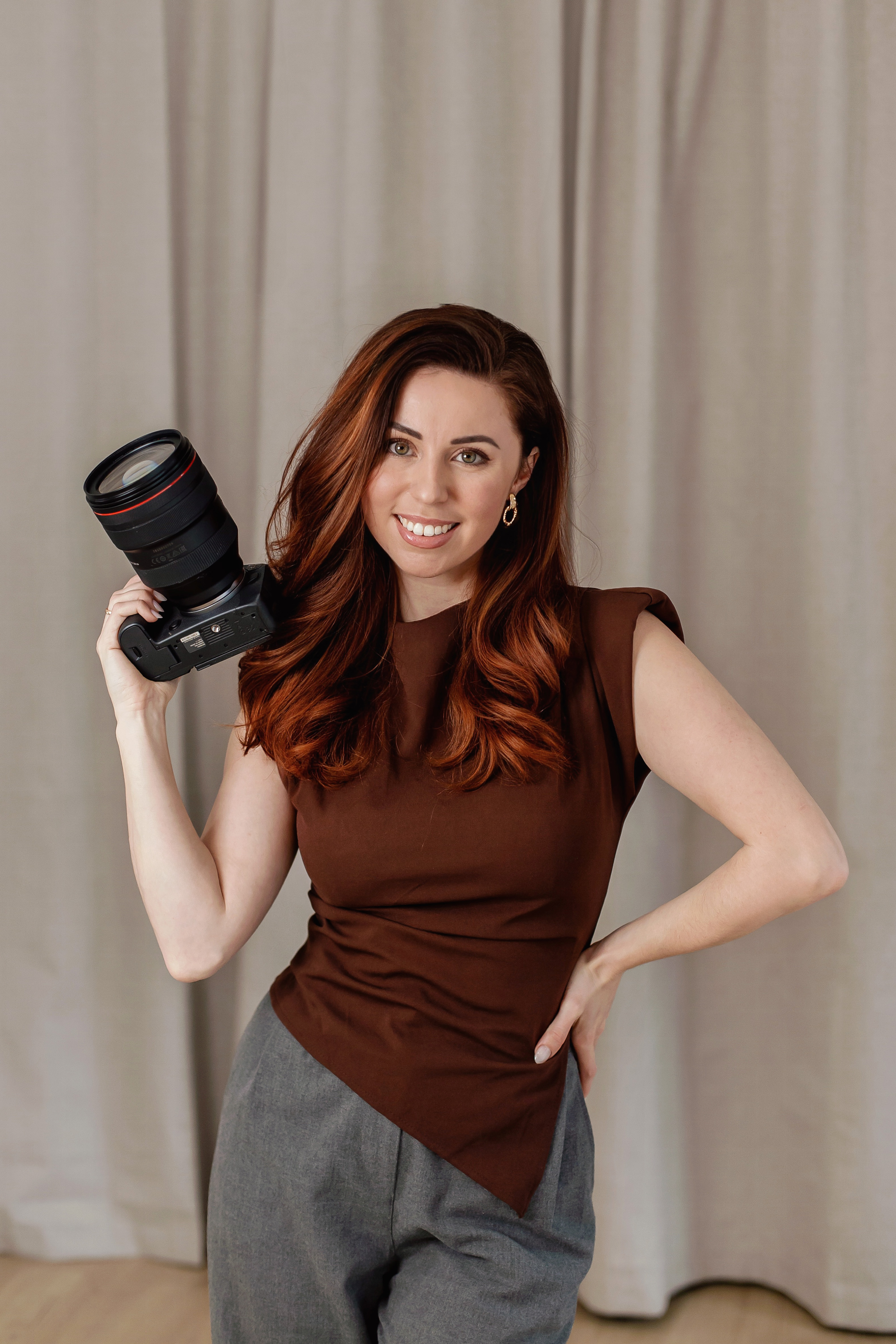
Yana Skakun
Photographer · England
Professional wedding, family and portrait photographer based in England. Passionate about capturing authentic emotions and timeless moments.
About Yana →hair salon photographybeauty business photographysalon portfolio photossalon team photography Cambridgetreatment room photographyGoogle Business Profile photos salon
Business Headshots — Corporate Headshot Photography in Cambridge & England
Corporate photography with Yana Skakun covers individual headshots, team portraits, and event documentation — all delivered with the same consistent quality and professional tone. Available in Cambridge and across England for businesses of all sizes. This guide — Hair Salon & Beauty Business Photography: Portfolio, Team & Treatment Room Shots — is part of the photography journal: practical, experience-based advice drawn from real sessions across England. Whether you arrived searching for hair salon photography or beauty business photography, the same care and attention shapes every session Yana photographs.
Corporate Headshot Photography sessions are available year-round, with bookings open across Cambridge, Ely, Huntingdon, Peterborough, and further afield — East England, London, the Midlands, and beyond. If you have specific questions about salon portfolio photos, mention it in your enquiry. Get in touch through the contact form above to check availability and discuss your session. Enquiries are welcomed from anywhere in the UK.
Frequently Asked Questions
What camera settings should I use for outdoor portraits?+
For outdoor portraits, shoot in aperture priority mode. Use a wide aperture (f/1.8–f/2.8) to blur the background and isolate your subject. Keep ISO as low as possible in good light. In bright conditions, use a neutral density filter or switch to manual to avoid overexposure at wide apertures.
What is the golden hour in photography?+
Golden hour is the period roughly 30–60 minutes after sunrise and before sunset. The sun is low in the sky, producing warm, soft, directional light that flatters skin tones and creates beautiful long shadows. It's widely considered the best natural light for portrait and outdoor photography.
How do you get sharp photos in low light?+
In low light, increase your ISO (accepting some grain), use the widest aperture your lens allows, and slow your shutter speed to the slowest you can hand-hold without camera shake (roughly 1/focal length as a guide). Use image stabilisation if available, and consider a tripod for static subjects.
What is the rule of thirds in photography?+
The rule of thirds divides the frame into a 3×3 grid. Placing your subject on one of the four intersection points — rather than dead centre — creates a more dynamic, visually interesting composition. It's a guideline, not a rule: some of the most powerful images break it deliberately.
How do you edit photos to look professional?+
Professional editing starts with shooting in RAW format. In Lightroom or similar software, correct exposure, white balance, and contrast first. Recover shadow and highlight detail. Apply gentle colour grading for mood. Be conservative with skin retouching — the goal is natural enhancement, not transformation. Consistency across a set of images is what separates professional from amateur editing.
Continue Reading
Related Articles
Business Headshots
Why professional business headshots are worth the investment in 2025
7 min read · Read Article
Business Headshots
The complete corporate headshot guide: What to expect and how to prepare
7 min read · Read Article
Business Headshots
LinkedIn headshot: What actually makes a profile photo work
7 min read · Read Article
Get in Touch
Ready to Book Your Session?
Get in touch to discuss your vision — I'll reply within 24 hours.