Yana Skakun

Brand Photography for Hair Salons and Barbershops
By Yana Skakun·1 May 2026·7 min read
A client scrolling through Instagram or comparing salons on Google makes a booking decision within a few seconds, and that decision is shaped almost entirely by what they see. Not the reviews, not the price list — the photographs. If your website and social feed are still relying on phone snapshots taken between clients, even on a recent handset, you are very likely losing bookings to salons whose imagery simply looks more professional, even if the actual work behind the chair is no better. Brand photography is one of the more directly commercial investments a salon can make.
Why Salon Photography Carries So Much Commercial Weight
Hair and beauty is an unusually visual industry to market. Clients are essentially buying a result they cannot properly evaluate until after they have committed to the appointment, which means the photographs that represent your work — your team, your space, your finished results — are doing an enormous amount of the persuasive work before anyone ever sits in your chair. Inconsistent, poorly lit, or dated imagery undermines trust even when the salon itself is excellent, simply because it is the only evidence a prospective client has to go on.
This matters across every channel a salon uses: the website gallery, the Instagram grid, the profile photograph on a booking platform, and any print or local advertising. A coherent, professionally shot set of images across all of these gives a much stronger impression of quality and consistency than a patchwork of styles and lighting built up over years of ad hoc phone photography.
What a Brand Photography Session Should Cover
Team headshots are the foundation — consistent lighting, a consistent background, and a consistent style across every stylist, so that a client browsing the team page gets a coherent sense of who they might be booking with, rather than a mismatched set of selfies and old photos of varying quality. Paired with each stylist's name and speciality, these do more to build trust than almost any other single piece of content on a salon website.
Interior photography of the salon itself is just as important and just as commonly under-invested in. Wide shots of the full space, closer detail shots of styling stations and the reception area, and images that capture the general atmosphere of the salon give prospective clients a genuine feel for the experience before they ever visit — and a beautifully designed salon interior loses much of its commercial value if the only photographs of it are dim, badly angled phone shots taken in passing.
Service photography — stylists genuinely at work, colouring, cutting, finishing — captures the craft and care behind the service in a way that performs particularly well on social media, provided the images feel authentic rather than staged. Before-and-after documentation is worth building deliberately over time as well; it is consistently among the best-performing content in the hair and beauty industry, and properly lit, consistently framed transformation photographs read as far more credible than inconsistent phone-shot pairs with mismatched backgrounds and harsh flash.
Refresh your salon's brand photography
From team headshots to a full brand shoot day covering interior, service, and product photography, get in touch to discuss what your salon needs.
Explore business photographyChoosing the Right Photographer for a Commercial Brief
Salon brand photography is a genuinely different brief from a typical portrait or wedding session, and it is worth choosing a photographer with specific experience in commercial and small-business work rather than assuming any photographer can turn their hand to it equally well. The priorities are different — consistency across every image so the whole set reads as one cohesive brand rather than a series of unrelated photographs, a practical understanding of how the images will actually be used across a website and social media, and an eye for the small operational details, like a clearly visible salon name or logo in the right shots, that make the final images genuinely useful for marketing rather than simply attractive.
A short planning conversation before the session, covering your brand colours, your existing marketing materials, and which specific images you are missing most at the moment, makes a real difference to how useful the resulting photography turns out to be. Salons that skip this step and simply book a generic photography session often end up with beautiful images that do not quite fit their existing branding or fill the actual gaps in their marketing.
Planning the Session Around Salon Operations
A full brand photography day works best when the salon is either fully closed or running at genuinely minimal capacity, since a session competing with a normally busy floor produces neither good photographs nor a good client experience for whoever is still being served. A quiet Monday or Tuesday morning tends to work well for salons that do not want to close entirely, or a single planned closure day compensated for with slightly extended hours later in the week.
It is worth preparing the physical space in the days before the session as thoroughly as you would for an important client visit — a proper deep clean, decluttered surfaces, and any worn or tired-looking fittings addressed or at least hidden from the planned angles. A camera notices every detail a busy working day allows you to overlook, and it is far better to catch these things before the session than to see them permanently fixed in your marketing photography afterwards.
Agreeing a simple, consistent styling brief for the team beforehand also makes a noticeable difference — matching aprons or a coordinated neutral palette photographs far better than a mix of personal clothing choices, and your stylists' own hair and makeup should be salon-ready, since they are effectively the walking advertisement for the standard of work on offer.
Product and Retail Photography
If your salon sells retail products — shampoos, styling products, tools — dedicated product photography is worth including in a brand shoot alongside the team and interior work. Clean flat-lay images of product ranges, styled shelf arrangements that mirror how the products actually sit in your salon, and simple product-in-use photographs all translate well across a website, social media, and any email marketing you run. Retail photography shot on the same day as your wider brand session, using consistent lighting, gives your product marketing a coherence it is very difficult to achieve through occasional phone photos taken whenever a new product line arrives.
This is a smaller and quicker part of a brand session to plan for, generally requiring only a simple table setup with good light and a handful of your best-selling or most photogenic products, but it is one of the parts of a session salons most often forget to ask for until afterwards, when they realise how much more professional their retail shelf photos could look.
How Often Salon Photography Needs Refreshing
For an established salon, a full brand photography refresh roughly every eighteen months to two years is generally sufficient to keep imagery feeling current, with team headshots updated more frequently whenever there is meaningful staff turnover — nothing undermines trust quite as quickly as a website team page featuring stylists who no longer work there. Shorter, more focused top-up sessions of an hour or two are worth building in seasonally as well, particularly around content that has a natural shelf life, such as festive styling looks or a spring refresh of colour and cut trends, keeping the salon's imagery feeling active and current rather than static year-round.
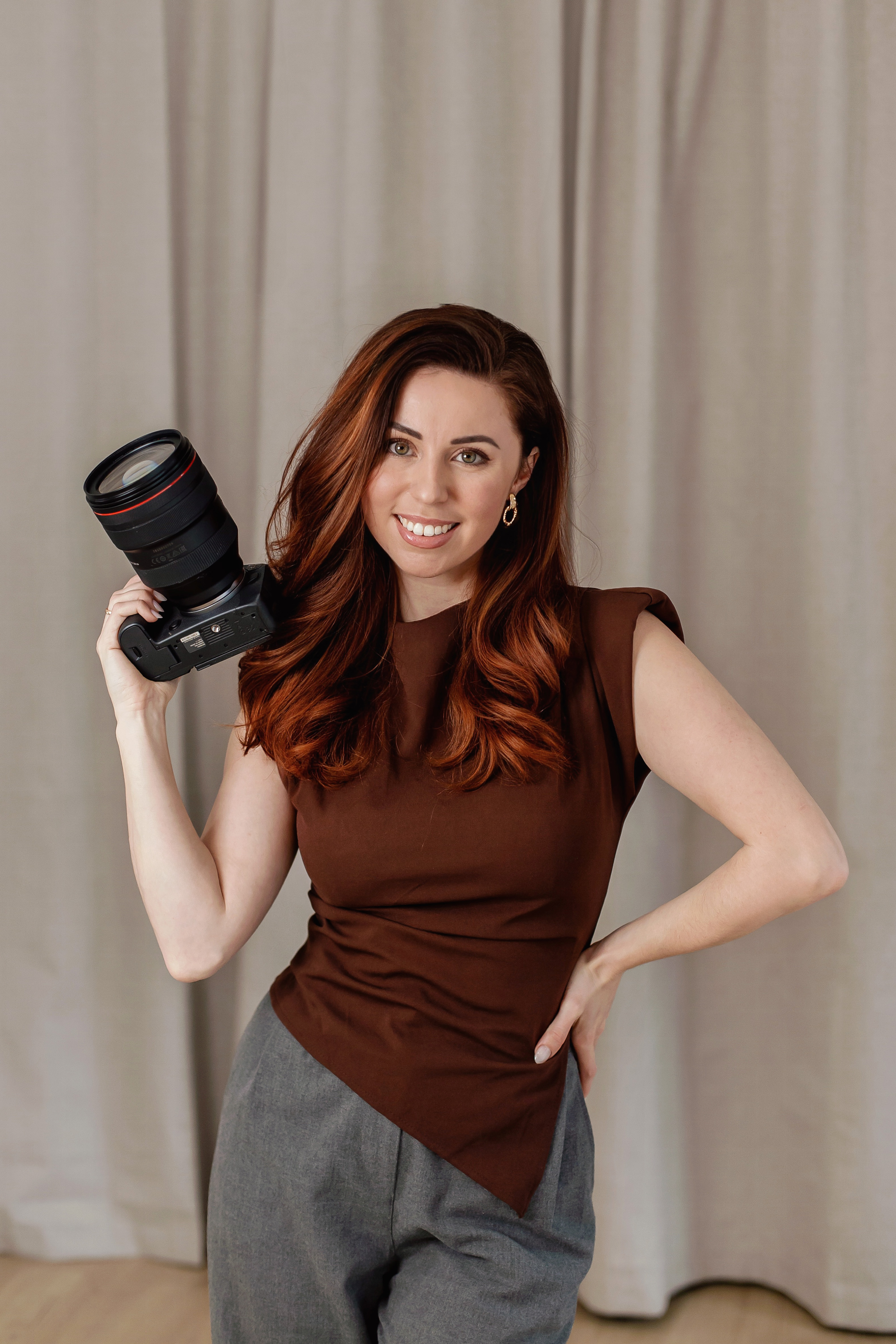
Yana Skakun
Photographer · England
Professional wedding, family and portrait photographer based in England. Passionate about capturing authentic emotions and timeless moments.
About Yana →hair salon brand photography ukbarbershop brand photographyhairdresser professional photossalon team headshots uk
Business Headshots — Corporate Headshot Photography in Cambridge & England
Corporate photography with Yana Skakun covers individual headshots, team portraits, and event documentation — all delivered with the same consistent quality and professional tone. Available in Cambridge and across England for businesses of all sizes. This guide — Brand Photography for Hair Salons and Barbershops — is part of the photography journal: practical, experience-based advice drawn from real sessions across England. Whether you arrived searching for hair salon brand photography uk or barbershop brand photography, the same care and attention shapes every session Yana photographs.
Corporate Headshot Photography sessions are available year-round, with bookings open across Cambridge, Ely, Huntingdon, Peterborough, and further afield — East England, London, the Midlands, and beyond. If you have specific questions about hairdresser professional photos, mention it in your enquiry. Get in touch through the contact form above to check availability and discuss your session. Enquiries are welcomed from anywhere in the UK.
Frequently Asked Questions
What camera settings should I use for outdoor portraits?+
For outdoor portraits, shoot in aperture priority mode. Use a wide aperture (f/1.8–f/2.8) to blur the background and isolate your subject. Keep ISO as low as possible in good light. In bright conditions, use a neutral density filter or switch to manual to avoid overexposure at wide apertures.
What is the golden hour in photography?+
Golden hour is the period roughly 30–60 minutes after sunrise and before sunset. The sun is low in the sky, producing warm, soft, directional light that flatters skin tones and creates beautiful long shadows. It's widely considered the best natural light for portrait and outdoor photography.
How do you get sharp photos in low light?+
In low light, increase your ISO (accepting some grain), use the widest aperture your lens allows, and slow your shutter speed to the slowest you can hand-hold without camera shake (roughly 1/focal length as a guide). Use image stabilisation if available, and consider a tripod for static subjects.
What is the rule of thirds in photography?+
The rule of thirds divides the frame into a 3×3 grid. Placing your subject on one of the four intersection points — rather than dead centre — creates a more dynamic, visually interesting composition. It's a guideline, not a rule: some of the most powerful images break it deliberately.
How do you edit photos to look professional?+
Professional editing starts with shooting in RAW format. In Lightroom or similar software, correct exposure, white balance, and contrast first. Recover shadow and highlight detail. Apply gentle colour grading for mood. Be conservative with skin retouching — the goal is natural enhancement, not transformation. Consistency across a set of images is what separates professional from amateur editing.
Continue Reading
Related Articles
Business Headshots
Why professional business headshots are worth the investment in 2025
7 min read · Read Article
Business Headshots
The complete corporate headshot guide: What to expect and how to prepare
7 min read · Read Article
Business Headshots
LinkedIn headshot: What actually makes a profile photo work
7 min read · Read Article
Get in Touch
Ready to Book Your Session?
Get in touch to discuss your vision — I'll reply within 24 hours.