Yana Skakun
Headshot Trends 2027: AI, Authenticity & Personal Branding
By Yana Skakun·2 October 2026·6 min read
Headshot photography in 2027 is being shaped by two competing forces: AI-generated headshots making cheap approximations widely available, and a growing professional awareness that those approximations don't actually work. The counter-trend — authentic, professional photography for personal branding — is growing faster than the AI disruption it is responding to, and I am seeing this play out directly in the kind of headshot bookings I get and the conversations I have with clients about what they actually need.
The AI Headshot Problem
AI-generated headshots from apps and services arrived with promises of professional results at low cost. What they deliver is a version of a face that looks plausible — passable enough for a profile thumbnail glanced at for two seconds — but fails under scrutiny: hands that are wrong, backgrounds with logic errors, micro-expressions that read as uncanny, and results that look unmistakably like every other AI headshot generated by the same tool. Clients, employers, and colleagues increasingly recognise them on sight, and the backlash is proportionate to how obvious the tell usually is once you know what to look for.
The deeper problem is not aesthetic, it is functional. A headshot exists to help people recognise you and trust that the image represents you accurately. An AI-generated image, however polished, is by definition not a photograph of you — it is a statistical approximation trained on photographs of other people, and in professional contexts where trust and accuracy actually matter, that distinction has real consequences.
This is playing out most visibly on LinkedIn, where profile photo quality has become something people notice and comment on more than they used to. A generic or obviously synthetic image now reads as a red flag in a way it simply did not five years ago, when almost any photograph was better than none.
Major Headshot Trends in 2027
The authenticity premium is the clearest response to the AI problem: professionals are actively seeking headshots that are demonstrably real — natural expressions, genuine environments, no AI sheen. "Authentic" has become a marketable claim in a way it never needed to be before, and clients now sometimes ask me explicitly to keep retouching minimal specifically so the image reads as unmistakably real.
Personal branding sessions are increasingly replacing the single headshot booking. A single LinkedIn photo is being replaced by a small portfolio — a formal headshot, an action shot at work, an environmental portrait, a team version — and personal branding photography packages that cover this range in one session are growing accordingly. Environmental headshots, photographed in-context at your desk, your studio, or your industry event rather than against a blank studio backdrop, are being requested more often than pure studio work, because they carry information about who you are and what you do that a plain background cannot.
Warmer, less corporate styling is also on the rise. The cold, blue-toned studio headshot of a decade ago is declining, and warmer backgrounds, softer natural light, and more relaxed expressions are requested far more frequently. Alongside this, shorter sessions and faster turnaround are increasingly expected — half-hour individual sessions and same-week delivery have become a normal ask rather than a premium option, reflecting how busy professional schedules have become. And inclusive casting has moved from a niche offer to a baseline expectation: headshot photography needs to work well across different ages, body types, and skin tones as a matter of course, not as a special accommodation.
A note on staying ahead of the trend
If your current headshot is more than two or three years old, or was generated by an app rather than photographed, it is very likely working against you rather than for you in 2027's professional landscape. I would be glad to talk through what an updated, authentic set of images could look like for your particular role and industry.
Get in touch about a sessionLinkedIn and Platform Considerations in 2027
The LinkedIn algorithm continues to reward profiles with genuine professional photography — profiles with well-photographed headshots consistently outperform those without in connection and engagement metrics, and this gap is not closing as more people adopt AI-generated alternatives; if anything, the gap is widening as genuine photography becomes a more visible point of differentiation. Multi-platform requirements have also increased: headshots are now used across LinkedIn, company websites, speaker profiles, podcast artwork, industry directories, and press materials, and a single well-chosen image increasingly needs to serve all of these uses rather than being reshot for each one.
Video thumbnail crossover is a newer factor worth mentioning. As video presence grows in professional contexts — webinars, LinkedIn video posts, podcast appearances — still photography that captures a similar sense of presence and warmth to good video becomes more valuable, because it needs to sit alongside moving footage of the same person without feeling like a different, stiffer version of them.
AI detection context is the sharpest edge of this whole trend. In high-trust professional contexts — legal, financial, medical, senior leadership — AI-generated headshots carry genuine reputational risk when identified as such, because they suggest a willingness to present an inauthentic version of yourself in exactly the kind of context where trust is the whole point.
How Sessions Themselves Have Changed
The practical shape of a headshot session has shifted alongside these broader trends. Clients now arrive with a much clearer sense of the specific images they need, often having thought in advance about the different platforms and contexts a photo will need to cover, rather than requesting a single generic "professional photo" and hoping it fits everywhere. This has made pre-session conversations more useful and more specific — talking through your role, your industry, and where the images will actually be used produces a far better outcome than a one-size-fits-all approach ever could.
Locations have diversified too. Where a decade ago most headshot bookings defaulted to a plain studio backdrop, a growing number of sessions in 2027 happen partly or entirely on location — an office, a workshop, a favourite café, outdoors in natural light — reflecting the broader shift toward environmental and personal-branding photography described above. I still offer and regularly use simple studio-style setups, because they remain the right choice for some clients and some industries, but the balance of requests has moved noticeably toward more contextual, personality-driven images over the past few years.
What Hasn't Changed
Amid all this shift toward authenticity, environmental context, and platform-driven requirements, it is worth remembering what has stayed constant. Good light is still good light, whether it comes from a studio setup or a window in your own office. A genuine expression, drawn out through real conversation rather than a forced pose, still photographs better than anything else, regardless of how many new formats and platforms a headshot needs to serve. And a photographer who takes the time to understand what you actually need the image for will always produce a more useful result than one working from a generic template.
The trends shaping 2027 are really variations on this same underlying truth: the technology and platforms around headshot photography keep changing, but the fundamentals of what makes a photograph feel true to the person in it have not moved much at all. That is, if anything, the strongest argument for working with a photographer rather than a generator — the fundamentals are exactly what automated tools cannot yet reliably produce.
What This Means for Booking a Headshot Session Now
For most professionals, the practical takeaway from all of this is straightforward: a genuine, well-photographed headshot has become more valuable relative to the alternatives, not less. The rise of cheap AI-generated images has, somewhat counterintuitively, raised the bar for what a real photograph needs to communicate, because it now has to signal authenticity as well as competence and approachability.
Preparing for a 2027-Ready Headshot Session
Practically speaking, preparing for a session in this current landscape means thinking slightly more broadly than just "one good photo." Before booking, it is worth listing the different places your headshot currently needs to appear, and being honest about whether one image can genuinely cover all of them or whether a small set of variations — a formal crop, a more relaxed environmental shot, perhaps a wider shot suitable for a website banner — would serve you better across the year ahead.
It is also worth thinking about longevity. A headshot photographed with current, natural styling rather than chasing a very specific trend tends to age better over the following few years, which matters given how much more frequently headshots are now viewed and compared across multiple platforms. A timeless, authentic image outperforms a fashionable but dated one far more often than people expect.
I approach every headshot session with this in mind — natural light wherever possible, genuine expression drawn out through conversation rather than a held smile, and a set of images that give you options across the different contexts your headshot will actually be used in. If you would like to talk through what a current, authentic set of professional images could do for you, get in touch and we can plan a session around exactly what you need.
Yana Skakun
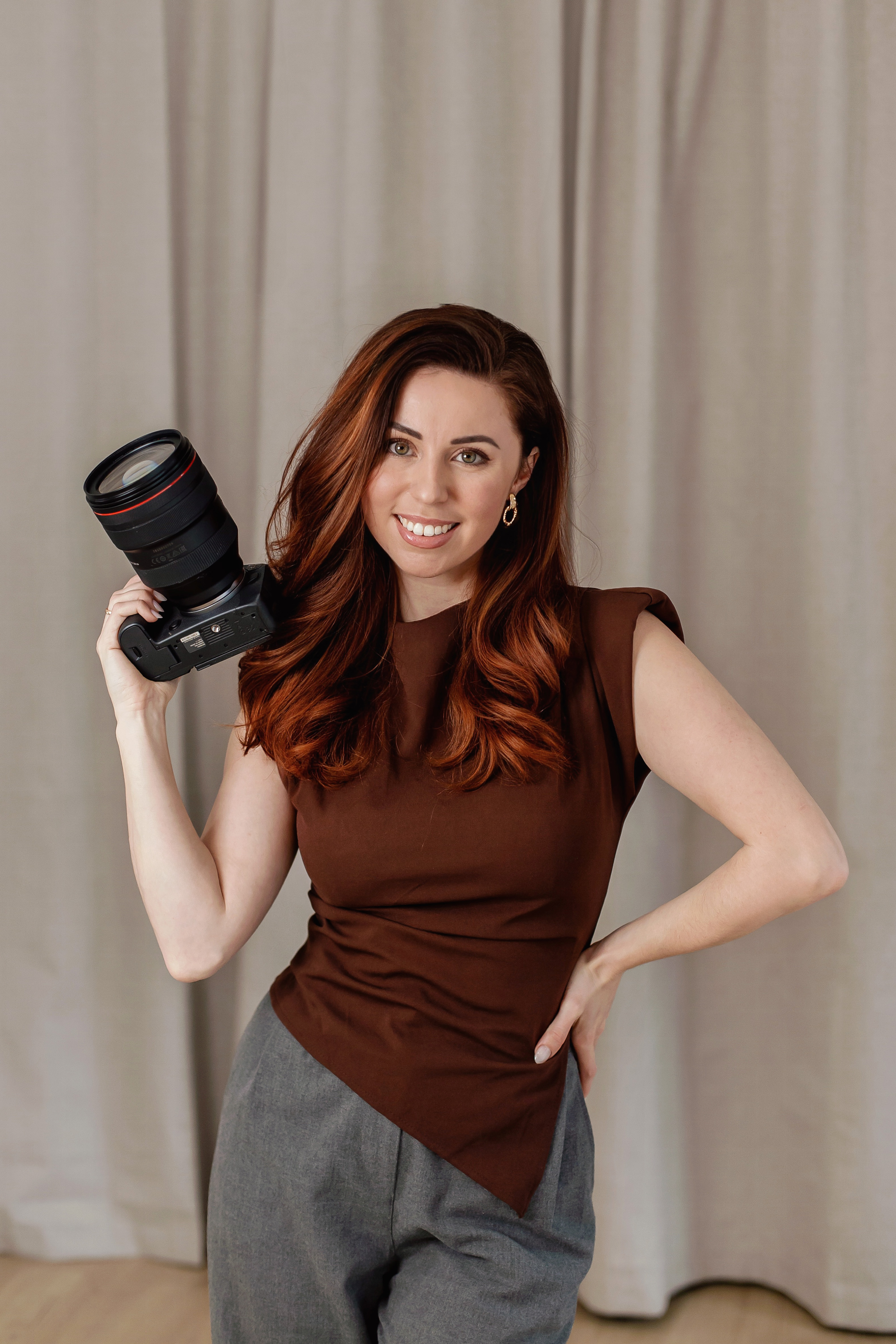
Photographer · England
Professional wedding, family and portrait photographer based in England. Passionate about capturing authentic emotions and timeless moments.
About Yana →headshot trends 2027ai headshots 2027authentic headshots 2027personal branding photography 2027 uk
Photography Tips — Professional Photography in Cambridge & England
Yana Skakun is a professional photographer based in Cambridge, specialising in wedding, family, and portrait photography across England. Every session is personal — planned around your story, your people, and the moments that matter most. This guide — Headshot Trends 2027: AI, Authenticity & Personal Branding — is part of the photography journal: practical, experience-based advice drawn from real sessions across England. Whether you arrived searching for headshot trends 2027 or ai headshots 2027, the same care and attention shapes every session Yana photographs.
Professional Photography sessions are available year-round, with bookings open across Cambridge, Ely, Huntingdon, Peterborough, and further afield — East England, London, the Midlands, and beyond. If you have specific questions about authentic headshots 2027, mention it in your enquiry. Get in touch through the contact form above to check availability and discuss your session. Enquiries are welcomed from anywhere in the UK.
Frequently Asked Questions
What camera settings should I use for outdoor portraits?+
For outdoor portraits, shoot in aperture priority mode. Use a wide aperture (f/1.8–f/2.8) to blur the background and isolate your subject. Keep ISO as low as possible in good light. In bright conditions, use a neutral density filter or switch to manual to avoid overexposure at wide apertures.
What is the golden hour in photography?+
Golden hour is the period roughly 30–60 minutes after sunrise and before sunset. The sun is low in the sky, producing warm, soft, directional light that flatters skin tones and creates beautiful long shadows. It's widely considered the best natural light for portrait and outdoor photography.
How do you get sharp photos in low light?+
In low light, increase your ISO (accepting some grain), use the widest aperture your lens allows, and slow your shutter speed to the slowest you can hand-hold without camera shake (roughly 1/focal length as a guide). Use image stabilisation if available, and consider a tripod for static subjects.
What is the rule of thirds in photography?+
The rule of thirds divides the frame into a 3×3 grid. Placing your subject on one of the four intersection points — rather than dead centre — creates a more dynamic, visually interesting composition. It's a guideline, not a rule: some of the most powerful images break it deliberately.
How do you edit photos to look professional?+
Professional editing starts with shooting in RAW format. In Lightroom or similar software, correct exposure, white balance, and contrast first. Recover shadow and highlight detail. Apply gentle colour grading for mood. Be conservative with skin retouching — the goal is natural enhancement, not transformation. Consistency across a set of images is what separates professional from amateur editing.
Continue Reading
Related Articles

Photography Tips
Photography Gift Vouchers: The Most Personal Present You Can Give
5 min read · Read Article
Photography Tips
Photo Books vs Photo Albums: What Is the Difference and Which Is Better?
5 min read · Read Article
Photography Tips
Photo Gift Ideas: Turning Professional Images into Meaningful Presents
5 min read · Read Article
Get in Touch
Ready to Book Your Session?
Get in touch to discuss your vision — I'll reply within 24 hours.