Yana Skakun

Brand Photography for Knitwear Designers and Textile Makers
By Yana Skakun·17 April 2026·8 min read
Photography for Knitwear Designers and Textile Makers
Handmade knitwear and textile work — whether hand-knitted garments, woven cloth, embroidered pieces, or printed textiles — occupies a premium position in the UK craft market. The tactile qualities that justify the price: the weight of a hand-spun yarn, the complexity of a hand-woven pattern, the precision of detailed embroidery — are all things that exist physically and need to be communicated visually. Professional photography is the bridge between the physical reality of the work and the digital marketplace where most buyers encounter it.
Types of Textile Photography
Flat Lay and Detail Photography
Flat lay photography — the garment or textile laid flat on a surface and photographed from directly above — is the baseline for knitwear product photography. It shows the full piece, the pattern, the construction, and the colour accurately. But flat lays on their own undersell knitwear: they cannot show how a garment falls and drapes, how a shawl wraps, or the three-dimensionality of complex stitch patterns.
Detail photography fills this gap. A close-up macro image of a cable pattern, the edge of a hem, the join of a colour-work motif, or the texture of a particular stitch provides the visual information that communicates craftsmanship. For embroidered or printed textiles, detail photography is often the most compelling image in a product listing.
On-Body Photography
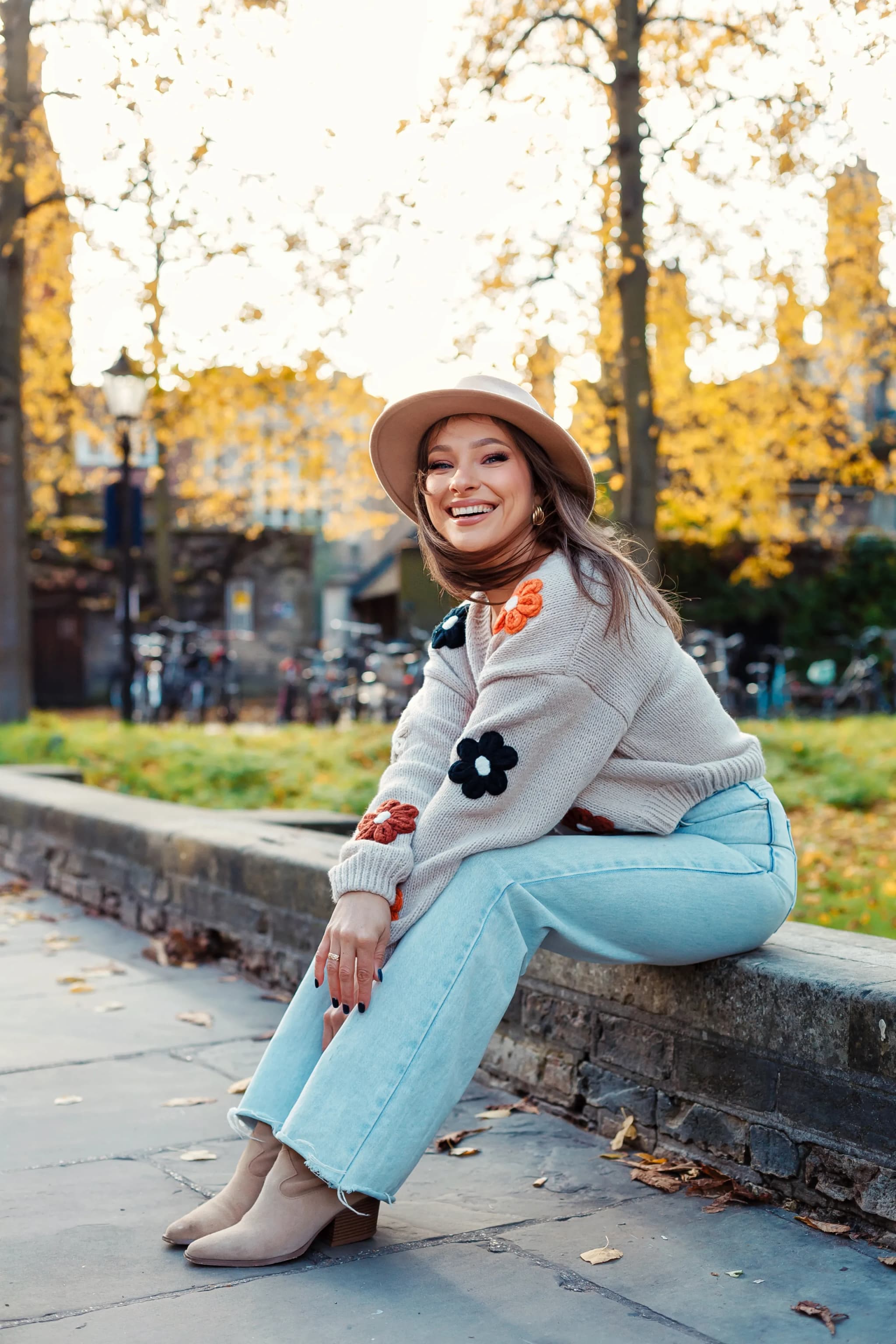
Knitwear on a model communicates how a garment actually behaves when worn — the drape of a cardigan, the fit of a hat, the way a cowl sits. Model photography is more expensive and logistically complex than flat lay photography, but it is significantly more persuasive. A chunky hand-knitted jumper on a model in an outdoor autumn setting is a completely different commercial proposition from the same jumper laid flat on a white background.
The choice of model, location, and styling should all reflect the brand's customer identity. A luxury merino knitwear brand needs a different visual treatment from a colourful children's hand-knit maker.
Maker Photography
The maker at work — knitting, at a loom, at an embroidery frame, with yarn — tells the story of handmade craft that distinguishes artisan textile work from machine-produced alternatives. Hands are the primary subject of maker photography in textile work: the hands of someone who hand-knits, weaves, or embroiders are expressive, characterful, and immediately communicate the human skill behind the work.
Technical Considerations for Textile Photography
Colour Accuracy
Yarn colour and dye are often complex and subtle — the difference between a dusty sage and a grey-green, between a warm cream and a cool white, between a vibrant rust and a muted terracotta. Colour accuracy in knitwear photography is commercially critical: a customer who receives a garment that looks different from the listing photograph is not a satisfied customer. Calibrated daylight-balanced lighting and post-production reviewed on a calibrated monitor are essential.
Texture and Stitch Definition
The stitch patterns that make handmade knitwear beautiful — the raised surface of cable work, the ridged texture of ribbing, the graphic clarity of fair isle motifs — require directional light to be visible in photographs. A soft directional light source from the side of a flat-laid garment reveals stitch texture in a way that flat frontal lighting cannot. For detailed embroidery, a raking light at a low angle is often required to reveal the three-dimensionality of the stitchwork.
Planning Your Knitwear Photography Session
- Block and prepare all garments before the session — blocked knitwear photographs significantly better than unblocked.
- Decide the mix of flat lay, detail, and on-body photography in advance. These require different setups and different time allocations.
- Agree on the visual aesthetic: backgrounds, props, location for outdoor model shots.
- Consider seasonal timing for outdoor model photography — your knitwear collection should be photographed in the season that matches its market.
Photography That Honours Your Textile Work
Brand photography for knitwear designers and textile makers — product shots, maker imagery, and on-body photography that communicates the craft behind your work. Get in touch to discuss your session.
Explore Business Photography →
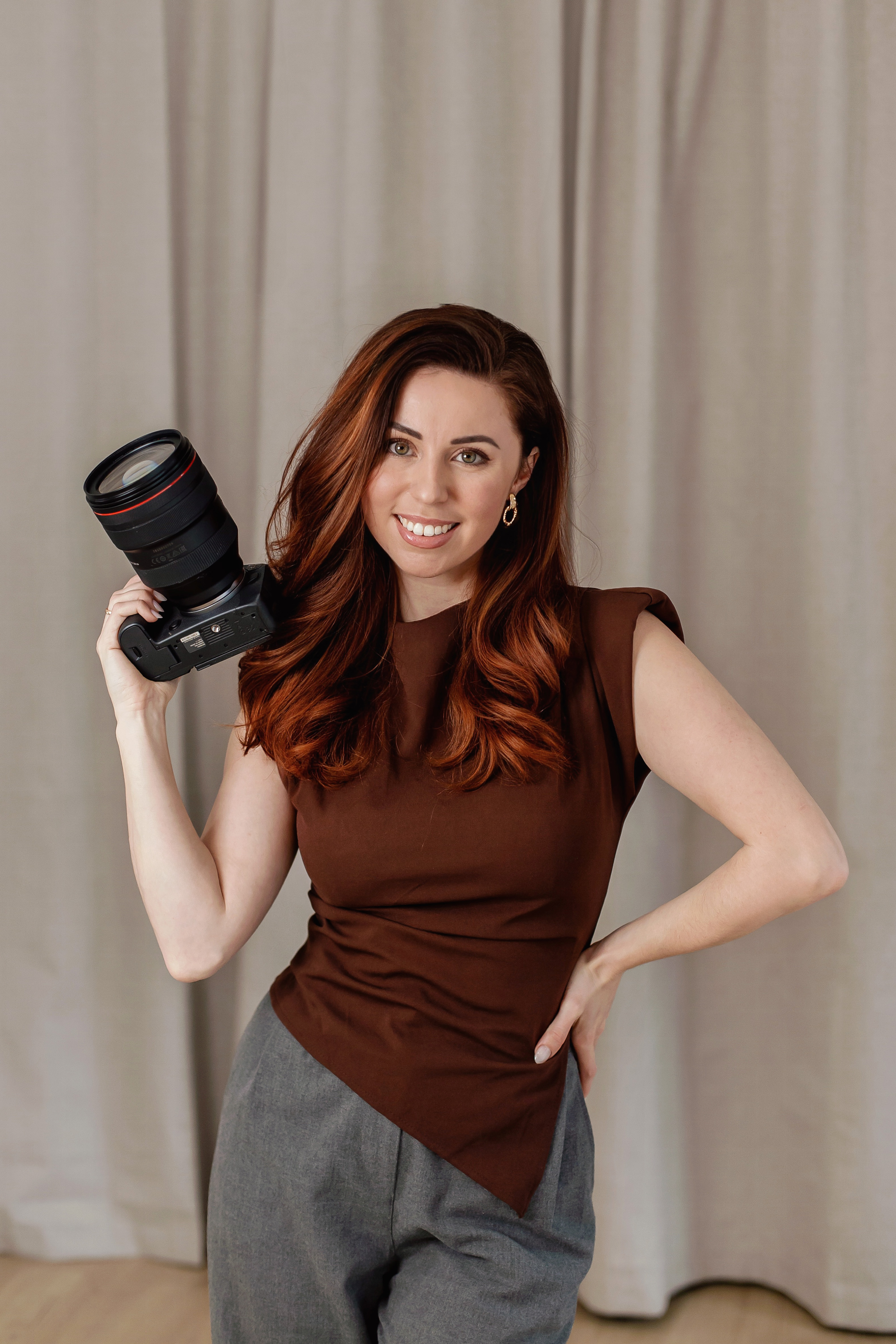
Yana Skakun
Photographer · England
Professional wedding, family and portrait photographer based in England. Passionate about capturing authentic emotions and timeless moments.
About Yana →knitwear brand photography UKtextile maker photographyhandmade knitwear photos UKknitting designer brand photosembroidery photography UK
Business Headshots — Corporate Headshot Photography in Cambridge & England
Corporate photography with Yana Skakun covers individual headshots, team portraits, and event documentation — all delivered with the same consistent quality and professional tone. Available in Cambridge and across England for businesses of all sizes. This guide — Brand Photography for Knitwear Designers and Textile Makers — is part of the photography journal: practical, experience-based advice drawn from real sessions across England. Whether you arrived searching for knitwear brand photography uk or textile maker photography, the same care and attention shapes every session Yana photographs.
Corporate Headshot Photography sessions are available year-round, with bookings open across Cambridge, Ely, Huntingdon, Peterborough, and further afield — East England, London, the Midlands, and beyond. If you have specific questions about handmade knitwear photos uk, mention it in your enquiry. Get in touch through the contact form above to check availability and discuss your session. Enquiries are welcomed from anywhere in the UK.
Frequently Asked Questions
What camera settings should I use for outdoor portraits?+
For outdoor portraits, shoot in aperture priority mode. Use a wide aperture (f/1.8–f/2.8) to blur the background and isolate your subject. Keep ISO as low as possible in good light. In bright conditions, use a neutral density filter or switch to manual to avoid overexposure at wide apertures.
What is the golden hour in photography?+
Golden hour is the period roughly 30–60 minutes after sunrise and before sunset. The sun is low in the sky, producing warm, soft, directional light that flatters skin tones and creates beautiful long shadows. It's widely considered the best natural light for portrait and outdoor photography.
How do you get sharp photos in low light?+
In low light, increase your ISO (accepting some grain), use the widest aperture your lens allows, and slow your shutter speed to the slowest you can hand-hold without camera shake (roughly 1/focal length as a guide). Use image stabilisation if available, and consider a tripod for static subjects.
What is the rule of thirds in photography?+
The rule of thirds divides the frame into a 3×3 grid. Placing your subject on one of the four intersection points — rather than dead centre — creates a more dynamic, visually interesting composition. It's a guideline, not a rule: some of the most powerful images break it deliberately.
How do you edit photos to look professional?+
Professional editing starts with shooting in RAW format. In Lightroom or similar software, correct exposure, white balance, and contrast first. Recover shadow and highlight detail. Apply gentle colour grading for mood. Be conservative with skin retouching — the goal is natural enhancement, not transformation. Consistency across a set of images is what separates professional from amateur editing.
Continue Reading
Related Articles
Business Headshots
Why professional business headshots are worth the investment in 2025
7 min read · Read Article
Business Headshots
The complete corporate headshot guide: What to expect and how to prepare
7 min read · Read Article
Business Headshots
LinkedIn headshot: What actually makes a profile photo work
7 min read · Read Article
Get in Touch
Ready to Book Your Session?
Get in touch to discuss your vision — I'll reply within 24 hours.