Yana Skakun

Marquee Wedding Photography: Tips for Epic Lighting and Atmosphere
By Yana Skakun·10 July 2026·8 min read
Marquee weddings are some of my favourite days to photograph, and also some of the most technically demanding. A marquee gives couples enormous freedom — a blank canvas in a field, a garden, or on a family farm, built exactly to your own vision rather than fitted around someone else's function room. But that freedom comes with a photographic challenge that most couples never think about until it is far too late to fix cheaply: light. A marquee is essentially a large tent, and tents do very particular and sometimes unhelpful things to light. Understanding how that light behaves, and planning around it, is the difference between photographs that glow and photographs that look flat, orange, or muddy. This guide covers what I have learned photographing marquee weddings across the UK and how to set your day up so the pictures do justice to all the effort that goes into building a marquee wedding from scratch.
Why Marquees Are Lighting Puzzles, Not Just Venues
A church, a barn, or a hotel function room has fixed walls, fixed windows, and usually some existing electrical lighting that a photographer can assess in advance. A marquee is temporary, and its lighting character depends entirely on the fabric, the lining, the time of day, and what lighting rig the couple has hired. Canvas and PVC diffuse daylight in very different ways. A traditional canvas marquee with a cream or ivory lining glows beautifully in daylight, filtering sunshine into a soft, warm wash that is genuinely one of the nicest ambient lighting setups I work in all year. A clear-span PVC structure with a white lining behaves more like a giant softbox on a bright day, but can look distinctly cool and clinical without the addition of warm interior lighting once the sun goes down.
The practical upshot is that the same marquee can look completely different at 2pm, 6pm, and 9pm, and each of those windows needs a different approach. Couples planning their day, and any supplier briefing a marquee company, should treat lighting as a genuine design decision rather than an afterthought bolted on once the tables and chairs are sorted.
Daytime: Working With the Canvas Glow
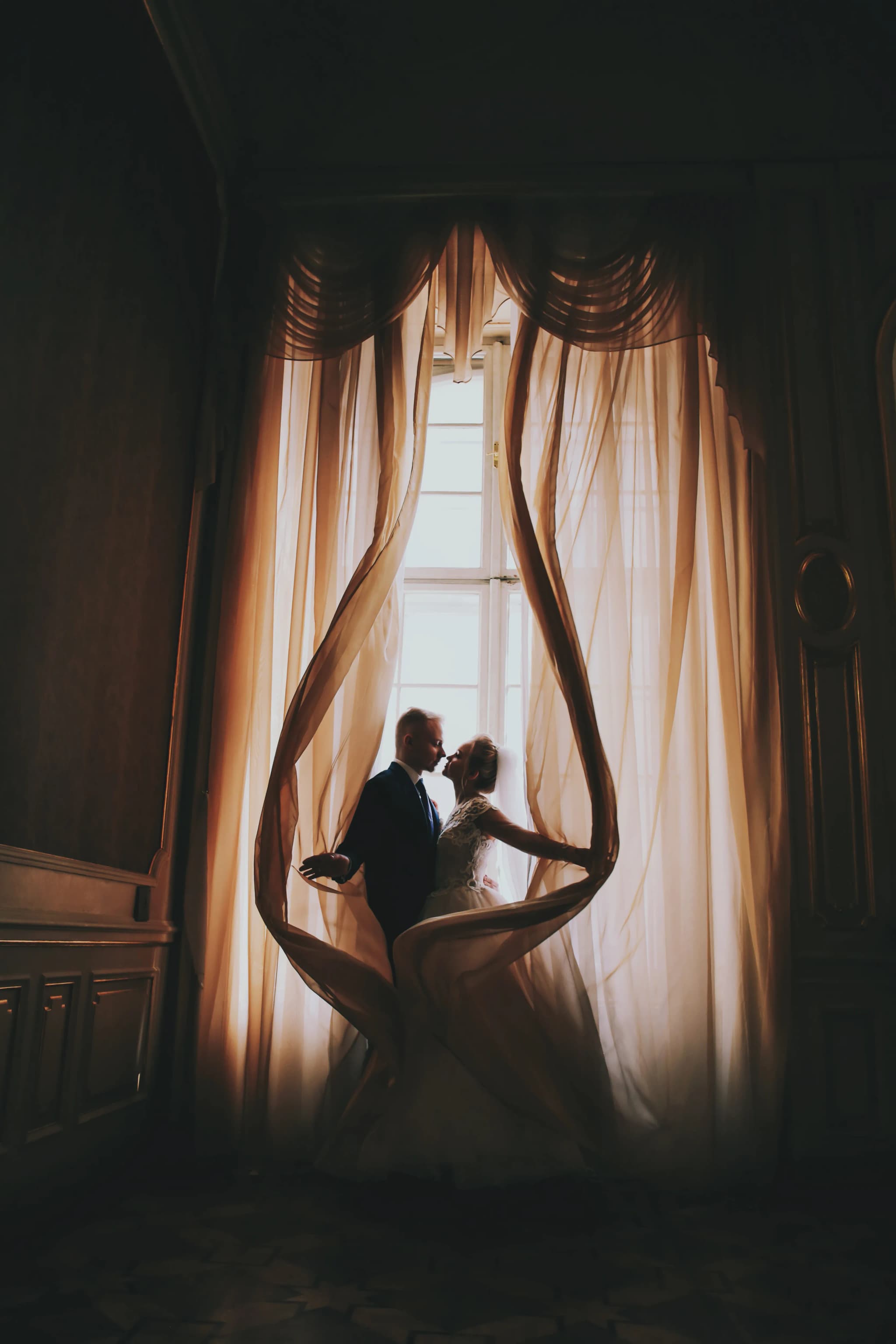
During daylight hours, a well-lined marquee is often a photographer's dream. Sunlight passing through canvas or fabric lining is heavily diffused, which means it wraps around faces softly without the harsh shadows you get from direct sun outdoors at midday. I generally position speeches, the wedding breakfast, and any formal portraits taken inside the marquee to make the most of this window, particularly between roughly midday and 5pm in summer, when the ambient glow inside a lined marquee is at its most flattering.
The colour of the lining matters more than most couples realise. Ivory and cream linings produce a warm, golden cast that looks wonderful in photographs and generally suits most skin tones. Pure white linings are cooler and more neutral, which photographs cleanly but can look slightly flat without some warmth added back in through florals, candles, or lighting. If you are choosing between lining options with your marquee supplier, ask to see a swatch in daylight, not just under the showroom's artificial lights, because the effect changes considerably.
Clear sections of roof or wall — increasingly popular for stargazing marquees or those with view-facing panels — bring in direct, undiffused light that behaves much more like outdoor sun. These are wonderful for atmosphere but do need slightly different positioning for portraits taken nearby, since strong side light through a clear panel can create hard shadows in a way the diffused canvas sections will not.
The Golden Hour Problem: Marquee Sides and Sunset
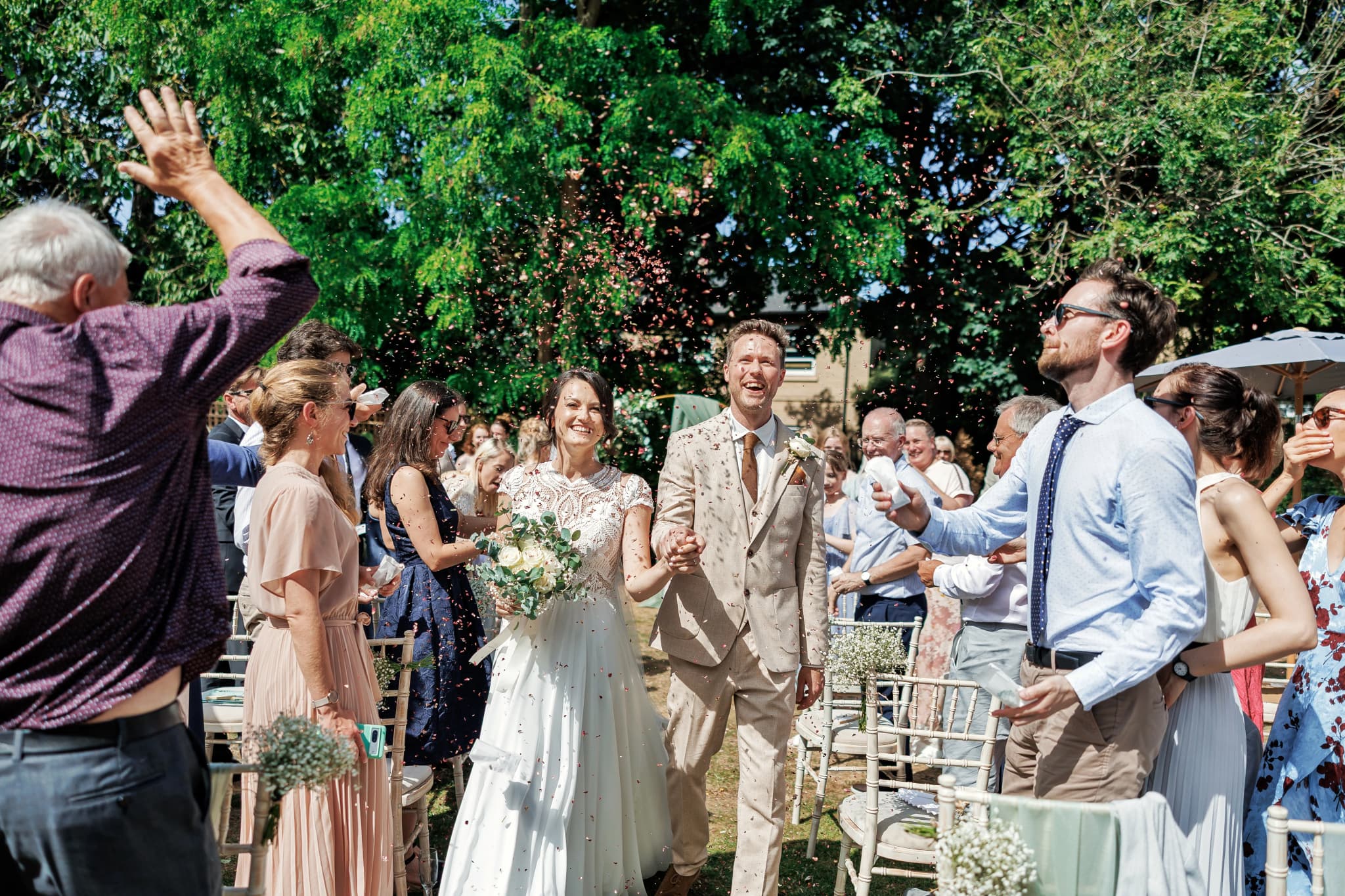
Every wedding photographer chases golden hour, and marquee weddings offer one of the best opportunities for it precisely because the outdoor setting usually means open fields, gardens, or grounds right outside the marquee doors. The mistake I see couples make is scheduling every single photograph, speech, and dance inside the marquee and never stepping back out once dinner begins. If your wedding is in June or July, sunset in the UK falls somewhere between 8.30pm and 9.30pm, and that hour before sunset produces some of the most beautiful couple portraits of the entire day — low, warm, golden light with none of the harshness of midday sun.
I always build a short window into the timeline, typically fifteen to twenty minutes, for the couple to step outside during the reception for golden hour portraits. It does not need to be announced to the whole room or feel like a big production; it is simply a quiet pause taken together while the light is doing something extraordinary. Couples who skip this because they do not want to leave their guests almost always tell me afterwards it was worth the brief absence. If you are still finalising your day and want help thinking through where this fits, it is exactly the kind of detail I talk through when planning wedding day photography coverage with couples in advance.
Rolling up marquee sides, or opening the doors fully, during golden hour also transforms the light inside. The warm outdoor glow spills into the marquee interior and mixes with the lining's own colour, creating a genuinely beautiful ambient look for the last of the daylight speeches or the cake cutting, if timed well.
Planning a marquee wedding?
If you are building your day's timeline around a marquee, I am always happy to talk through lighting, timings, and the best window for golden hour portraits before the big day arrives. It is a conversation worth having early, while there is still room to adjust the schedule around the light.
Get in touchAfter Dark: Why Interior Lighting Hire Is Not Optional
Once the sun goes down, a marquee has no ambient light source of its own beyond whatever has been hired in, and this is where I see couples most often under-budget. Festoon lights strung across the ceiling look wonderful to the naked eye at a low wattage, but they are frequently too dim and too warm-toned on their own to properly light a dance floor or a room full of guests for photography. They work beautifully as atmosphere and texture in the background of a photograph, but they should rarely be the only light source in the room.
I generally recommend couples ask their marquee or lighting supplier for a layered approach: festoon or fairy lights for atmosphere and ceiling interest, uplighters along the walls or pole-mounted for colour and depth, and a genuine, brighter light source over the dance floor for the evening reception, whether that is a proper dance floor lighting rig from the DJ or band, or additional pin-spot lighting on the tables. Candles on tables add warmth and texture at close range but contribute almost nothing to overall room lighting, so they should be treated as a decorative layer, not a lighting plan.
Fairy-lit ceiling canopies, draping, and chandeliers all photograph beautifully as backdrop detail, but a photographer needs enough ambient light in the room to actually capture guests dancing, laughing, and talking without every image needing heavy flash to compensate. A marquee that is atmospherically dim to the eye at 10pm is often close to unworkable for natural, unposed photography without supplementing it, so if candlelit ambience is important to you, it is worth having that conversation with your lighting supplier explicitly rather than assuming festoons alone will cover it.
Flash, Off-Camera Lighting, and What I Bring
For evening marquee receptions I typically supplement the venue's own lighting with off-camera flash, bounced or diffused rather than fired directly at guests, to add just enough fill without flattening the atmosphere the couple has spent months planning. The goal is always photographs that look like they belong in that room on that night, not photographs that look like they were taken in a different, brighter space entirely. Bounced flash off a marquee's pale lining works particularly well, since the fabric itself becomes a huge, soft light source when used this way.
Speeches are usually the trickiest single moment to light well in a marquee, because the speaker is often standing in front of a dim or backlit area near the top table while guests are seated in relative darkness. I scout this position early in the day, before guests arrive, and adjust seating-plan-adjacent lighting where possible — even something as simple as asking for the uplighters nearest the top table to be angled or dimmed slightly differently can make a meaningful difference to how the speeches are lit.
Weather Contingencies and Marquee Doors
British weather being what it is, most marquee weddings need a wet-weather plan, and that plan has photographic consequences too. Closed marquee sides on a grey, rainy day mean far less ambient light gets in, which changes the whole feel of daytime photography inside. On days like this I lean more heavily on the marquee's own interior lighting even during the afternoon, and I plan portrait locations under cover — a porch, a stable block, an open-sided barn, or simply just inside the open marquee doorway — that still get some natural light without exposing anyone to the rain. Couples with smaller, more intimate marquee celebrations often have more flexibility here, since fewer people need to be moved or accommodated if the plan changes on the day.
It is always worth asking your marquee supplier what the contingency looks like for opening or closing sides at short notice, and building a small amount of flexibility into the day's timeline so that if the rain clears for twenty minutes around golden hour, there is still a window to step outside. I would rather build in that flexibility and not need it than have a rigid schedule that leaves no room for the weather to cooperate.
A Few Practical Notes for Couples Choosing a Marquee
If you are still at the planning stage, a few things are worth raising with your marquee company directly. Ask what lining colours are available and see a sample in daylight if you can. Ask whether the structure has any clear roof or wall panels, since these change how light behaves inside. Confirm what lighting is included as standard versus what needs to be hired separately — festoons, uplighters, and dance floor lighting are very often separate line items rather than automatically included. And think honestly about your evening timeline: if your reception runs into darkness, budget properly for lighting that will let your photographs, and your guests, actually be seen.
These are exactly the kind of details that make it into the planning conversations I have with couples ahead of their day, alongside timeline advice more generally. A well-lit marquee, thought through in advance, photographs as beautifully as any indoor venue — sometimes more so, because you get the best of both a golden-hour outdoor setting and a warm, atmospheric interior once night falls. Once your gallery is delivered, marquee weddings also tend to make wonderful wedding albums, since the mix of open-air portraits and glowing evening reception images gives a real range of tone and colour across the pages.
Marquee weddings reward couples and suppliers who treat lighting as part of the design of the day rather than an afterthought, and the photographs genuinely reflect that care. If you are planning a marquee wedding and would like to talk through timings, lighting, or anything else about how the day will be photographed, I would love to hear from you — you can see examples of how pricing and coverage work on the pricing page, or simply get in touch to start the conversation. I'm Yana Skakun, and marquee weddings — with all their light, colour, and atmosphere — are some of the days I most look forward to each season.


Yana Skakun
Photographer · England
Professional wedding, family and portrait photographer based in England. Passionate about capturing authentic emotions and timeless moments.
About Yana →marquee wedding photography ukmarquee wedding lightingwedding marquee tipsgolden hour wedding photosUK wedding photographeroutdoor wedding lighting
Venue Guides — Wedding Photography in Cambridge & England
Yana Skakun photographs weddings across England, with particular expertise in regional venues and the distinct lighting and architectural challenges each space presents. Coverage areas include Cambridgeshire, East England, London, and the Midlands. This guide — Marquee Wedding Photography: Tips for Epic Lighting and Atmosphere — is part of the photography journal: practical, experience-based advice drawn from real sessions across England. Whether you arrived searching for marquee wedding photography uk or marquee wedding lighting, the same care and attention shapes every session Yana photographs.
Wedding Photography sessions are available year-round, with bookings open across Cambridge, Ely, Huntingdon, Peterborough, and further afield — East England, London, the Midlands, and beyond. If you have specific questions about wedding marquee tips, mention it in your enquiry. Get in touch through the contact form above to check availability and discuss your session. Enquiries are welcomed from anywhere in the UK.
Frequently Asked Questions
What are the best wedding venues in Cambridgeshire?+
Cambridgeshire has excellent options across every budget and style. King's College Chapel and Trinity Hall offer iconic Cambridge settings. Anstey Hall and Ely Cathedral provide classic country house and cathedral drama. Granchester Meadows and various farm venues suit couples wanting a relaxed outdoor feel. The region's historic colleges, riverside venues, and country estates make it one of England's finest wedding destinations.
How do I find a hidden gem wedding venue?+
Look beyond the first page of Google results. Talk to your photographer and caterer — suppliers who work at venues regularly know which ones are genuinely beautiful to work in versus just well-photographed. Visit venues in person rather than relying on Instagram. Historic house venues, working farms, and privately-owned estates sometimes offer exceptional beauty without the premium price of established commercial venues.
What is the average cost of a wedding venue in England?+
Venue hire in England typically ranges from £2,000 to £15,000+ depending on region, exclusivity, catering arrangements, and guest numbers. London and the Home Counties tend to be at the higher end. East Anglia and the Midlands offer excellent venues at more accessible price points. Some venues quote a total minimum spend including catering, so always understand what's included.
Can you get married outside in England?+
Since 2022, couples in England and Wales can legally marry in a wider variety of outdoor settings, though regulations are still evolving. Many licensed venues now offer outdoor civil ceremonies. Check with your local Register Office for current rules and licensing requirements if you want a legal outdoor ceremony.
What is a dry hire wedding venue?+
A dry hire venue provides the space only — you arrange all your own suppliers (caterers, bar, furniture, decorations, entertainment). It gives maximum flexibility and can be more cost-effective than all-inclusive venues, but requires more coordination. Make sure you understand what's included: some 'dry hire' venues include tables and chairs, others are literally just a shell space.

Get in Touch
Ready to Book Your Session?
Get in touch to discuss your vision — I'll reply within 24 hours.