Yana Skakun
Men's portrait photography: How to look your best in front of the camera
By Yana Skakun·28 July 2026·7 min read
Most men say some version of the same thing before a professional photo session: "I hate having my photograph taken." I hear it almost every time, usually said half-jokingly in the first few minutes as a way of pre-apologising for whatever is about to go wrong. It is not unusual, and it is not a permanent condition. In my experience it is almost always the product of a previous bad photography experience — poor light, no direction, an awkward wait while someone else fiddled with a camera, a wedding photographer shouting "smile" from across a room. None of that is really about the man in front of the lens. It is about the process he was put through. Change the process and the result changes with it, reliably and quickly. What follows is what I actually do differently when I am photographing men, whether that is a corporate headshot, a personal brand portrait, or a groom on his wedding morning, and why each piece of it matters.
Why Men Often Look Stiff in Photographs
Without direction, most people default to the same posture in front of a camera: shoulders squared to the lens, chin raised slightly, jaw fixed, arms either crossed or pinned to the sides. It looks controlled because it is controlled — it is the posture of someone actively suppressing self-consciousness rather than someone who feels at ease. Men in particular tend to hold this stance longer than women do before a photographer intervenes, partly because there is a cultural expectation that a man having his photo taken should look composed and unbothered, which in practice reads as tense and unbothered's opposite.
The instinct most people have when they notice someone looking stiff is to say "just relax," and this is close to useless as instruction. Nobody has ever relaxed on command. What actually works is giving someone something specific to do with their body and their face — a physical task rather than an emotional one — because a specific task occupies the part of the brain that would otherwise be monitoring how the photo is turning out. I would rather ask a client to shift their weight onto their back foot than ask them to relax, because the first instruction is followed instantly and without self-consciousness, and the second one is not followed at all.
Posture That Actually Works for Men
A small weight shift changes everything. One foot slightly forward of the other, weight settled back rather than evenly split, and a slight rotation of the shoulders so they sit at an angle to the camera rather than square-on — this single adjustment breaks the wooden, passport-photo quality of a squared stance almost immediately. Square-on to the camera is the widest possible presentation of the body, and it is rarely flattering on anyone; turning even fifteen degrees narrows the silhouette and introduces some visual dynamism into what would otherwise be a flat rectangle of a person.
The chin is the part people get most wrong on their own. The instinct under pressure is to lift it, which reads as defensive or overly formal and tends to shorten the neck in the frame. I ask for the opposite: chin very slightly forward and down, as though leading gently with the top of the head. It sounds like a small thing and photographs as a completely different jawline — more defined, less strained.
Hands are the other place where men visibly do not know what to do with themselves. Hanging limply at the sides, they always look uncomfortable, and crossed tightly over the chest they read as closed-off rather than confident. I give hands a job: one in a trouser pocket with the thumb left out, a loose fold rather than a tight cross, or resting lightly on a nearby surface, a chair back, a railing, a car door. A hand with a purpose disappears into the image. A hand with no purpose becomes the thing the eye keeps returning to.
Expression: What I Actually Ask For
A genuine smile requires a genuine thought or feeling behind it — you cannot manufacture one just by arranging the mouth into the right shape, and the camera is unflatteringly good at telling the difference between a felt expression and a held one. The fastest route to something real is through movement rather than stillness. I regularly ask men to look away from the camera entirely, think about something specific — a plan for the weekend, something that actually made them laugh recently, the person they are getting the photos taken for — and then look back towards the lens on a count. The fraction of a second before the "photo face" sets back in is very often the best frame of the whole sequence, because it still has the residue of whatever they were actually thinking about.
For a more serious, composed expression — the kind that suits a corporate headshot or a formal portrait — a slight squint of the lower eyelids, sometimes called the "squinch" among portrait photographers, removes the wide-eyed, startled quality that comes from trying to hold both eyes fully open and still for the camera. It is a tiny adjustment, barely visible in a mirror, but it reads on camera as focus and quiet confidence rather than the blank, slightly alarmed look that untrained eye contact with a lens tends to produce.
I also try to keep talking throughout a session rather than falling silent between frames. Silence while someone is being photographed is where self-consciousness creeps back in fastest. A running conversation, even about something completely unrelated to the shoot, keeps the face animated and the shoulders loose, and it means the good expressions tend to arrive unprompted rather than on command.
What to Wear for Male Portraits
The general rule is fitted, not formal, unless formal is genuinely the appropriate register for what the photographs are for. A jacket that fits well through the shoulders reads as put-together in a photograph in a way that an oversized or overly formal suit does not, and a blazer worn over an open collar — no tie — is one of the most versatile options for a professional portrait, striking a balance between polish and approachability that suits most industries.
For colour, solid mid-tones tend to photograph best: navy, charcoal, forest green, deep burgundy. These sit well against most backgrounds, do not compete with skin tone the way very pale or very saturated colours can, and age well in photographs that might be used for several years on a website or LinkedIn profile. As a general guide, very pale colours can wash out fair skin under studio or bright outdoor light, and very dark colours can swallow definition against dark skin, so it is worth thinking about the contrast between clothing and complexion rather than following a fixed rule regardless of who is wearing it.
Patterns are not off-limits but they need to be considered carefully. Fine stripes and small checks can create a shimmering, distracting effect on camera known as moiré, particularly on video or in high-resolution stills, so a simple, solid weave is usually the safer choice for the primary outfit, with a patterned tie or pocket square as a smaller accent if some texture is wanted. I generally suggest bringing two or three outfit options to a session rather than deciding in advance — the best choice is often obvious once you see the actual background and light in the space, and having options avoids the situation where the one outfit brought turns out to clash with the location.
Working with Grooms on the Wedding Morning
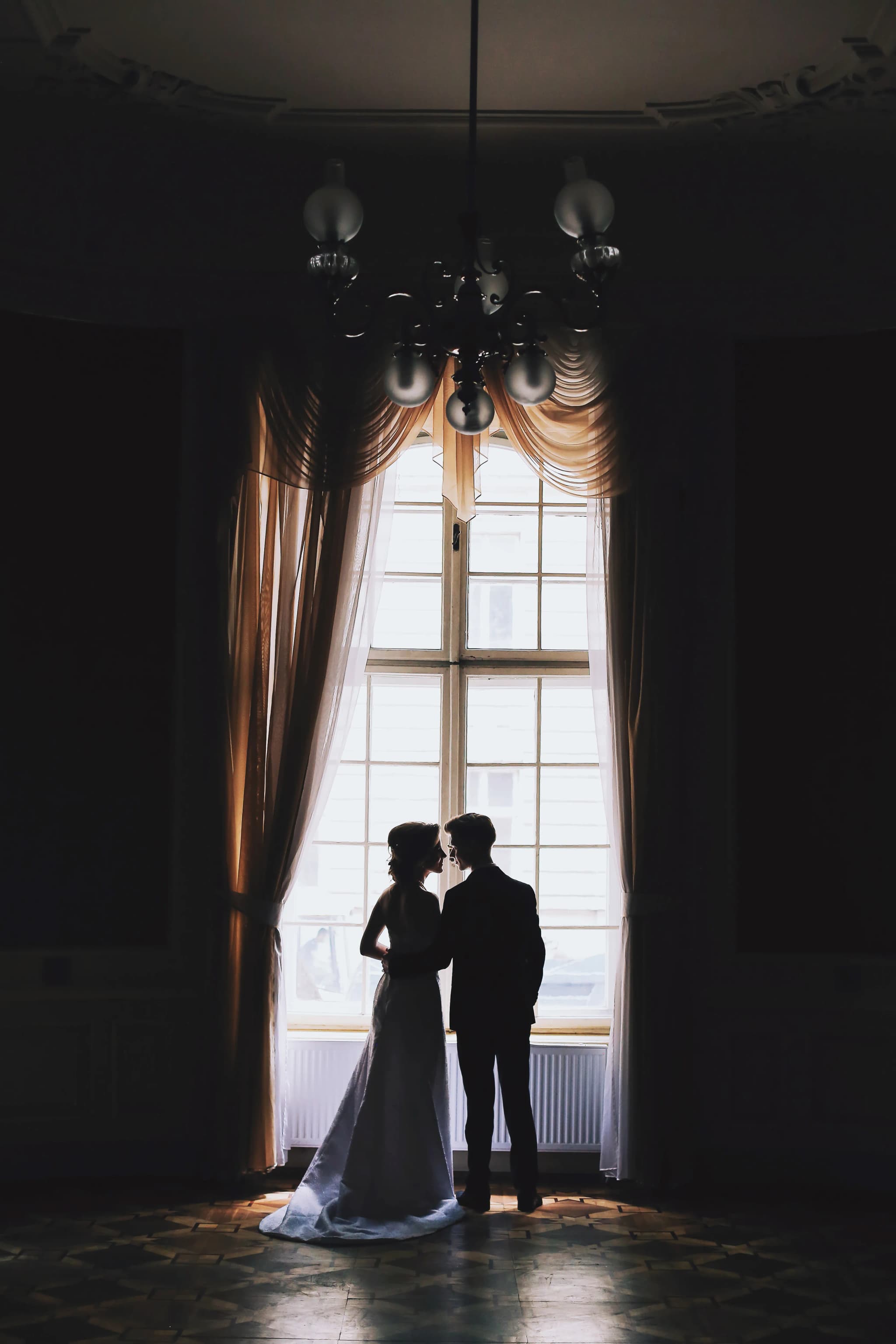
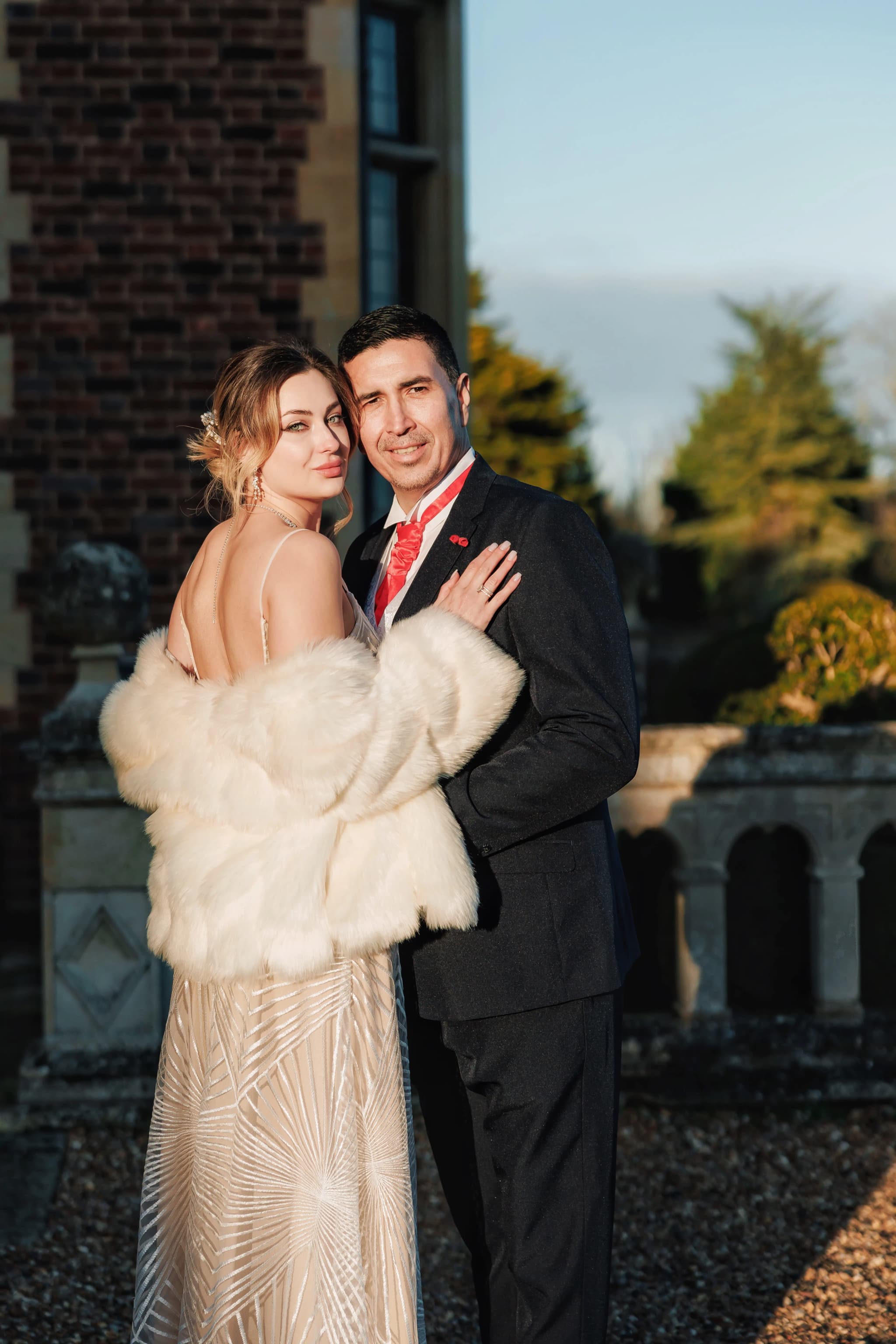
Groom portraits present a particular version of this problem. A groom is often more anxious than he will admit — about the day going smoothly, about a speech later, about simply being looked at by a room full of people — and that low-level tension shows up in the shoulders and jaw well before any formal photographs are taken. I try to photograph grooms doing something rather than standing for something wherever possible: getting dressed, having a final check in the mirror, a quiet moment with a best man or father. Activity-based photographs on a wedding morning almost always outperform posed ones, because the groom is thinking about the task in front of him rather than about the camera in the room.
When a formal portrait is needed — and most weddings do want at least a handful of composed groom portraits, often with the wider wedding party — I use the same weight-shift and hand-placement principles from a standard portrait session, just compressed into a shorter window given how much else is happening on a wedding morning. A minute or two of genuinely attentive direction produces noticeably better results than five unstructured minutes of "stand there and look natural," which is the instruction most grooms have been given at every wedding they have ever been part of and which has never once produced a natural-looking photograph.
Professional headshots and personal brand portraits
I photograph men's professional headshots, personal brand portraits, and groom portraits across Cambridge and the wider UK, with direction built specifically for people who do not enjoy having their photo taken.
Enquire about a portrait sessionThe Single Most Consistent Improvement
If I had to isolate the one adjustment that improves male portrait sessions more consistently than any other, it is a few seconds of deliberate physical resetting between frames — dropping the shoulders, shaking out the hands, rolling the neck, taking a breath and letting it out. Most men tighten progressively across a session without noticing it happening; the first few frames are often the most naturally held, and by frame thirty the shoulders have crept up towards the ears and the jaw has set hard, entirely without the subject being aware of it. A photographer who notices this pattern and actively interrupts it every three or four frames — rather than shooting continuously and hoping for the best — will get noticeably better results in the second half of a session than in the first, which is the opposite of what usually happens when nobody is managing it.
It is worth saying plainly that none of this depends on being a naturally photogenic person or someone who is comfortable in front of a camera. I have photographed plenty of men who arrived convinced they were "bad at photos" and left with portraits they were genuinely pleased with, not because anything about them changed in the space of an hour, but because the process around them changed. Good direction does the work that confidence is usually assumed to do. If you are dreading an upcoming headshot, personal brand shoot, or wedding portrait session for exactly this reason, get in touch and we can talk through what would work best for you before any camera comes out.
Yana Skakun
Photographer · England
Professional wedding, family and portrait photographer based in England. Passionate about capturing authentic emotions and timeless moments.
About Yana →men portrait photographymale headshots tipshow to look good in photos menmen professional portraitsportrait photography guide for men
Photography Tips — Professional Photography in Cambridge & England
Yana Skakun is a professional photographer based in Cambridge, specialising in wedding, family, and portrait photography across England. Every session is personal — planned around your story, your people, and the moments that matter most. This guide — Men's portrait photography: How to look your best in front of the camera — is part of the photography journal: practical, experience-based advice drawn from real sessions across England. Whether you arrived searching for men portrait photography or male headshots tips, the same care and attention shapes every session Yana photographs.
Professional Photography sessions are available year-round, with bookings open across Cambridge, Ely, Huntingdon, Peterborough, and further afield — East England, London, the Midlands, and beyond. If you have specific questions about how to look good in photos men, mention it in your enquiry. Get in touch through the contact form above to check availability and discuss your session. Enquiries are welcomed from anywhere in the UK.
Frequently Asked Questions
What camera settings should I use for outdoor portraits?+
For outdoor portraits, shoot in aperture priority mode. Use a wide aperture (f/1.8–f/2.8) to blur the background and isolate your subject. Keep ISO as low as possible in good light. In bright conditions, use a neutral density filter or switch to manual to avoid overexposure at wide apertures.
What is the golden hour in photography?+
Golden hour is the period roughly 30–60 minutes after sunrise and before sunset. The sun is low in the sky, producing warm, soft, directional light that flatters skin tones and creates beautiful long shadows. It's widely considered the best natural light for portrait and outdoor photography.
How do you get sharp photos in low light?+
In low light, increase your ISO (accepting some grain), use the widest aperture your lens allows, and slow your shutter speed to the slowest you can hand-hold without camera shake (roughly 1/focal length as a guide). Use image stabilisation if available, and consider a tripod for static subjects.
What is the rule of thirds in photography?+
The rule of thirds divides the frame into a 3×3 grid. Placing your subject on one of the four intersection points — rather than dead centre — creates a more dynamic, visually interesting composition. It's a guideline, not a rule: some of the most powerful images break it deliberately.
How do you edit photos to look professional?+
Professional editing starts with shooting in RAW format. In Lightroom or similar software, correct exposure, white balance, and contrast first. Recover shadow and highlight detail. Apply gentle colour grading for mood. Be conservative with skin retouching — the goal is natural enhancement, not transformation. Consistency across a set of images is what separates professional from amateur editing.
Continue Reading
Related Articles

Photography Tips
Photography Gift Vouchers: The Most Personal Present You Can Give
5 min read · Read Article
Photography Tips
Photo Books vs Photo Albums: What Is the Difference and Which Is Better?
5 min read · Read Article
Photography Tips
Photo Gift Ideas: Turning Professional Images into Meaningful Presents
5 min read · Read Article
Get in Touch
Ready to Book Your Session?
Get in touch to discuss your vision — I'll reply within 24 hours.