Yana Skakun
Personal Branding for Authors: Book Launch Photography
By Yana Skakun·15 June 2026·6 min read
An author photograph sits on book jackets, in press kits, on speaker bureau listings, and in every interview, review, and feature published about your work. It is quietly one of the most-used professional images most authors ever have taken, and yet it is often the one given the least thought — a phone photo cropped from a launch party, or a headshot taken years earlier for a completely different purpose, pressed into service because a deadline arrived and there was nothing else to hand. Getting it right matters more than most authors realise until the image is already circulating in print and online, at which point changing it is far harder than getting it right the first time.
What a Book Launch Photography Session Actually Needs to Produce
A single photograph is rarely enough. Publishers, publicists, festival organisers, and journalists all need slightly different things, and a proper personal branding session for an author is built around producing a set of images that covers each use rather than one hero shot stretched to cover everything.
The back-of-jacket portrait is the classic author headshot — a clean background, considered light, and an expression that reads well at thumbnail size in an online bookshop as well as at larger scale on the physical dust jacket or paperback flap. It needs to look current, since it will likely be reused for every subsequent edition and reprint until you next update it.
A separate press photograph, usually landscape and at higher resolution, is what a newspaper picture desk or literary supplement editor actually wants. It is rarely identical to the jacket shot — editors want a slightly different frame, sometimes with more space around the subject for a headline or pull quote to sit alongside, and having that option ready means a feature does not get delayed while someone chases you for a usable image.
If you are likely to speak at literary festivals, conferences, or on panels, organisers will ask for a biography photograph for the printed programme and promotional material, and these are very often square-cropped, so having at least one image composed to survive a square crop without losing the top of your head or half your face saves a scramble later. Alongside the formal set, a run of more relaxed lifestyle photographs — reading, writing, in your study, or in a location that connects to your book — gives you material for the website About page, blog header, and the ongoing stream of social media posts that accompany a book's life long after publication week.
How an Author's Brand Photography Differs from a Standard Headshot
A standard corporate headshot is, by design, interchangeable. The whole point of a headshot for a law firm partner or a company website is consistency — the same background, the same lighting set-up, the same neutral, approachable expression, repeated across dozens of colleagues so the team page reads as a coherent set. Author brand photography works against that logic. It is meant to be specific, not interchangeable, because it communicates genre, tone, and personality alongside your likeness.
A crime thriller author photographed against a stark, shadowed background with a direct, unsmiling gaze is communicating something entirely different from a children's picture book illustrator photographed in bright, playful light surrounded by their own artwork, which is in turn different again from a literary fiction novelist photographed in the soft, contemplative light of a study lined with books. None of these are wrong. They are each doing their job, which is to give a reader, a bookseller, or a journalist an instant, largely unconscious impression of what kind of book this is before they have read a word of the text.
This is why a genuinely effective author photograph takes more thought than a standard headshot, and usually more than one set-up within a single session. Before we shoot, I ask about the book itself — its genre, its tone, whether it is the first in a series or a standalone, whether your public persona leans towards warm and approachable or serious and literary. Those conversations shape decisions about location, wardrobe, and lighting far more than any technical checklist, and they are the difference between a photograph that merely shows your face and one that does some of the marketing work for you.
Location and Setting: What Actually Works for Author Photographs
Bookshelves are the obvious choice and, used well, they still work — but a photograph taken against a wall of your own books, with the titles legible in the background, communicates something more specific than a generic library backdrop. I often use a mix of settings within one session: a clean, simply-lit portrait against a neutral background for the jacket and press uses, alongside a more environmental set at a location connected to you or your book, whether that is a study, a particular landscape referenced in the writing, a café you associate with drafting the manuscript, or a Cambridge college courtyard if that is part of your own story.
For authors based in or visiting Cambridge, the city offers a genuinely useful range of settings within a small area — historic libraries, quiet courtyards, riverside paths, and interiors with good natural light through tall windows, all of which read as considered rather than staged. For authors elsewhere in the UK, I am equally happy to travel to a location that means something to the book, since a setting with real relevance to the work is almost always more interesting than a photogenic location chosen purely for its light.
Not sure what images you actually need?
Publishers, publicists, and festival organisers all ask for slightly different things. Tell me about your publication timeline and I will help you work out exactly which shots the session needs to cover.
Ask about author photographyWhen to Book Book Launch Photography
The practical answer is: earlier than feels necessary. Publishers and publicists need high-resolution images months before the publication date, often several months ahead, to build review copies, media packs, and pre-order campaigns around. If your book has a publicity push planned — proof copies going out to reviewers, early features being pitched to literary editors, a festival appearance being arranged — the photograph usually needs to exist before any of that activity begins, not once it is already underway.
Booking a photography session with a generous lead time before your publication date gives you comfortable room for the whole process: choosing a date, having the session, reviewing and selecting images, and receiving final files ready to send to your publisher or publicist without anyone chasing you. Leaving it until a few weeks before publication creates unnecessary pressure on everyone, narrows your choice of dates and locations, and risks the kind of rushed session that produces images you are not entirely happy with living on your book jacket for years.
It is also worth thinking beyond the immediate launch. An author photograph taken for a debut novel will very likely be reused for the paperback edition, for subsequent books in a series, for your website, and for every piece of press coverage that follows for years afterwards. Treating the session as an investment in an image you will be represented by for a long time, rather than a box to tick before one specific deadline, tends to produce better decisions about how much time and thought to give it.
Wardrobe, Expression, and the Practical Details
Clothing for an author photograph works best when it is simple and unobtrusive rather than an outfit that draws attention away from your face. Solid colours photograph more cleanly than busy patterns, and clothing that reflects your genre without being a costume — a tailored jacket for a serious non-fiction author, something softer and more relaxed for a memoirist — tends to age better than anything too trend-led, since these images are often used for years.
On expression, the instinct many authors have is to smile broadly for every frame, and while a warm, open expression suits many genres well, it is not universally right. A session that includes a range — some warmer, some more serious and direct — gives you options for the different contexts an author photograph gets used in, from a chatty podcast thumbnail to a serious literary review. I generally shoot more variety than feels necessary in the moment, precisely so you have genuine choice afterwards rather than one single expression stretched across every use.
Delivery and Ongoing Use
Once the session is complete, edited images are delivered as high-resolution files suitable for print reproduction as well as web use, so a single set of files can go to your publisher, your website, and any press requests without needing separate versions produced later. I also provide a small number of images cropped and prepared specifically for common uses — square for programme listings, landscape for press — so you are not relying on whoever receives the files to crop sensitively themselves.
Because an author photograph tends to be reused repeatedly over a long period, I keep session files on record so that if you need a different crop, a different file size, or a black-and-white version for a particular publication further down the line, that can usually be sorted quickly without needing to arrange a new session.
An author photograph is a small, practical piece of the publishing process, but it is one that follows your work around for years — on the shelf, on the shop website, on every piece of press coverage the book generates. Giving it proper thought before the pressure of a looming deadline arrives makes the difference between an image you are quietly proud to have representing you and one you tolerate because there was no time to do better. If you have a publication date on the horizon and want to talk through what a session would involve, get in touch and we can work out a timeline that fits comfortably around your publisher's deadlines.
Yana Skakun
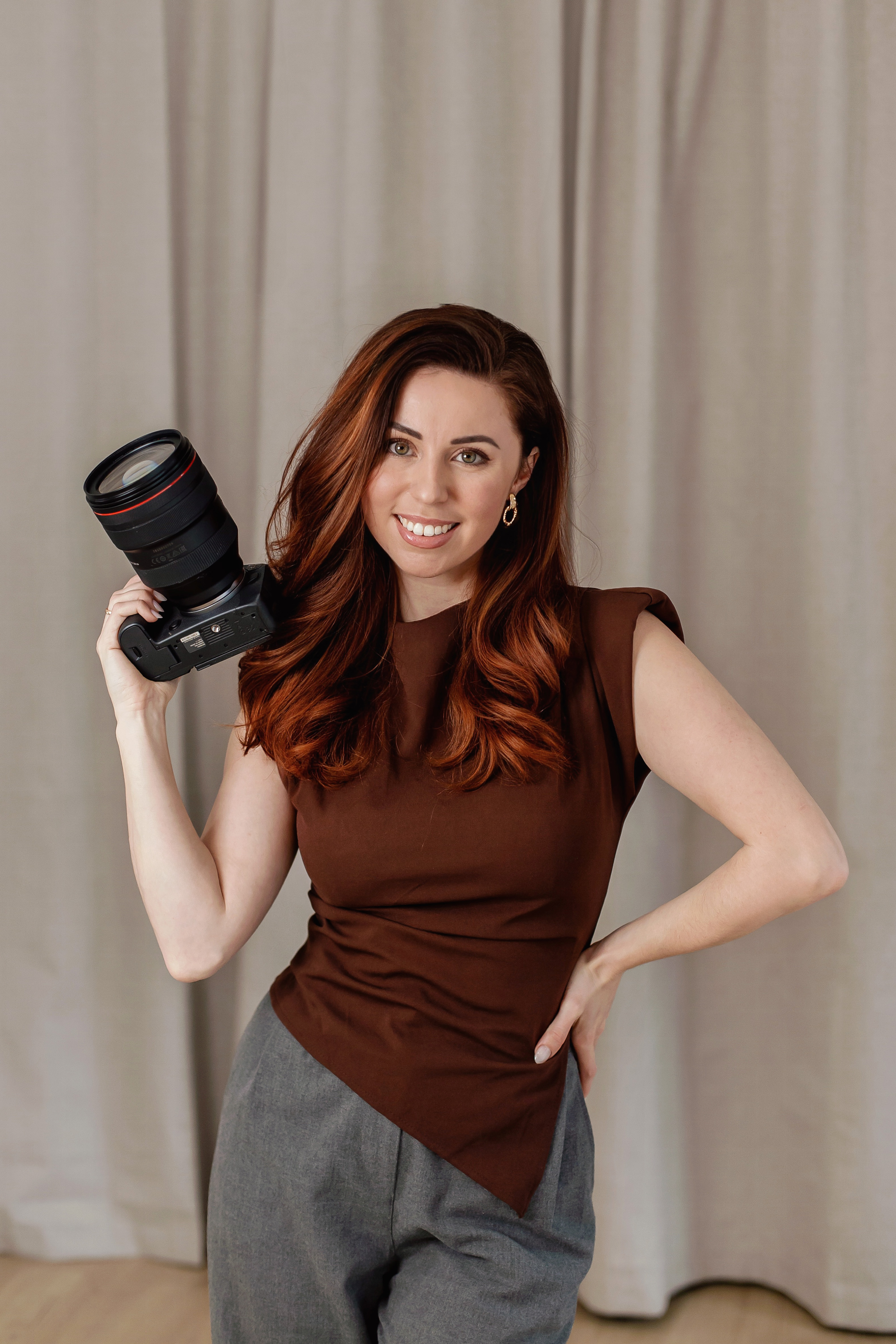
Photographer · England
Professional wedding, family and portrait photographer based in England. Passionate about capturing authentic emotions and timeless moments.
About Yana →author personal branding photographybook launch photography ukauthor headshot brand photoswriter personal branding photographer
Photography Tips — Professional Photography in Cambridge & England
Yana Skakun is a professional photographer based in Cambridge, specialising in wedding, family, and portrait photography across England. Every session is personal — planned around your story, your people, and the moments that matter most. This guide — Personal Branding for Authors: Book Launch Photography — is part of the photography journal: practical, experience-based advice drawn from real sessions across England. Whether you arrived searching for author personal branding photography or book launch photography uk, the same care and attention shapes every session Yana photographs.
Professional Photography sessions are available year-round, with bookings open across Cambridge, Ely, Huntingdon, Peterborough, and further afield — East England, London, the Midlands, and beyond. If you have specific questions about author headshot brand photos, mention it in your enquiry. Get in touch through the contact form above to check availability and discuss your session. Enquiries are welcomed from anywhere in the UK.
Frequently Asked Questions
What camera settings should I use for outdoor portraits?+
For outdoor portraits, shoot in aperture priority mode. Use a wide aperture (f/1.8–f/2.8) to blur the background and isolate your subject. Keep ISO as low as possible in good light. In bright conditions, use a neutral density filter or switch to manual to avoid overexposure at wide apertures.
What is the golden hour in photography?+
Golden hour is the period roughly 30–60 minutes after sunrise and before sunset. The sun is low in the sky, producing warm, soft, directional light that flatters skin tones and creates beautiful long shadows. It's widely considered the best natural light for portrait and outdoor photography.
How do you get sharp photos in low light?+
In low light, increase your ISO (accepting some grain), use the widest aperture your lens allows, and slow your shutter speed to the slowest you can hand-hold without camera shake (roughly 1/focal length as a guide). Use image stabilisation if available, and consider a tripod for static subjects.
What is the rule of thirds in photography?+
The rule of thirds divides the frame into a 3×3 grid. Placing your subject on one of the four intersection points — rather than dead centre — creates a more dynamic, visually interesting composition. It's a guideline, not a rule: some of the most powerful images break it deliberately.
How do you edit photos to look professional?+
Professional editing starts with shooting in RAW format. In Lightroom or similar software, correct exposure, white balance, and contrast first. Recover shadow and highlight detail. Apply gentle colour grading for mood. Be conservative with skin retouching — the goal is natural enhancement, not transformation. Consistency across a set of images is what separates professional from amateur editing.
Continue Reading
Related Articles

Photography Tips
Photography Gift Vouchers: The Most Personal Present You Can Give
5 min read · Read Article
Photography Tips
Photo Books vs Photo Albums: What Is the Difference and Which Is Better?
5 min read · Read Article
Photography Tips
Photo Gift Ideas: Turning Professional Images into Meaningful Presents
5 min read · Read Article
Get in Touch
Ready to Book Your Session?
Get in touch to discuss your vision — I'll reply within 24 hours.