Yana Skakun

Rainy Wedding Day? Why You Shouldn't Worry About UK Weather
By Yana Skakun·10 July 2026·8 min read
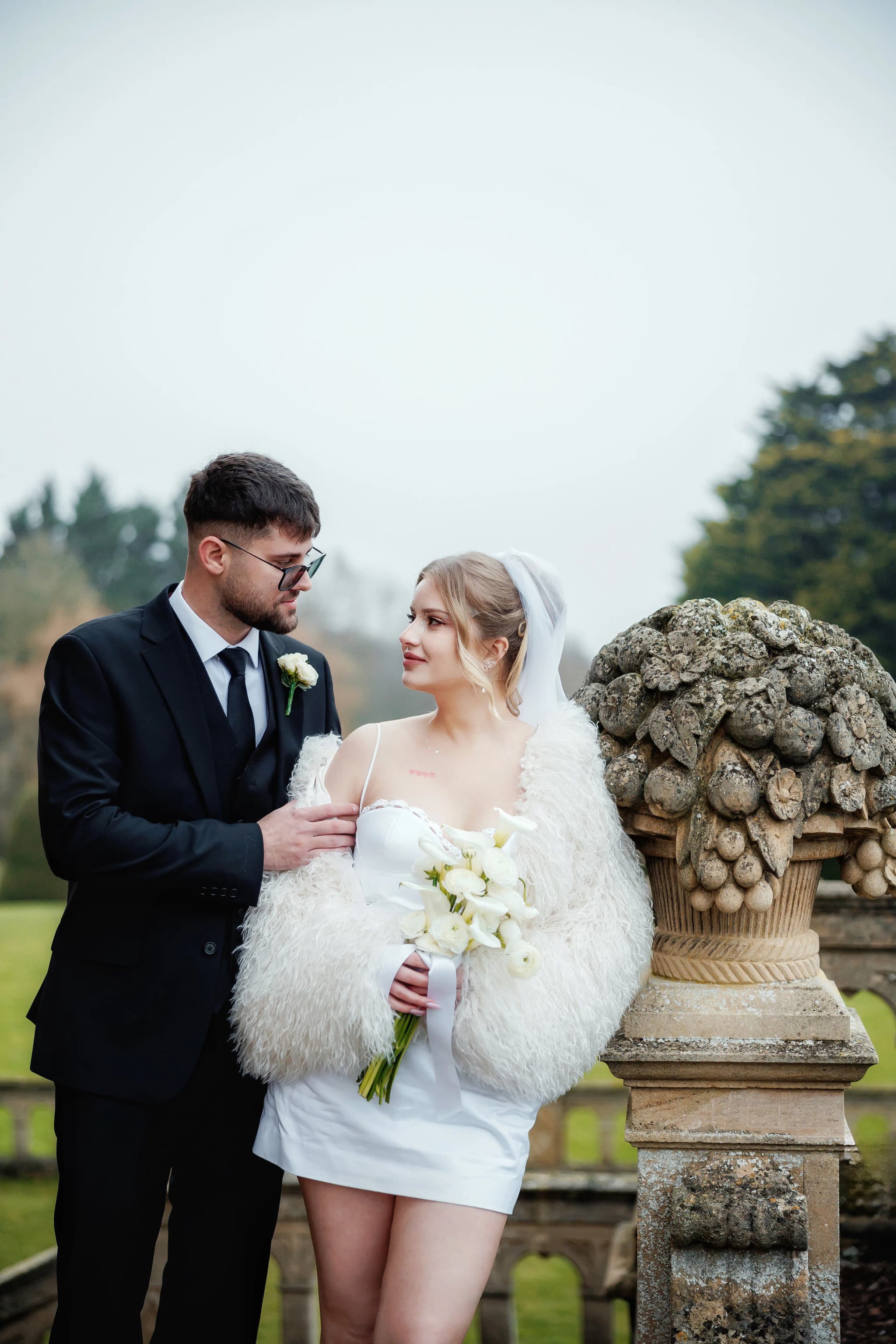
Somewhere around the third week before every UK wedding, I start getting the same message from couples: "Have you seen the forecast?" It is almost always followed by a string of worried emojis. I understand it completely — you have spent months, sometimes years, planning a single day, and the idea that weather beyond anyone's control might interfere with it feels genuinely stressful. But after photographing weddings across Cambridgeshire and the wider east of England through every kind of British weather, I can say with real confidence: rain does not ruin a wedding, and it very rarely ruins the photographs. In many cases, it makes them better.
Why UK Weather Anxiety Is So Common (and So Unnecessary)
Britain's reputation for unpredictable weather is well earned, and anyone planning an outdoor or partly outdoor wedding here has to accept from the outset that a forecast made even a week in advance is little more than a guess. This is simply the reality of getting married in this country, and every venue, every planner, and every photographer who works here regularly has built that reality into how they operate. The anxiety usually comes from imagining wedding photography as something that only works in bright sunshine — blue skies, golden light, everyone squinting happily into the camera. That image is one particular style of wedding photography, and it is not the only one, nor is it necessarily the best one.
The couples who end up happiest with their rainy-day photographs are almost always the ones who stopped fighting the forecast a few days out and decided instead to enjoy the day they were actually going to have. That shift in mindset matters more for how the photographs feel than the weather itself does. A relaxed couple in the rain produces far better images than a tense, disappointed couple under a break in the clouds.
What Rain Actually Does to Wedding Photographs
Photographically speaking, rain solves a problem that photographers spend a great deal of effort trying to create artificially: soft, even, flattering light. Direct sun creates harsh shadows under eyes and noses, forces people to squint, and produces a contrast range that can be difficult to work with, especially around midday. An overcast, rainy sky acts as an enormous natural softbox. The light is diffused evenly across everyone's face, there is no need to hunt for shade, and skin tones render smoothly without the blown highlights and heavy shadows that bright sun can cause.
Rain also adds genuine visual texture that sunny weddings simply do not have. Wet pavements reflect light and colour in a way dry stone never does. Water droplets on flowers, on car windows, on a marquee canopy, catch detail beautifully in close-up shots. A dark, dramatic sky behind a couple creates a mood and a sense of atmosphere that a flat blue sky rarely achieves. Some of the most striking, most editorial-feeling images I have taken have come from weather that couples were dreading the week before.
There is also an emotional honesty to rainy wedding photographs that couples often come to value more than they expect. A couple laughing under one umbrella, hair slightly damp, makeup a little softened by the air, tends to look like themselves in a way that a stiffly posed sunny portrait sometimes does not. Guests huddled together under a marquee roof, someone's coat held over a bridesmaid's head, a best man sprinting across a courtyard with a golf umbrella — these become some of the stories people tell for years afterwards, and they only happen because of the rain.
How I Actually Plan for Rain on the Day
Every wedding I shoot has a weather contingency built into the timeline from the earliest planning stages, regardless of the season or the forecast, because British weather can change within a single afternoon. This is not a last-minute scramble; it is standard preparation. I always ask couples and venues about covered or indoor alternatives for portraits, confirm what is available at the venue itself (an orangery, a cloistered walkway, a grand staircase, a barn interior with good window light), and build a flexible order of the day that can absorb a shower without falling apart.
Timing flexibility is the single most useful tool against bad weather. Rain in the UK is very rarely constant for an entire day; it tends to come in bands, with genuine breaks between them. If the couple portraits are the one part of the day that needs to happen outdoors, I keep an eye on the sky and the radar throughout the afternoon and use natural gaps as they appear, even if that means adjusting the planned order slightly. A twenty-minute break in the rain at four o'clock is often all that is needed.
I always carry clear umbrellas as part of my kit. They photograph beautifully — unlike a solid black umbrella, which just becomes a dark shape blocking the couple's faces, a clear umbrella lets light through and lets me see and photograph the couple underneath it clearly, while still keeping everyone dry. I will also usually scout a handful of covered spots near the ceremony and reception venue in advance specifically as rain contingencies, so that if the whole day turns out wet, there is still a clear plan for portraits rather than an improvised one.
A note on planning ahead
If you are planning a UK wedding and the weather is on your mind, it is worth raising it early rather than waiting until the week before. I build a rain plan into every wedding day timeline from the outset, and knowing the venue's indoor options in advance makes an enormous difference on the day itself. Have a look through recent real weddings to see how this plays out in practice, including a few that were shot in proper British downpours.
Get in touchPractical Advice for Couples Facing a Rainy Forecast
If your forecast turns wet in the days before your wedding, resist the urge to check it every hour — UK forecasts beyond about forty-eight hours are genuinely unreliable, and obsessing over a five-day outlook rarely changes anything except your stress levels. Instead, focus on the things that are within your control. Talk to your venue about their indoor backup for photographs and speeches. Ask your florist whether your bouquet and any buttonholes can handle a little rain (most can, briefly). Pack a small bag of practical items: a couple of decent-sized umbrellas in a colour or pattern you actually like the look of, a change of shoes for the reception if you are wearing anything delicate, and a hairstyle and makeup plan that can handle a bit of moisture without collapsing.
Wellies under a wedding dress have become genuinely popular for exactly this reason, and they photograph charmingly rather than as a compromise. If you are marrying somewhere with grounds or gardens, ask the venue whether golf umbrellas are available on-site — many venues that host regular weddings keep a stock for exactly this situation. And if you are working with a wedding planner, ask them directly what the rain plan is; a good planner will already have one, and simply hearing it out loud tends to ease a lot of the anxiety.
For couples considering an elopement or intimate wedding in the UK, weather flexibility is actually easier to manage than at a large wedding, since the timeline is usually simpler and there are fewer people whose schedules need to align around a change of plan. A small group can duck into a café, wait out a shower, and carry on, in a way that eighty guests cannot.
Real Examples: Rain That Made the Photographs Better
Some of the images I am proudest of from past weddings came directly from weather that couples had spent weeks worrying about. A reflection of a bride's dress in a puddle outside a Cambridgeshire barn, shot low to the ground, is one of the most requested images from that entire wedding when I show couples my portfolio now. A groomsman holding an umbrella over the photographer rather than the couple, caught by a second camera, became one of a couple's favourite candid shots because it captured exactly the kind of good humour their families are known for. A confetti exit shot in light drizzle, with the confetti catching the low afternoon light as it fell through the damp air, is genuinely more atmospheric than the same shot taken in flat sunshine.
None of these images required extraordinary effort to create. They came from being present, watching for the moment, and treating rain as a photographic opportunity rather than an obstacle to work around. This is the mindset I bring to every wedding regardless of forecast, and it is worth couples adopting the same mindset themselves in the run-up to their day.
When Rain Genuinely Does Change the Plan
It would be dishonest to suggest rain never has practical consequences, so it is worth being straightforward about this too. Heavy, sustained rain can mean outdoor ceremonies move indoors, group photographs get simplified to save everyone from standing outside in wet clothes for twenty minutes, and a planned countryside walk for couple portraits gets shortened or relocated somewhere more sheltered. These are sensible, practical adjustments rather than failures of the day, and a venue and photographer who have handled British weather before will make them smoothly and without fuss.
The one thing I would genuinely encourage against is trying to force a full outdoor plan through determined bad weather purely because it was the original plan. Guests in soaked formalwear, a bride worried about a dress that is not designed to get wet, and a rushed, uncomfortable set of photographs taken under pressure are the actual downsides of rain on a wedding day — not the rain itself, but resisting sensible adaptation to it. A good plan B, discussed calmly in advance, avoids all of this entirely.
Choosing the Right Photographer for a British Wedding
When you are looking for a wedding photographer based in the UK, weather adaptability is worth asking about directly, in the same way you might ask about backup equipment or insurance. Ask to see examples of their work from weddings with poor weather, not just their sunniest, brightest portfolio images. A photographer who has genuine, confident experience shooting in rain will talk about it as a normal, manageable part of the job rather than as a disaster scenario, and that confidence is exactly what you want standing next to you if the forecast does turn against you.
It is also worth discussing timeline and pricing early, since a flexible, weather-resilient day often benefits from a slightly longer coverage window that allows time to wait for a break in the rain or move locations if needed. You can find full details on packages and pricing that reflect this kind of flexible coverage, and it is something I am always happy to talk through directly with couples during initial consultations, well before any forecast is even relevant.
Weather is one of the very few genuinely uncontrollable elements of a wedding day, and that is precisely why it is worth letting go of the worry around it as early as possible. Rain in the UK is common, it is manageable, and with the right planning it very rarely takes anything away from the photographs — more often, it adds something unexpected and memorable to them. If you would like to talk through how Yana Skakun Photography plans for British weather, or want to see how past weddings turned out in less-than-perfect conditions, get in touch and we can talk through your date and venue directly.
Yana Skakun
Photographer · England
Professional wedding, family and portrait photographer based in England. Passionate about capturing authentic emotions and timeless moments.
About Yana →rainy wedding day photographyUK wedding weatherwedding photography rain planovercast wedding lightCambridgeshire wedding photographerwet weather wedding tips
Photography Tips — Professional Photography in Cambridge & England
Yana Skakun is a professional photographer based in Cambridge, specialising in wedding, family, and portrait photography across England. Every session is personal — planned around your story, your people, and the moments that matter most. This guide — Rainy Wedding Day? Why You Shouldn't Worry About UK Weather — is part of the photography journal: practical, experience-based advice drawn from real sessions across England. Whether you arrived searching for rainy wedding day photography or uk wedding weather, the same care and attention shapes every session Yana photographs.
Professional Photography sessions are available year-round, with bookings open across Cambridge, Ely, Huntingdon, Peterborough, and further afield — East England, London, the Midlands, and beyond. If you have specific questions about wedding photography rain plan, mention it in your enquiry. Get in touch through the contact form above to check availability and discuss your session. Enquiries are welcomed from anywhere in the UK.
Frequently Asked Questions
What camera settings should I use for outdoor portraits?+
For outdoor portraits, shoot in aperture priority mode. Use a wide aperture (f/1.8–f/2.8) to blur the background and isolate your subject. Keep ISO as low as possible in good light. In bright conditions, use a neutral density filter or switch to manual to avoid overexposure at wide apertures.
What is the golden hour in photography?+
Golden hour is the period roughly 30–60 minutes after sunrise and before sunset. The sun is low in the sky, producing warm, soft, directional light that flatters skin tones and creates beautiful long shadows. It's widely considered the best natural light for portrait and outdoor photography.
How do you get sharp photos in low light?+
In low light, increase your ISO (accepting some grain), use the widest aperture your lens allows, and slow your shutter speed to the slowest you can hand-hold without camera shake (roughly 1/focal length as a guide). Use image stabilisation if available, and consider a tripod for static subjects.
What is the rule of thirds in photography?+
The rule of thirds divides the frame into a 3×3 grid. Placing your subject on one of the four intersection points — rather than dead centre — creates a more dynamic, visually interesting composition. It's a guideline, not a rule: some of the most powerful images break it deliberately.
How do you edit photos to look professional?+
Professional editing starts with shooting in RAW format. In Lightroom or similar software, correct exposure, white balance, and contrast first. Recover shadow and highlight detail. Apply gentle colour grading for mood. Be conservative with skin retouching — the goal is natural enhancement, not transformation. Consistency across a set of images is what separates professional from amateur editing.
Continue Reading
Related Articles

Photography Tips
Photography Gift Vouchers: The Most Personal Present You Can Give
5 min read · Read Article
Photography Tips
Photo Books vs Photo Albums: What Is the Difference and Which Is Better?
5 min read · Read Article
Photography Tips
Photo Gift Ideas: Turning Professional Images into Meaningful Presents
5 min read · Read Article
Get in Touch
Ready to Book Your Session?
Get in touch to discuss your vision — I'll reply within 24 hours.