Yana Skakun

Professional Headshots for Science Communicators: Authority and Accessibility in One Frame
By Yana Skakun·19 August 2025·4 min read
Science communicators occupy a strange and specific visual space. You are neither a corporate executive whose headshot needs to say "trustworthy institution" nor a lifestyle influencer whose photograph needs to say "relatable and warm above all else." You are something in between, and the photograph that represents you online — on a speaker biography page, a podcast cover, a Substack masthead, a university staff profile, a book jacket, or a festival programme — has to hold two things in tension at once: it needs to look credible to specialists and funders, and it needs to look genuinely approachable to an audience who may never have picked up a peer-reviewed paper in their life. I work with researchers, science journalists, public engagement officers, and podcast hosts across Cambridge and the wider UK, and this is consistently the brief I am given, whether or not the client has the vocabulary to put it that way themselves.
Why the Standard Headshot Formula Does Not Work Here
The conventional corporate headshot — dark suit, grey seamless backdrop, arms folded, a professional but slightly guarded expression — is designed to communicate authority and reliability to a business audience that already understands the context. It works well for a solicitor's website or a company leadership page. It works badly for a science communicator, because that formula reads as distant and institutional at exactly the moment your audience needs to feel invited in. A general public reading a headline about your research, or deciding whether to click play on your podcast episode, responds to warmth and curiosity long before they respond to formality.
At the other extreme, an overly casual photograph — taken on a phone, in a hoodie, with an ambiguous background — undersells the expertise you have spent years building. If you are approaching a festival organiser, a commissioning editor, or a grant panel, that image can quietly work against you before anyone has read a word of your biography. The solution is not a compromise between the two extremes so much as a genuinely different brief: an image built around engaged, intelligent curiosity rather than either formal authority or performed enthusiasm. That expression — someone caught mid-thought, genuinely interested, present in the moment — reads as credible to a specialist audience and as approachable to a general one, because it does not depend on either audience's specific frame of reference to land.
Planning for the Platforms You Will Actually Use
One of the most common frustrations I hear from science communicators is that their existing photograph works on one platform and fails everywhere else — a portrait-orientation image that becomes an awkward, badly-cropped square on a podcast app, or a tightly-cropped headshot that leaves no room for text overlay on a festival banner. This is almost always a planning problem rather than a photography problem. Before the session, I go through the list of places the images will actually be used, because each one has a different aspect ratio and a different amount of breathing room required around the subject.
Speaker biography pages on conference and festival websites typically want a landscape or portrait crop with generous space above the head for a name and title to sit alongside it. Podcast cover artwork is almost always square, and frequently a close, warm crop that has to hold its own as a small thumbnail on a phone screen. YouTube channel art needs a wide landscape banner with the subject positioned off-centre so text can overlay the empty space. Substack and newsletter headers want a landscape image with a calm, uncluttered background. LinkedIn and X profile photographs are square and close, university and institutional staff pages tend to want a formal portrait crop against a neutral background, and a book jacket photograph has its own particular conventions depending on the publisher and genre. Rather than shooting one setup and hoping it survives being cropped six different ways, I plan compositions during the session with each specific end use in mind, so nothing is left to a last-minute crop that cuts off an elbow or crowds a face against the frame edge.
Updating the Image When the Role Has Changed
A great many of the science communicators I photograph started their careers as researchers and have, over time, taken on some or all of a public-facing role — writing for a general audience, appearing on podcasts, giving public lectures, running an outreach programme, or building a following explaining their field on social media. The photograph that still represents them online is very often the one taken years earlier for a university staff directory: formal, slightly stiff, framed for an audience of colleagues rather than the public. It is not a bad photograph in its original context, but it no longer matches the role the person is actually doing, and that mismatch is worth fixing.
For clients who are still active in both worlds — publishing academic papers and doing public engagement work in the same year — I often use a single session to produce two distinct sets of images: a more formal, institution-appropriate headshot for university profiles, grant applications, and conference programmes, alongside a warmer, more relaxed set for public-facing use on social platforms, personal websites, and media appearances. Both sets come from the same session, the same outfit changes if needed, and the same booking, so there is no need to plan and pay for two separate photography appointments as your public profile grows.
Studio Portraits Versus Environmental Photographs
Science communicators tend to benefit from having both a clean studio-style headshot and at least a small set of environmental images — photographs taken somewhere with genuine context, whether that is a laboratory corridor, a lecture theatre, outdoors on a university site, or simply a location with interesting light and texture. The studio headshot is the workhorse image: it goes on the staff page, the podcast platform's guest list, the conference speaker grid, anywhere a clean, consistent, easily-cropped photograph is needed. The environmental image tells more of a story and works well for feature articles, longer profile pieces, personal websites, and social media posts where a bit of visual context adds interest rather than distraction.
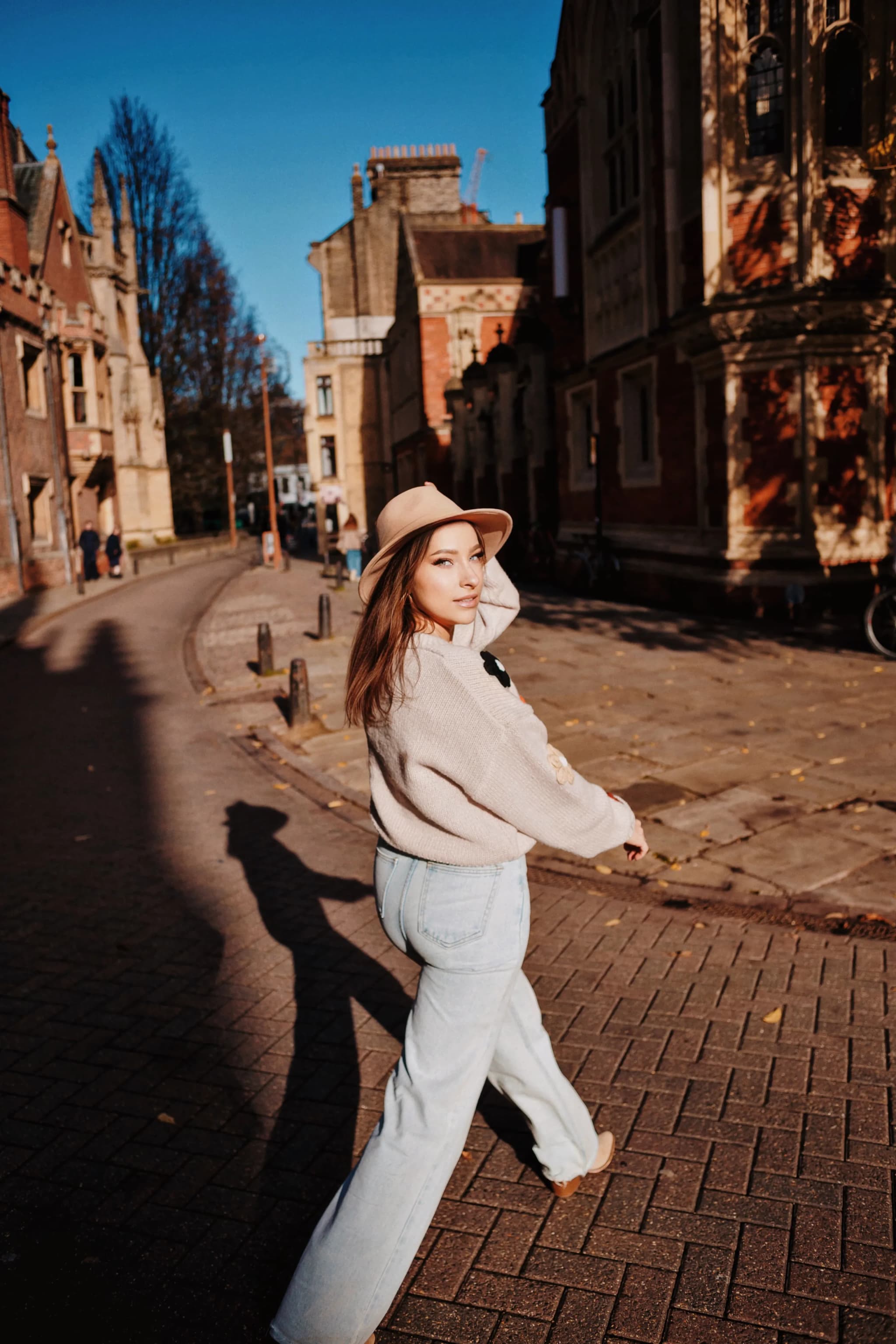
In Cambridge specifically, this often means combining a controlled indoor or studio setup with a short outdoor sequence making use of the city's distinctive architecture and light — college courtyards, quiet stretches of the Cam, or simply a well-lit street with interesting texture in the background. The aim throughout is that the setting supports the subject rather than competing with them: a beautiful backdrop that draws the eye away from the face defeats the purpose of a headshot session.
What to Wear and How to Prepare
Clothing for a science communicator headshot session sits deliberately between formal and casual. Solid, mid-tone colours photograph better than busy patterns or anything with visible logos or text, both of which date quickly and distract from the face. A smart-casual jumper, a well-fitted shirt, or a blazer without a tie all tend to read as credible without tipping into corporate formality. If you are planning to use images for both academic and public-facing purposes, bringing a second outfit — something slightly more formal and something slightly more relaxed — gives us the flexibility to produce genuinely different-feeling sets within the same session.
It is also worth thinking in advance about what you actually want the photographs to communicate. A researcher explaining climate science to a general audience wants a different visual tone from a science journalist covering breaking medical stories, which is different again from a podcast host whose entire brand is built around approachable enthusiasm. Before the session I usually ask clients to send a few examples of other communicators' photographs they admire — not to copy, but to understand the register they are aiming for, so we can build toward that rather than guessing.
Photography for speaking engagements and festivals
If you are preparing to submit to a science festival, pitch a podcast appearance, or update a speaker profile, having a current, well-formatted photograph ready in advance makes the whole process considerably smoother.
Enquire about a headshot sessionTiming Sessions Around Festivals and Speaking Season
Cambridge Science Festival, Cheltenham Science Festival, New Scientist Live, and the steadily growing calendar of regional science communication events all request speaker photographs well ahead of their published programmes, usually as part of the initial submission or confirmation process. Having a current, correctly formatted image ready to send immediately — rather than scrambling to find something usable from an old conference badge or a cropped group photo — removes one small but genuine barrier to accepting speaking invitations at short notice. I generally suggest booking a session in late winter or early spring, ahead of the main run of spring and summer festivals, so the images are ready well before submission deadlines start arriving.
For science journalists and podcast hosts, there is less of a fixed seasonal pattern, but the same principle applies: it is far easier to update a byline photograph or podcast cover once, well in advance, than to be caught needing a new image the week before a major feature or a first episode goes live.
A photograph cannot substitute for the substance of your work, but it does shape the very first impression an editor, a festival organiser, a podcast listener, or a member of the public forms before they have read or heard a single word from you. For science communicators specifically, that first impression has to do more work than most professional photographs are asked to do — carrying both credibility and warmth in a single frame, across a dozen different platforms and crop ratios. If your current photograph no longer reflects the public-facing work you are doing, or you simply do not have one that is fit for purpose across the platforms you use, get in touch and I would be glad to talk through a session built around exactly how you communicate your science.
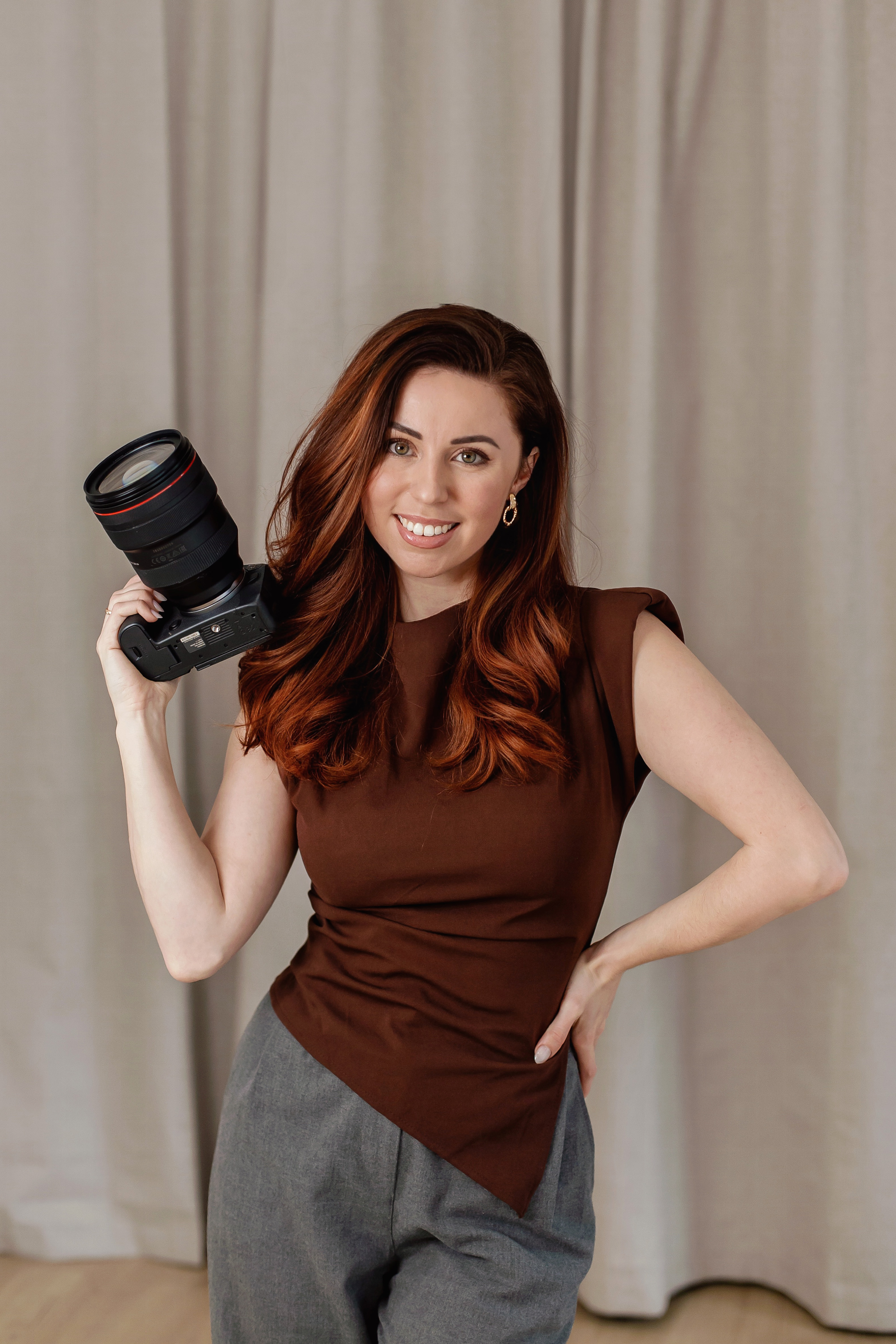
Yana Skakun
Photographer · England
Professional wedding, family and portrait photographer based in England. Passionate about capturing authentic emotions and timeless moments.
About Yana →science communicator headshots UKscience journalist professional photo UKpublic engagement professional photography Cambridgescience festival speaker headshot UKscience YouTuber profile photo UKSubstack science writer headshot UK
Business Headshots — Corporate Headshot Photography in Cambridge & England
Corporate photography with Yana Skakun covers individual headshots, team portraits, and event documentation — all delivered with the same consistent quality and professional tone. Available in Cambridge and across England for businesses of all sizes. This guide — Professional Headshots for Science Communicators: Authority and Accessibility in One Frame — is part of the photography journal: practical, experience-based advice drawn from real sessions across England. Whether you arrived searching for science communicator headshots uk or science journalist professional photo uk, the same care and attention shapes every session Yana photographs.
Corporate Headshot Photography sessions are available year-round, with bookings open across Cambridge, Ely, Huntingdon, Peterborough, and further afield — East England, London, the Midlands, and beyond. If you have specific questions about public engagement professional photography cambridge, mention it in your enquiry. Get in touch through the contact form above to check availability and discuss your session. Enquiries are welcomed from anywhere in the UK.
Frequently Asked Questions
What camera settings should I use for outdoor portraits?+
For outdoor portraits, shoot in aperture priority mode. Use a wide aperture (f/1.8–f/2.8) to blur the background and isolate your subject. Keep ISO as low as possible in good light. In bright conditions, use a neutral density filter or switch to manual to avoid overexposure at wide apertures.
What is the golden hour in photography?+
Golden hour is the period roughly 30–60 minutes after sunrise and before sunset. The sun is low in the sky, producing warm, soft, directional light that flatters skin tones and creates beautiful long shadows. It's widely considered the best natural light for portrait and outdoor photography.
How do you get sharp photos in low light?+
In low light, increase your ISO (accepting some grain), use the widest aperture your lens allows, and slow your shutter speed to the slowest you can hand-hold without camera shake (roughly 1/focal length as a guide). Use image stabilisation if available, and consider a tripod for static subjects.
What is the rule of thirds in photography?+
The rule of thirds divides the frame into a 3×3 grid. Placing your subject on one of the four intersection points — rather than dead centre — creates a more dynamic, visually interesting composition. It's a guideline, not a rule: some of the most powerful images break it deliberately.
How do you edit photos to look professional?+
Professional editing starts with shooting in RAW format. In Lightroom or similar software, correct exposure, white balance, and contrast first. Recover shadow and highlight detail. Apply gentle colour grading for mood. Be conservative with skin retouching — the goal is natural enhancement, not transformation. Consistency across a set of images is what separates professional from amateur editing.
Continue Reading
Related Articles
Business Headshots
Why professional business headshots are worth the investment in 2025
7 min read · Read Article
Business Headshots
The complete corporate headshot guide: What to expect and how to prepare
7 min read · Read Article
Business Headshots
LinkedIn headshot: What actually makes a profile photo work
7 min read · Read Article
Get in Touch
Ready to Book Your Session?
Get in touch to discuss your vision — I'll reply within 24 hours.