Yana Skakun

Small Business Photography Packages Cambridge: What's Included and What It Costs
By Yana Skakun·10 July 2026·8 min read
Every small business owner I photograph asks some version of the same question fairly early in our conversation: "What do I actually get, and how much is this going to cost me?" It is a completely reasonable question, and one that a lot of photography websites answer vaguely, if at all. This guide sets out, in plain terms, what a small business photography package in and around Cambridge typically includes, how pricing is generally structured across the industry, and what actually influences the final cost so you can budget sensibly before you ever pick up the phone.
Why Small Businesses Need Their Own Photography
The gap between a business using stock photography or old phone snaps and a business using proper, consistent photography is visible within seconds of landing on a website or scrolling a social feed. Stock photography is instantly recognisable as stock — the same handshake, the same laptop-in-a-coffee-shop, the same suspiciously perfect team of models who have never actually worked together. Customers clock it, even subconsciously, and it quietly undermines trust in a way that is hard to quantify but easy to feel.
For a small business, real photography does something stock images cannot: it shows the actual person behind the service, the actual product, the actual workshop or shopfront or studio. If you run a bakery, a therapy practice, a design studio, or a trades business, your clients are ultimately choosing to work with a person, and a genuine, well-lit photograph of that person does more to build confidence than almost any other single piece of marketing material. This matters just as much for a sole trader as it does for a team of fifteen, which is part of why I treat small business sessions with the same care as wedding photography — the stakes for the client are different, but the need for the work to be genuinely good is not.
What's Typically Included in a Small Business Package
Most small business photography packages, mine included, are built around three core elements: individual headshots, a set of environmental or "in action" images, and, where relevant, some product or premises photography. A typical half-day session covers headshots for one to six people, a run of candid working shots — someone at a workbench, behind a counter, in conversation with a client, mid-task in whatever the actual work looks like — and a small set of wider shots of the space itself if the location is part of the brand story.
The final deliverable is usually a set of fully edited, high-resolution digital images delivered via an online gallery, generally within one to two weeks of the shoot. Most packages include a defined number of "selects" — the images I take through full retouching and colour grading — rather than every single frame captured, because a curated set of twenty genuinely strong images is far more useful to a business than three hundred raw, unedited ones. Usage rights for websites, social media, and print marketing are typically included as standard; anything involving large-scale paid advertising or licensing to a third party is usually a separate conversation.
Some businesses only need headshots and nothing else, and that is entirely reasonable — a lot of my portrait work is exactly this: single-person sessions built around one clean set of professional headshots for LinkedIn, a website bio, and press use. Others want the fuller brand story, with the workspace, the products, and the team all covered in one session. The package should flex to what you actually need rather than forcing everyone through the same fixed structure.
What Actually Drives the Cost
UK small business photography pricing varies a fair amount, and the honest answer to "how much does this cost" is: it depends on scope, and any photographer quoting you a single flat number before understanding your needs is probably giving you a rough guide rather than a real figure. That said, there are a handful of factors that consistently move the price up or down, and understanding them helps you have a much more productive first conversation.
Session length is the biggest factor. A one-hour single-person headshot session costs meaningfully less than a half-day session covering a team of ten plus premises shots, simply because of the time, the number of setups, and the volume of editing involved afterwards. Number of subjects is the second major factor — photographing one person against a clean background is a different job to coordinating six team members around their individual schedules on the day. Location also plays a part: a session in your own premises usually costs less than one requiring travel to multiple sites or the hire of a studio space.
Editing volume matters too. A package that includes forty fully retouched images takes considerably longer to deliver than one including ten, and that time is reflected in the price. Finally, usage rights can affect cost — standard web and social usage is one thing, but if you need the images for a national ad campaign or an exclusive licence that prevents me from using them in my own portfolio, that is a different commercial arrangement entirely. As a very rough steer, single-person headshot sessions in the Cambridge area commonly sit in the low hundreds of pounds, while fuller half-day team and brand sessions run into the mid-to-high hundreds depending on scope — but the only way to get an accurate figure for your business is to talk through what you actually need.
Not sure what you need yet?
That is genuinely the most common starting point. Tell me a bit about your business, how many people need photographing, and where you plan to use the images, and I will put together a package that fits — rather than trying to fit your business into a package that does not.
Get in touchChoosing a Location: Studio, Office, or On-Site
Where a small business session takes place has more influence on the final images than most people expect going in. A neutral studio backdrop gives you clean, consistent headshots that work well across every LinkedIn profile and website bio, and it is often the fastest option when coordinating a team with limited time, since there is no travel and the lighting is fully controlled regardless of the weather outside.
Shooting on-site, at your actual premises, tends to produce more distinctive and more useful images overall, because the background itself starts doing marketing work — a barista actually behind their own machine, a physiotherapist actually in their treatment room, a joiner actually at their bench, all read as more authentic and more specific than a plain grey backdrop ever will. For most small businesses in and around Cambridge I lean towards a hybrid approach where practical: clean headshots against a simple backdrop within your space, plus a set of candid environmental shots around the same location, giving you both the polished individual portraits and the wider brand story in a single visit.
Natural light matters a great deal here, and it is worth thinking about when you schedule a session. A premises with good window light through the morning will photograph very differently to a windowless back office, and where natural light is limited I bring lighting equipment to compensate, but a site visit or even a quick video call beforehand to look at the space saves surprises on the day.
Getting the Best Results from Your Session
The single biggest factor in how a headshot turns out is how relaxed the person in front of the camera actually feels, and that has almost nothing to do with the camera or the lighting. I spend the first few minutes of any individual headshot simply talking — about the business, about the day, about anything that is not "look at the camera and smile" — because that natural conversation produces the expressions that end up looking like the person actually does when they are engaged and comfortable, rather than the slightly frozen look that comes from someone concentrating hard on posing correctly.
Practical preparation helps too. Solid, mid-tone clothing photographs more reliably than busy patterns or very bright white, which can distract from the face. For team sessions, having everyone loosely coordinate colours — not matching outfits, just avoiding one person in bright red standing next to someone in pale cream — keeps a set of team headshots looking cohesive when used together on a website or company page. A trim, a good night's sleep, and turning up slightly early to settle in before the camera comes out all make a bigger difference than most people expect.
For team and premises sessions, having a rough shot list agreed beforehand — who needs headshots, which parts of the space you want covered, whether you need any specific product or process shots — keeps the day moving efficiently and means nothing important gets missed because everyone was working from a shared plan rather than making decisions on the fly.
Making the Photography Work Across Your Marketing
A photography session is only as valuable as the use it actually gets afterwards, so it is worth planning ahead for where the images will go. Website headshots, LinkedIn profiles, Google Business Profile, email signatures, press kits, printed brochures, and social media all have slightly different needs in terms of orientation and cropping, and mentioning these uses before the shoot means I can capture a mix of tight, wide, portrait, and landscape framing rather than everything being locked to a single crop that only works in one place.
It is also worth thinking about longevity. Business photography does not need refreshing every year, but a set of images that is five or six years old, especially if someone has changed their hairstyle or the business has moved premises, starts to work against you rather than for you. Most businesses find that revisiting photography every two to three years, or whenever there is a significant team change, keeps everything looking current without needing to treat it as an annual expense.
Common Questions Small Businesses Ask
Can multiple team members be photographed in one session? Yes, this is one of the most common bookings I do — a single half-day session covering headshots for an entire team is generally far more cost-effective than booking individual sessions for each person, provided everyone can be scheduled through in reasonably tight time slots.
Do I need to book a studio, or can it be done at my premises? Either works, and the right choice depends on your space and what you are trying to achieve, as covered above. Plenty of small businesses in Cambridge choose their own office or shop because it doubles up as brand storytelling, not just headshots.
How far in advance should I book? A few weeks is generally sensible, particularly if you are coordinating a team's diaries around a single session date. Squeezing in quick single-person sessions can sometimes happen with much shorter notice, so it is always worth asking even if you think you have left it late.
What if I only need one or two images, not a full package? That is entirely workable. Not every business needs a half-day shoot, and a shorter, more focused session for one or two people is a perfectly normal request rather than an inconvenience.
Good business photography is not about vanity or extravagance — it is a practical, working part of how a small business presents itself to the people it wants to work with. Whether you need a single clean headshot for a LinkedIn profile or a full set of images covering your team, your premises, and your work in progress, the goal is always the same: photographs that look genuinely like you, your people, and what you actually do. Yana Skakun Photography is based in Cambridge and works with small businesses across the city and further afield throughout the UK. If you would like to talk through what a package might look like for your business, get in touch and we can find a shape and a price that actually fits.
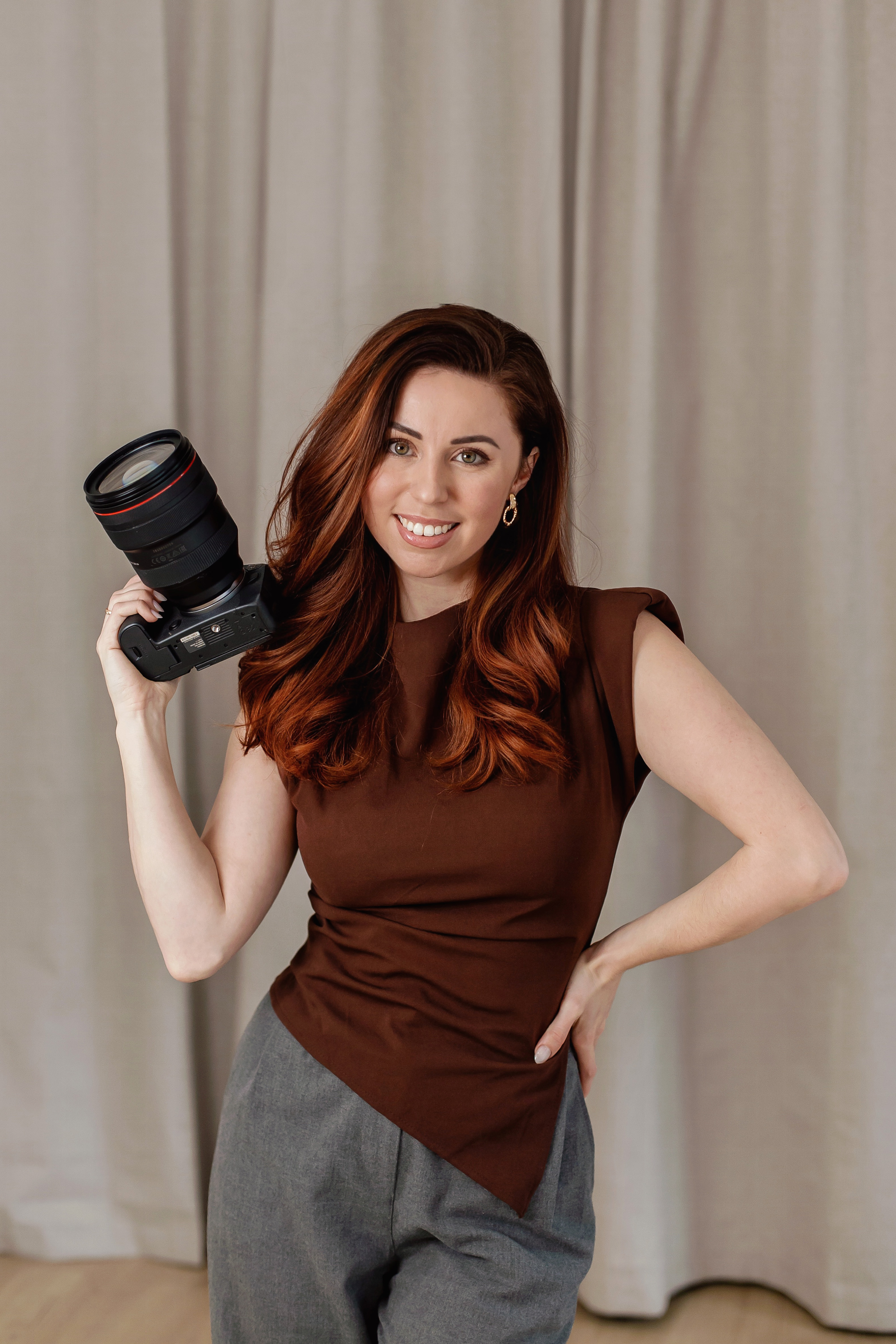
Yana Skakun
Photographer · England
Professional wedding, family and portrait photographer based in England. Passionate about capturing authentic emotions and timeless moments.
About Yana →small business photography Cambridgebusiness headshots Cambridgecorporate photography packagesteam headshot sessionbranding photography Cambridgeprofessional headshot cost UK
Business Headshots — Corporate Headshot Photography in Cambridge & England
Corporate photography with Yana Skakun covers individual headshots, team portraits, and event documentation — all delivered with the same consistent quality and professional tone. Available in Cambridge and across England for businesses of all sizes. This guide — Small Business Photography Packages Cambridge: What's Included and What It Costs — is part of the photography journal: practical, experience-based advice drawn from real sessions across England. Whether you arrived searching for small business photography cambridge or business headshots cambridge, the same care and attention shapes every session Yana photographs.
Corporate Headshot Photography sessions are available year-round, with bookings open across Cambridge, Ely, Huntingdon, Peterborough, and further afield — East England, London, the Midlands, and beyond. If you have specific questions about corporate photography packages, mention it in your enquiry. Get in touch through the contact form above to check availability and discuss your session. Enquiries are welcomed from anywhere in the UK.
Frequently Asked Questions
What camera settings should I use for outdoor portraits?+
For outdoor portraits, shoot in aperture priority mode. Use a wide aperture (f/1.8–f/2.8) to blur the background and isolate your subject. Keep ISO as low as possible in good light. In bright conditions, use a neutral density filter or switch to manual to avoid overexposure at wide apertures.
What is the golden hour in photography?+
Golden hour is the period roughly 30–60 minutes after sunrise and before sunset. The sun is low in the sky, producing warm, soft, directional light that flatters skin tones and creates beautiful long shadows. It's widely considered the best natural light for portrait and outdoor photography.
How do you get sharp photos in low light?+
In low light, increase your ISO (accepting some grain), use the widest aperture your lens allows, and slow your shutter speed to the slowest you can hand-hold without camera shake (roughly 1/focal length as a guide). Use image stabilisation if available, and consider a tripod for static subjects.
What is the rule of thirds in photography?+
The rule of thirds divides the frame into a 3×3 grid. Placing your subject on one of the four intersection points — rather than dead centre — creates a more dynamic, visually interesting composition. It's a guideline, not a rule: some of the most powerful images break it deliberately.
How do you edit photos to look professional?+
Professional editing starts with shooting in RAW format. In Lightroom or similar software, correct exposure, white balance, and contrast first. Recover shadow and highlight detail. Apply gentle colour grading for mood. Be conservative with skin retouching — the goal is natural enhancement, not transformation. Consistency across a set of images is what separates professional from amateur editing.
Continue Reading
Related Articles
Business Headshots
Why professional business headshots are worth the investment in 2025
7 min read · Read Article
Business Headshots
The complete corporate headshot guide: What to expect and how to prepare
7 min read · Read Article
Business Headshots
LinkedIn headshot: What actually makes a profile photo work
7 min read · Read Article
Get in Touch
Ready to Book Your Session?
Get in touch to discuss your vision — I'll reply within 24 hours.