Yana Skakun
Spring family photography: Best locations & timing in the UK
By Yana Skakun·29 September 2026·8 min read
Spring in the UK is a fleeting and extraordinary thing. In the space of six or seven weeks, the countryside transforms from bare winter branches into a world of blossom, bluebells, and long golden evenings that stretch past eight o'clock. For family photography, it is the season I look forward to most — not because it is easy, but because when you get the timing right, the resulting images are genuinely unlike anything you can create at any other time of year.
Understanding the Spring Photography Windows
One of the most important things I tell families booking spring sessions is that the best conditions are not a date on a calendar — they are a window, and that window can shift by two or three weeks from one year to the next. Cherry blossom in Cambridgeshire typically peaks somewhere between the second and fourth week of April, depending on whether February and March have been mild. English bluebells in ancient woodland — a truly iconic UK bloom — generally follow two to four weeks later, peaking between late April and mid-May across central England.
This means spring family photography requires a degree of flexibility that other seasons do not. When you book with me for a spring session, we agree on a provisional date and then confirm it in the week before, once I have been monitoring the trees and woodland in your chosen location. It is a slightly different process from booking a summer or autumn portrait session, but the results justify the extra planning. Missing peak blossom by five days can be the difference between an extraordinary image and an ordinary one.
If you have young children with limited schedule flexibility, the safest approach is to choose locations that offer multiple seasonal features — a site with both early blossom and later bluebell woodland, for example, extends your window considerably. Several of the parks and estates I work with regularly in Cambridgeshire and Hertfordshire offer exactly this.
Cherry Blossom Sessions: Timing and Locations
Cherry blossom is the more forgiving of the two major spring features to photograph. Urban parks with mature ornamental cherry trees tend to be more accessible with young children, and a misty or overcast spring morning in a blossom-filled park has a quiet, intimate quality that suits family portraiture beautifully. In Cambridgeshire, the Backs in Cambridge offer one of the most spectacular urban blossom displays in England — the row of cherry trees along the river, with the college architecture behind, creates a backdrop that is unambiguously Cambridge in a way that feels genuinely special for families living in or near the city.
The full bloom of cherry blossom typically lasts between seven and fourteen days, and a single windy night can scatter the petals overnight. I monitor blossom in my key locations from the third week of March each year, and I am always watching the forecasts once we are within range. When you are within a week of your session and blossom is looking close to peak, I will be in touch with specific timing recommendations. Early morning — between seven and nine — gives you petals at their freshest and light that is soft and directional even on sunny days.
For families keen on blossom, I would always suggest holding two dates loosely if your schedule allows: a primary date and a backup a few days later. The blossom almost always cooperates for one or the other, and building in that buffer takes the anxiety out of the booking considerably.
Bluebell Woods: England's Most Magical Family Setting
If cherry blossom is the most popular spring feature, English bluebells — Hyacinthoides non-scripta — are the most spectacular. Ancient bluebell woodland in full bloom is unlike anything else in the UK photographic year. The dense carpet of blue-violet flowers under a canopy of oak and ash that has not yet fully leafed, with shafts of early morning light cutting through, produces images with a genuinely fairytale quality that families return to for decades.
The key logistical consideration with bluebell woods is that they attract crowds, particularly on weekends at peak bloom. I almost always schedule bluebell family sessions either early in the morning — before nine — or on weekday mornings where possible. The flowers are freshest in the morning, the light is often best, and the woods are quiet enough that children can actually explore without the noise and distraction of other visitors. A family with young children wandering through an empty bluebell wood at seven-thirty in the morning, with dappled light and the smell of the forest floor, is one of the most joyful things I photograph.
In the East Anglia and Cambridgeshire region, there are several ancient woodlands within thirty to forty minutes of Cambridge that I work with seasonally. I do not publish these locations publicly, partly to protect the habitats and partly because the experience for my clients is better when the site is not crowded. If you are booking a bluebell session, ask me about location options during your consultation and I can talk you through the specifics.
Spring Family Sessions with Yana
Spring blossom and bluebell family sessions book out weeks in advance — often before the season arrives. I photograph across Cambridgeshire, Hertfordshire, and East Anglia, and I monitor seasonal conditions closely so you do not have to. If you are thinking about a spring session this year, the right time to enquire is now.
Enquire about spring family sessions →What to Wear: Dressing Your Family for Spring
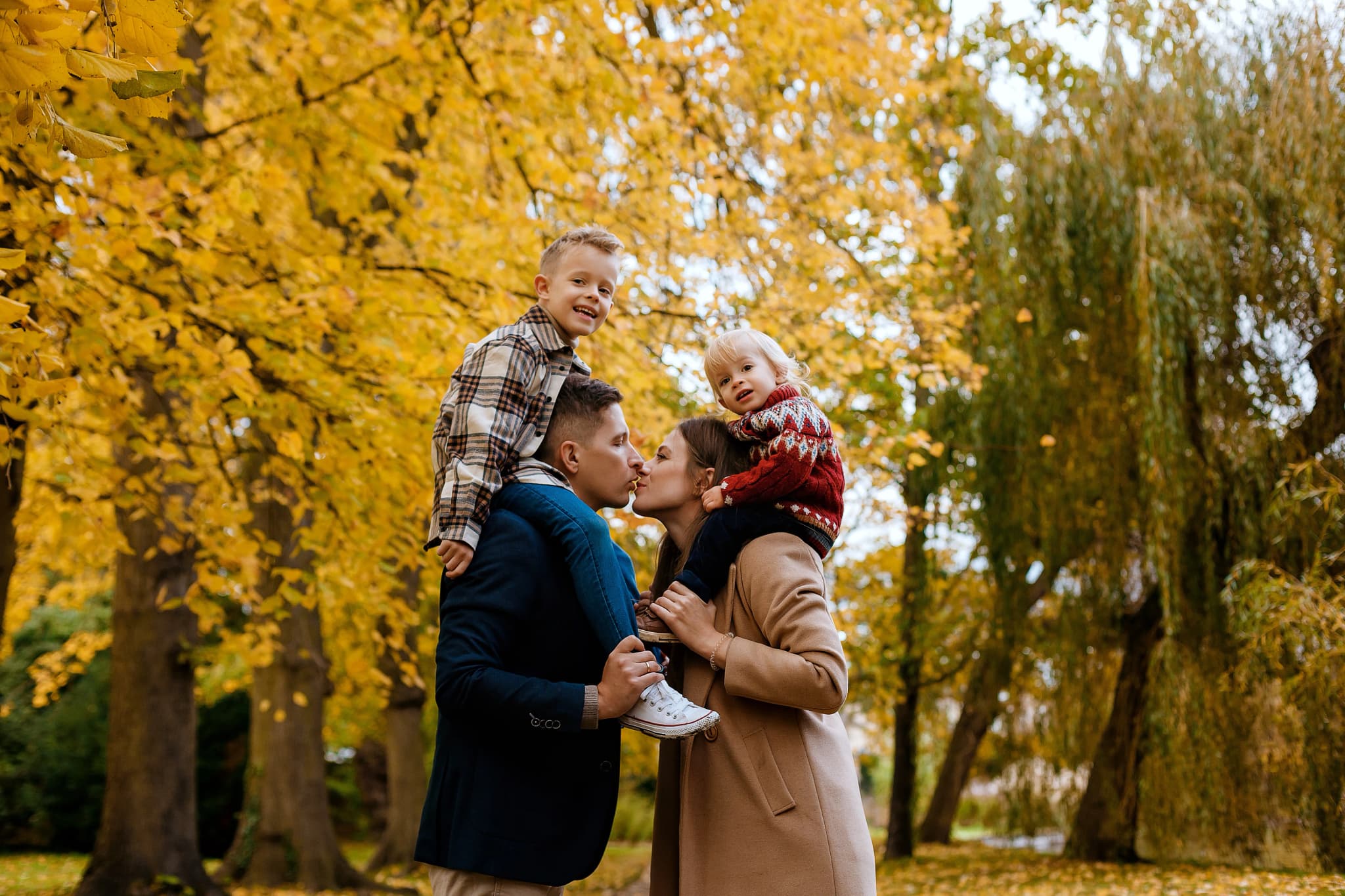
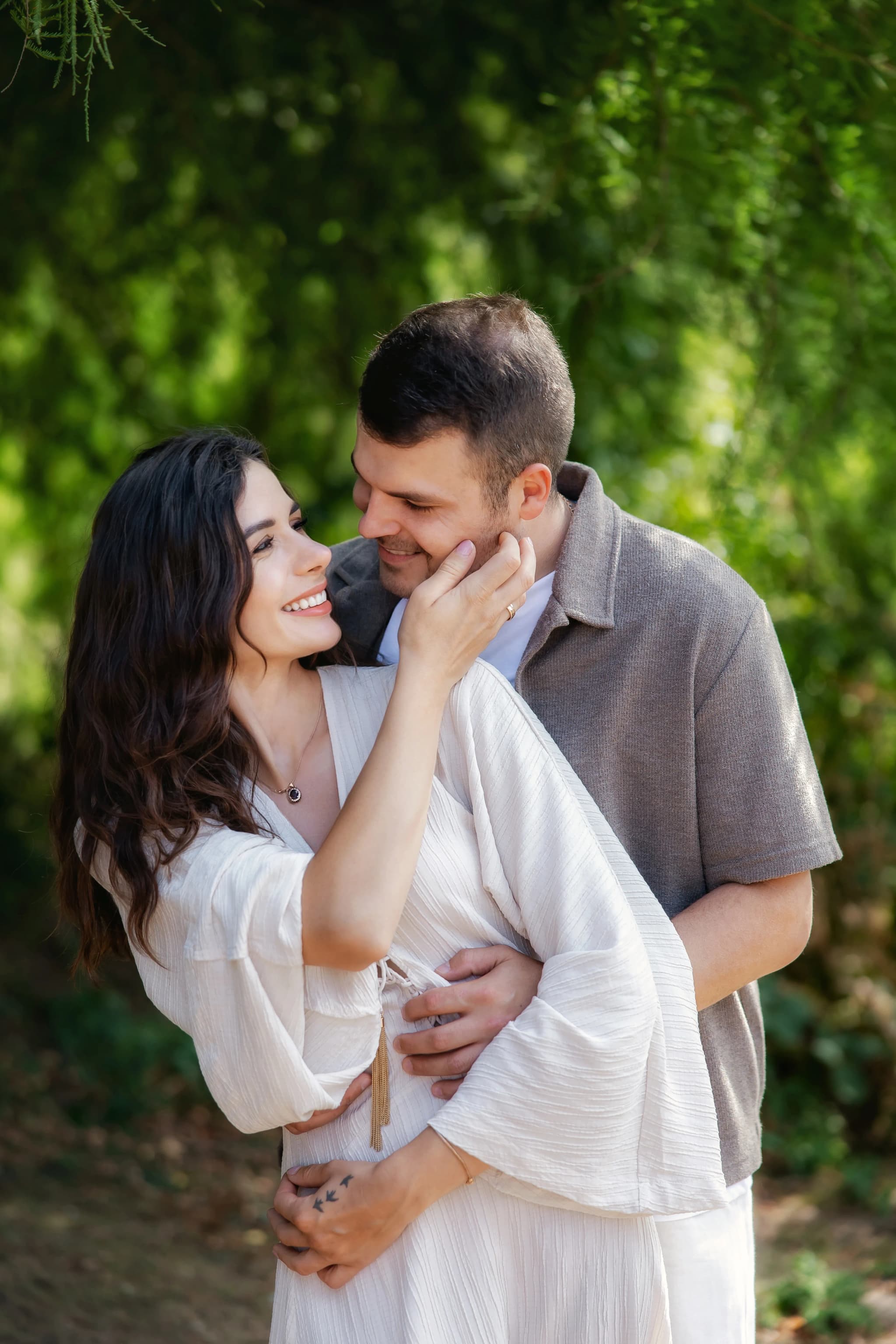
Spring colour palettes translate beautifully to camera when they complement rather than compete with the landscape. Against cherry blossom, which is typically a pale pink or white, soft neutrals work brilliantly — cream, oatmeal, warm white, dusty rose, sage green, and muted terracotta all sit naturally within the palette. Against bluebell woodland, which is cooler and more saturated, I often recommend leaning into warm earth tones: rust, ochre, deep olive, tan leather, and warm cream. These tones create a natural contrast against the violet-blue flowers without competing with them.
The most common wardrobe mistakes I see in spring sessions are bright white (which overexposes easily in open spring light), very dark navy or black (which can look heavy against fresh spring green), and clashing busy patterns within the family group. You do not all need to match — in fact, matching can look a little stiff — but picking a cohesive palette of two or three tones and dressing within that palette creates a natural harmony that elevates the images considerably.
Layering is also practical advice for spring sessions. The weather in April and May in the UK is genuinely unpredictable. A light linen jacket or a soft knit layer over a simple dress not only photographs beautifully but gives children and adults the option to remove a layer if it warms up during the session. I always ask families to bring at least one optional layer each, and in practice it comes up in about half of all spring sessions.
Light, Weather, and When to Shoot
The two greatest gifts that spring gives a photographer are the rapidly lengthening day and the quality of overcast light. By May, golden hour does not arrive until around eight in the evening, which opens up a vastly wider range of session times than winter allows. The period between five and seven in the evening in May is one of the most beautiful in the photographic year — directional, warm, with long shadows and a quality of light that flatters everyone. For families with older children or teenagers, an early evening session in this window is often my first recommendation.
For families with babies or toddlers where an eight o'clock session is simply not practical, overcast mornings are genuinely excellent. The soft, even light that a thin layer of cloud produces eliminates harsh shadows, flatters skin tones across all ages, and allows shooting in open spaces that would be unusable at the same time on a sunny day. I actively welcome overcast spring days and I always encourage clients not to cancel simply because the forecast is not sunny — some of my favourite spring family images have been made under a perfectly even grey sky.
Preparing Young Children for an Outdoor Session
Spring sessions with young children require a little preparation, and the families who enjoy the experience most are usually those who have thought through a few practical details in advance. Wellies or sturdy shoes are genuinely useful — bluebell woodland floors can be damp and uneven, and a toddler who has warm dry feet is a considerably happier toddler than one who has stepped in a puddle. A snack or two in a bag, kept back until a genuinely difficult moment, is always worth having. And arriving ten to fifteen minutes early to let children find their footing in the new environment — rather than launching immediately into posing — makes the entire session more relaxed for everyone.
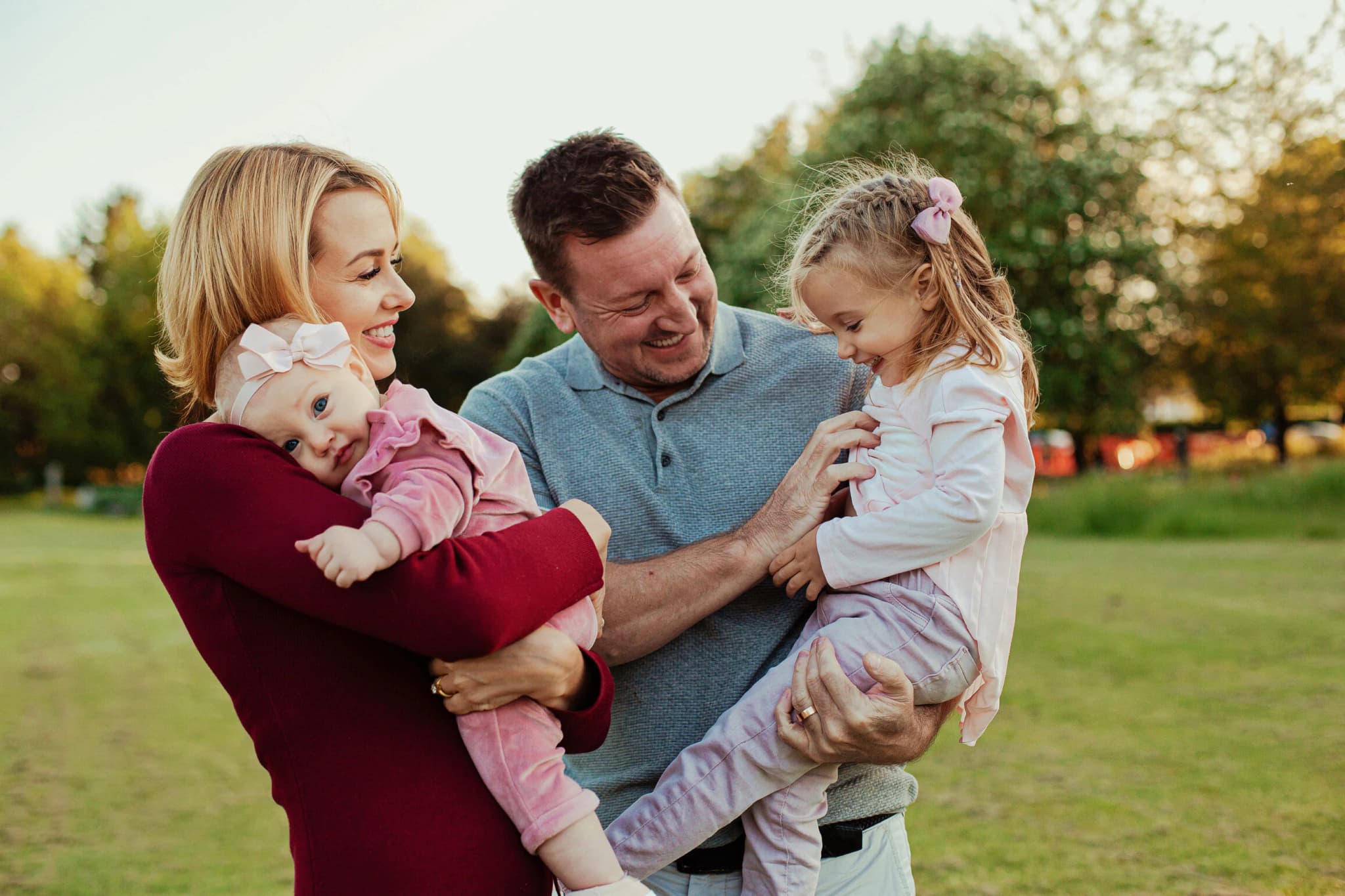
In my experience, the best images of young children rarely come from the posed moments. They come from the in-between seconds — a child turning to point at something in the distance, a toddler picking up a fallen petal, siblings running ahead on a woodland path. My approach with families is always to follow the children's lead and work with what is actually happening rather than trying to impose a fixed structure. Parents who give themselves permission to simply be present, rather than trying to manage their children's behaviour for the camera, almost always end up with images that capture something genuine and lasting.
Booking and Availability
Spring family sessions in Cambridgeshire and East Anglia are among the most requested work I do, and availability during the blossom and bluebell windows fills up well before the season arrives. Families who book in February and March have the best chance of securing their preferred timing and location. I offer a limited number of spring family sessions each year — partly to protect the quality of each session and partly because the monitoring and flexibility that seasonal work requires means I cannot take on unlimited bookings during narrow windows.
If you are considering a spring session, I would encourage you to enquire early. We can discuss the location options, talk through what suits your family, and put together a booking structure that builds in enough flexibility to catch the season at its best. Spring comes quickly, and once it has passed there is no shortcut to the next one.
The images that families come back to most, decade after decade, are almost always from the seasons — the blossom sessions, the bluebell mornings, the golden summer evenings. Spring, for all its unpredictability, has a quality that no other season quite matches. When you catch it right, the photographs practically make themselves.

Yana Skakun
Photographer · England
Professional wedding, family and portrait photographer based in England. Passionate about capturing authentic emotions and timeless moments.
About Yana →spring family photography UKbluebell family portraitsspring outdoor family photosbest time for family photos springcherry blossom family photography
Photography Tips — Professional Photography in Cambridge & England
Yana Skakun is a professional photographer based in Cambridge, specialising in wedding, family, and portrait photography across England. Every session is personal — planned around your story, your people, and the moments that matter most. This guide — Spring family photography: Best locations & timing in the UK — is part of the photography journal: practical, experience-based advice drawn from real sessions across England. Whether you arrived searching for spring family photography uk or bluebell family portraits, the same care and attention shapes every session Yana photographs.
Professional Photography sessions are available year-round, with bookings open across Cambridge, Ely, Huntingdon, Peterborough, and further afield — East England, London, the Midlands, and beyond. If you have specific questions about spring outdoor family photos, mention it in your enquiry. Get in touch through the contact form above to check availability and discuss your session. Enquiries are welcomed from anywhere in the UK.
Frequently Asked Questions
What camera settings should I use for outdoor portraits?+
For outdoor portraits, shoot in aperture priority mode. Use a wide aperture (f/1.8–f/2.8) to blur the background and isolate your subject. Keep ISO as low as possible in good light. In bright conditions, use a neutral density filter or switch to manual to avoid overexposure at wide apertures.
What is the golden hour in photography?+
Golden hour is the period roughly 30–60 minutes after sunrise and before sunset. The sun is low in the sky, producing warm, soft, directional light that flatters skin tones and creates beautiful long shadows. It's widely considered the best natural light for portrait and outdoor photography.
How do you get sharp photos in low light?+
In low light, increase your ISO (accepting some grain), use the widest aperture your lens allows, and slow your shutter speed to the slowest you can hand-hold without camera shake (roughly 1/focal length as a guide). Use image stabilisation if available, and consider a tripod for static subjects.
What is the rule of thirds in photography?+
The rule of thirds divides the frame into a 3×3 grid. Placing your subject on one of the four intersection points — rather than dead centre — creates a more dynamic, visually interesting composition. It's a guideline, not a rule: some of the most powerful images break it deliberately.
How do you edit photos to look professional?+
Professional editing starts with shooting in RAW format. In Lightroom or similar software, correct exposure, white balance, and contrast first. Recover shadow and highlight detail. Apply gentle colour grading for mood. Be conservative with skin retouching — the goal is natural enhancement, not transformation. Consistency across a set of images is what separates professional from amateur editing.
Continue Reading
Related Articles

Photography Tips
Photography Gift Vouchers: The Most Personal Present You Can Give
5 min read · Read Article
Photography Tips
Photo Books vs Photo Albums: What Is the Difference and Which Is Better?
5 min read · Read Article
Photography Tips
Photo Gift Ideas: Turning Professional Images into Meaningful Presents
5 min read · Read Article
Get in Touch
Ready to Book Your Session?
Get in touch to discuss your vision — I'll reply within 24 hours.