Yana Skakun
How to organise a team photo day: A complete guide for businesses
By Yana Skakun·23 June 2026·8 min read
There is a particular moment on almost every team photo day when someone from the business turns to me and says something like, "I did not realise this would take so much organising." It is a fair reaction. A team photography day looks, from the outside, like a simple thing — a photographer turns up, takes some headshots, everyone goes back to their desks. In practice it is closer to a small production, with a schedule, a set of decisions about outfits and backdrops, a room that needs to be turned into a temporary studio, and twenty or thirty individual people who each need two minutes of calm, unhurried attention in front of the camera. Done well, it is one of the highest-return investments a business makes all year — consistent, professional images across the website, LinkedIn profiles, pitch decks, and press materials communicate competence and cohesion before a single conversation has taken place. Done badly, or without enough planning, it produces a mismatched set of images that never quite get used and have to be redone within eighteen months. This guide covers how I plan and run team photo days for businesses across Cambridge and the wider UK, and what I ask companies to think about before I arrive.
Start With a Clear Brief, Not Just a Booking
Before any equipment gets booked, I ask companies to agree internally on what the images are actually for. This sounds obvious, but it is the single biggest factor in whether a team photo day produces images people are still using in three years or images that quietly get replaced within twelve months. LinkedIn profile photos are square-cropped and need the subject close in frame, filling most of the space, because the platform displays them small. A company website team page usually wants a slightly wider crop with consistent headroom so a whole grid of faces sits together neatly. A press pack or conference speaker profile often needs a more environmental portrait — some context of the office or workspace behind the subject, rather than a plain seamless backdrop.
I ask for this brief in writing before the day: which of these uses matters most, whether there is an existing brand palette the backdrop should complement, and whether any individuals need additional formats — a managing director who also needs a wider environmental portrait for the annual report, for instance, alongside the standard headshot everyone else receives. Getting this settled in advance means the day itself does not get slowed down by decisions that should have been made a fortnight earlier, and it means every person's images actually get used rather than half the set sitting unused because nobody thought about crop ratios until afterwards.
Choosing a Location: Office, Studio, or Both
For teams of four or more, on-location at your own office is almost always the most practical choice. There is no travel time between individuals, no coordination of who needs to be where and when across two locations, and the environment is familiar, which tends to relax people in front of the camera rather than adding another unfamiliar variable to the day. I bring a portable studio setup — professional lighting, a choice of backdrop colours, and the same modifiers I would use in a fixed studio — and can typically have it built in a spare meeting room, a quiet corner of an open-plan floor, or a boardroom within about forty-five minutes.
The main requirement from the client side is a room, or at least a defined space, with a plain wall or enough floor area to position a backdrop stand roughly eight feet back from the shooting position, plus a nearby socket for lighting. Glass-walled meeting rooms look appealing but rarely work well in practice, since reflections and light bounce from the corridor beyond are difficult to control. A slightly boring internal room with a blank wall is, counterintuitively, usually the better choice.
For businesses that want the office itself to feature — reception desks, branded signage, a striking staircase or atrium — I build a short sequence of environmental shots into the schedule alongside the studio headshots, so the team gets both a clean, consistent headshot set and a handful of on-brand environmental portraits for wider marketing use. A studio hire is occasionally worth considering instead, usually for smaller leadership teams who want a more polished, editorial look, or for businesses without a suitable internal space, but for most teams of any size the office itself is simpler, cheaper, and produces images that still feel authentically tied to the company.
Scheduling the Day So Nobody Is Standing Around
Each individual typically takes between ten and twenty minutes in front of the camera once the studio is set up and running, though the first couple of people in any session often take slightly longer while everyone — photographer included — settles into the rhythm of the day. For a team of eight to ten people, that works out to roughly two to three hours of shooting time once you allow a short buffer between each person for outfit changes, a glance in the mirror, or simply a minute to compose themselves. For larger teams of twenty or more, I usually recommend splitting the group across a morning and afternoon session, or across two separate days, rather than trying to compress everyone into a single exhausting block, because both the photographer's attention and the sitters' energy genuinely do decline over a very long continuous session.
I ask clients to build a strict sign-up sheet with named time slots rather than a general "come along whenever" approach. A queue of people waiting outside a meeting room for their turn, watching each other go in and out, tends to raise everyone's self-consciousness before they have even sat down, and it wastes time as people drift off and need to be found again. Slotted appointments, ideally in fifteen-minute blocks with the first few staggered slightly wider to absorb any early delays, keep the day moving and mean nobody is standing around awkwardly for longer than a couple of minutes.
Morning sessions from around nine or half past tend to work best for team photo days generally, partly because people arrive at work already reasonably fresh and put-together, and partly because it leaves the photographer time to review the full set and flag anything — a stray hair, a crooked lanyard someone forgot to remove — before the whole team disperses for the day, in case anyone needs a very quick reshoot.
Outfit Guidance to Send to Your Team in Advance
I always send a short preparation note to the whole team roughly two weeks before the day, because outfit choices made on the morning itself, without any prior thought, are the single most common source of images that do not sit well together as a set. The core guidance is simple: solid, mid-tone colours photograph best against most studio backdrops — navy, charcoal, forest green, burgundy, warm grey. These read as professional without competing with the subject's face for attention.
Busy patterns, fine pinstripes, and very small checks can create a distracting shimmer effect in photographs known as moiré, so I ask people to avoid them where possible. Bright white shirts worn alone, with no jacket or layer over them, can also overexpose slightly against studio lighting and lose detail, so a jacket, blazer, or cardigan over a white shirt tends to photograph better than the shirt on its own. I ask everyone to bring two or three outfit options into work that day if they are able to, folded in a bag rather than worn in the car, so we can quickly compare choices against the backdrop and lighting on the day and pick whichever works best.
Team members do not need to wear identical outfits — that level of uniformity often looks slightly artificial on a website team page — but a broadly co-ordinated palette across the group, everyone sitting somewhere in the navy-to-charcoal-to-burgundy range rather than one person in bright orange next to twenty people in black, makes the finished grid of headshots look like a deliberate, considered set rather than a random assortment.
Planning a team photo day
I organise team photography days at offices and studios across Cambridge and the wider UK, from small leadership teams to companies of thirty or more, with a consistent brief, schedule, and retouching standard applied across the whole group.
Enquire about a team photo dayOn the Day: Setup, Coaching, and Keeping Things Moving
I generally arrive around ninety minutes before the first person is due, which sounds generous but is realistic once you account for finding the right room, moving furniture out of the shot, setting up lighting stands and backdrop, and running a few test frames to check exposure and colour against the actual wall or backdrop being used. That ninety minutes is time well spent, because a studio that is properly set up before the first person arrives means every single sitting slot runs at full pace rather than the first two or three people effectively becoming test subjects.
Each person receives a small amount of expression coaching during their two minutes — not elaborate posing direction, but a handful of simple, specific prompts that reliably produce a natural, confident expression rather than the slightly frozen look that comes from someone being told to "just smile naturally," which is oddly one of the hardest things to do on command. I take multiple frames through a short sequence of expressions for each person specifically so there is genuine choice at the review stage, rather than a single frame that has to be accepted regardless of whether the eyes were fully open or the expression looked right. Some people relax within thirty seconds; others need the full allotted slot and a bit of easy conversation to stop looking like they are waiting for a dentist appointment. Neither is a problem, and nobody is rushed through faster than they need.
Delivery, Retouching Consistency, and Ongoing Use
Team sessions are typically delivered within a working week of the shoot, via an online gallery that gives each individual their own set of images alongside a master folder for whoever is managing the website or marketing materials. Consistency in retouching matters more for team sets than for almost any other kind of photography, because the images are viewed side by side, often in a grid on a website team page, where any variation in skin tone rendering, backdrop colour, or crop framing becomes immediately obvious. I apply the same light, natural retouching standard and the same colour grading across every image in a set, so the finished page reads as one coherent design decision rather than a collection of individual photographs taken in different rooms, different years, or by different photographers, which is unfortunately how a lot of company team pages end up looking after a few years of piecemeal additions.
It is also worth planning for staff turnover from the outset. I keep the studio setup, backdrop, and lighting notes on file for returning clients, so that a new hire six months later can be photographed against an identical backdrop with matching light and retouching, and the new image will drop into the existing team grid without anyone being able to tell it was taken on a different day. This is a small thing to arrange in advance but it saves a business from having to redo an entire team shoot every time someone joins or leaves, which is by far the more common reason team pages end up mismatched than any fault in the original photography.
A team photo day, organised properly, is a few hours out of everyone's calendar that pays back for years — on the website, on LinkedIn, in pitch decks, and in every context where a prospective client or candidate forms a first impression of your business before ever speaking to anyone in it. If you are planning one for your team in Cambridge or elsewhere in the UK and want help thinking through the brief, the location, or the schedule, get in touch and I will talk you through how it would work for your team specifically.

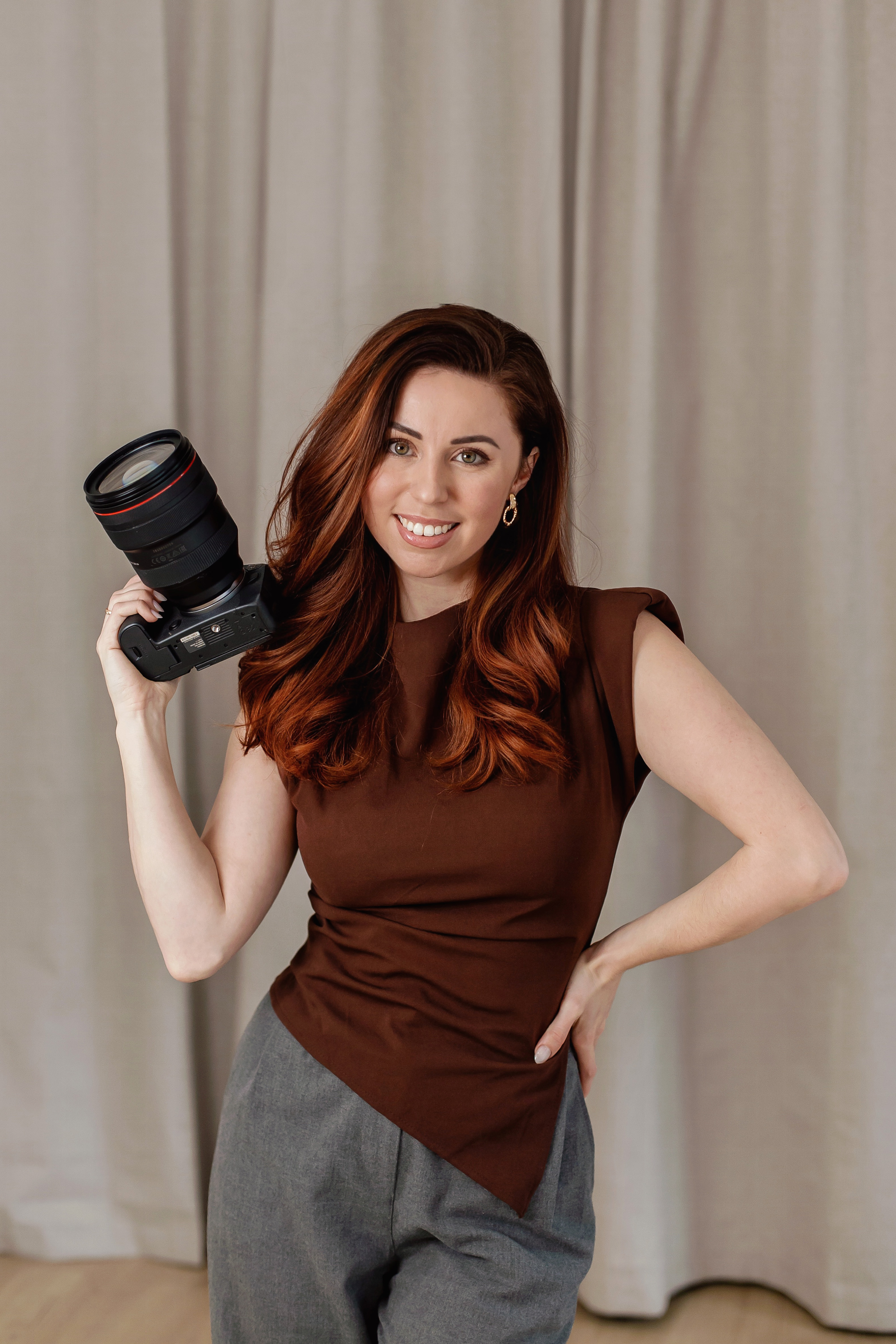
Yana Skakun
Photographer · England
Professional wedding, family and portrait photographer based in England. Passionate about capturing authentic emotions and timeless moments.
About Yana →team photo daycorporate photography dayoffice headshots guideteam headshots UKhow to organise team photos
Business Headshots — Corporate Headshot Photography in Cambridge & England
Corporate photography with Yana Skakun covers individual headshots, team portraits, and event documentation — all delivered with the same consistent quality and professional tone. Available in Cambridge and across England for businesses of all sizes. This guide — How to organise a team photo day: A complete guide for businesses — is part of the photography journal: practical, experience-based advice drawn from real sessions across England. Whether you arrived searching for team photo day or corporate photography day, the same care and attention shapes every session Yana photographs.
Corporate Headshot Photography sessions are available year-round, with bookings open across Cambridge, Ely, Huntingdon, Peterborough, and further afield — East England, London, the Midlands, and beyond. If you have specific questions about office headshots guide, mention it in your enquiry. Get in touch through the contact form above to check availability and discuss your session. Enquiries are welcomed from anywhere in the UK.
Frequently Asked Questions
What camera settings should I use for outdoor portraits?+
For outdoor portraits, shoot in aperture priority mode. Use a wide aperture (f/1.8–f/2.8) to blur the background and isolate your subject. Keep ISO as low as possible in good light. In bright conditions, use a neutral density filter or switch to manual to avoid overexposure at wide apertures.
What is the golden hour in photography?+
Golden hour is the period roughly 30–60 minutes after sunrise and before sunset. The sun is low in the sky, producing warm, soft, directional light that flatters skin tones and creates beautiful long shadows. It's widely considered the best natural light for portrait and outdoor photography.
How do you get sharp photos in low light?+
In low light, increase your ISO (accepting some grain), use the widest aperture your lens allows, and slow your shutter speed to the slowest you can hand-hold without camera shake (roughly 1/focal length as a guide). Use image stabilisation if available, and consider a tripod for static subjects.
What is the rule of thirds in photography?+
The rule of thirds divides the frame into a 3×3 grid. Placing your subject on one of the four intersection points — rather than dead centre — creates a more dynamic, visually interesting composition. It's a guideline, not a rule: some of the most powerful images break it deliberately.
How do you edit photos to look professional?+
Professional editing starts with shooting in RAW format. In Lightroom or similar software, correct exposure, white balance, and contrast first. Recover shadow and highlight detail. Apply gentle colour grading for mood. Be conservative with skin retouching — the goal is natural enhancement, not transformation. Consistency across a set of images is what separates professional from amateur editing.
Continue Reading
Related Articles
Business Headshots
Why professional business headshots are worth the investment in 2025
7 min read · Read Article
Business Headshots
The complete corporate headshot guide: What to expect and how to prepare
7 min read · Read Article
Business Headshots
LinkedIn headshot: What actually makes a profile photo work
7 min read · Read Article
Get in Touch
Ready to Book Your Session?
Get in touch to discuss your vision — I'll reply within 24 hours.