Yana Skakun

What Is a Brand Photo Shoot? Everything a Small Business Owner Needs to Know
By Yana Skakun·10 July 2026·8 min read
Cambridge has one of the most interesting independent business scenes in the country — bakeries on Mill Road, florists tucked down side streets, potters and jewellers selling at weekend markets, therapists working from converted front rooms, and a growing number of consultants and coaches who trade almost entirely online. Nearly every one of them, at some point, gets told the same thing by someone whose opinion they trust: "you need a brand photo shoot." And nearly every one of them has the same reaction, which is roughly: what does that actually mean, and do I really need it? This article is for that person — the small business owner who has heard the phrase, half-understands it, and wants a straight answer before they spend any money.
What a Brand Photo Shoot Actually Is
A brand photo shoot is a photography session built around your business rather than around a single occasion. It is not a wedding, where the goal is documenting one specific day, and it is not a standard headshot session, where the goal is a single flattering portrait of one person. A brand shoot is designed to produce a working library of images — you at work, your products or workspace, details that show what you do and how you do it, and a handful of more polished portraits — that you can use across your website, your social media, your Google Business profile, and any printed materials, for months or years afterwards.
The distinction that trips people up is this: a headshot answers the question "who are you?" A brand shoot answers the much bigger question "what is it like to work with you, and what do you actually do?" If you run a bakery, a headshot is you smiling at the camera. A brand shoot is you smiling at the camera, plus your hands shaping dough, plus the finished loaves on the cooling rack, plus the shopfront in morning light, plus a candid shot of you handing a customer their order. One image tells people your face. A set of images tells people your story.
I cover this from a slightly different angle on my brand photography page, and if you are trying to work out whether you specifically need a brand shoot or a more traditional headshot session, that is worth a read too — plenty of businesses genuinely need both, at different points.
Why It Matters More Than Most Owners Realise
Most small business owners underestimate how much their photography is doing, silently, on their behalf. Every time someone lands on your website, scrolls your Instagram, or clicks through from a Google search, the images are working before a single word of your copy gets read. If those images are a mismatch of phone snaps taken in poor light, borrowed stock photography that looks nothing like your actual premises, or nothing at all beyond a logo, that is the first impression you are making — and it is telling potential customers something you probably did not intend.
The flip side is that this is genuinely fixable, and relatively quickly. A single afternoon of proper photography can replace years of inconsistent, low-quality images across every platform you use. I have worked with business owners in Cambridge who put off a brand shoot for a year or more, convinced it was an unnecessary expense for a small operation, and who then told me afterwards that they wished they had done it on day one, because everything — the website, the social posts, the printed menu or price list — suddenly looked like it belonged to the same, credible business.
There is also a competitive angle that is easy to overlook. In a city like Cambridge, where independent shops and services often sit within a few hundred metres of near-identical competitors, photography is frequently the deciding factor in which business a customer chooses to try first. Two florists with similar prices and similar reviews: the one with genuinely good photography of their actual arrangements, on Google and Instagram, tends to win the click.
What to Expect During the Session
A typical brand shoot runs somewhere between one and three hours, depending on how much ground we need to cover. It usually starts with a short conversation, even if we have already discussed the plan in advance — walking the space together, talking through what matters most to capture that day, and agreeing on a loose running order so we are not standing around deciding what to do next once the session is underway.
From there, the shoot tends to move between three broad categories of image. The first is environmental portraits — you in your space, working, looking at the camera or looking away, genuinely engaged in something rather than posed stiffly against a blank wall. The second is process and detail shots: hands at work, tools, ingredients, materials, the specific things that make your business yours and not a generic version of it. The third is a small set of cleaner, more traditional portraits that work well as a profile photo, an About page hero image, or a press shot if a journalist or local publication ever wants one.
I try to keep the atmosphere relaxed rather than clinical. Most small business owners are not naturally comfortable in front of a camera, and stiff, over-directed sessions tend to produce stiff, over-directed photographs. Letting you actually do your work while I photograph it — rather than asking you to mime doing your work while staring at a lens — nearly always produces better, more honest results.
How to Prepare (Without Over-Preparing)
The single most useful thing you can do before a brand shoot is a genuine, unglamorous tidy of your space. Clear surfaces, put stock away neatly, wipe down anything that gets photographed close up. This sounds obvious, but it is the preparation step most commonly skipped, and it makes a bigger visible difference than almost anything else on this list. A well-lit, well-composed photograph of a cluttered counter still looks like a cluttered counter.
Beyond that, think in advance about what you actually want to show. If you sell a physical product, have a small selection of your best or most photogenic items ready rather than trying to feature everything. If your business is service-based, think about what "doing the work" looks like visually — a therapist might set up a chair and a warm corner of a room; a consultant might have a laptop and notes out on a table rather than an empty desk. A rough shot list, even three or four bullet points of must-haves, is genuinely useful and something we can build together before the day.
On clothing and appearance, the advice is simple: wear what you would actually wear to work on a good day, not a costume version of it. If you always wear an apron, wear the apron. If you would never wear a full suit day-to-day, do not borrow one for the shoot — it will look exactly as unnatural in the photographs as it feels while you are wearing it. Consistency between your photographs and your actual, everyday presentation is what makes brand photography feel authentic rather than staged.
Location: Your Premises, a Studio, or Both
For most small businesses, shooting on your own premises is the right choice, and often the only sensible one — a bakery cannot easily fake its ovens elsewhere, and a therapist's calm consulting room is a real part of the brand story. On-location shoots also tend to produce more distinctive, less interchangeable images than studio work, because the background is genuinely yours rather than a backdrop that could belong to anyone.
That said, some businesses benefit from a small studio component alongside the on-location work — a set of clean, consistent portraits against a neutral background for use on a team page or a press kit, shot in the same session or a follow-up appointment. Businesses that operate primarily online, with no physical shopfront customers ever visit, sometimes prefer this route entirely, choosing a location that reflects the tone of the brand rather than a literal workspace. There is no single correct answer here — it depends on what your business actually looks like and what you most need the photographs to do.
Thinking about a brand shoot for your business?
I work with independent businesses across Cambridge and the surrounding area — cafés, makers, therapists, consultants, and everything in between — and I keep packages realistic for small and micro business budgets. If you want to talk through what a shoot could look like for your specific business, get in touch and we can plan it properly before committing to anything.
Get in touchGetting Genuine Results, Not Generic Ones
The biggest risk with brand photography, generic or otherwise, is ending up with images that look like they could belong to any business in your sector rather than specifically to yours. Avoiding that comes down to a few things. Show real work rather than staged approximations of it wherever possible. Include the details that are genuinely specific to you — a particular tool, a handwritten sign, a view out of your actual window — rather than only the generic shots every business in your category gets. And resist the temptation to over-smooth everything in editing; a little texture, a little imperfection, is usually what makes an image feel like a real place rather than a stock photograph.
It is also worth planning for variety of use rather than a single hero image. A website needs wide, uncluttered images with room for text to sit over them. Instagram works better with tighter, more textural crops. A printed menu or price list needs simpler, cleaner compositions. A single session, planned properly, can produce images suited to all of these rather than one photograph awkwardly cropped five different ways after the fact.
Common Questions From Small Business Owners
How many photographs will I actually get? This depends on the length of the session and what we cover, but most brand shoots deliver somewhere between twenty-five and sixty final edited images, which is generally enough to cover a website refresh and several months of social content without repeating yourself constantly.
Can I include my team, not just myself? Yes, and for businesses with staff this is usually worth doing — customers respond well to seeing the actual people behind a business, not just the owner.
What if my premises are small or a bit rough around the edges? Nearly every working business premises has some imperfection, and it rarely matters as much as owners fear. Good use of light and composition can make a modest space look considered and genuine rather than glossy and impersonal, which is often the more useful outcome anyway.
How much does this cost? Small business brand shoots are generally priced well below wedding or large corporate commissions, reflecting the shorter session length and the smaller final gallery. Exact costs depend on session length and location, so it is best discussed directly — you can see general starting points on my pricing page, or ask for a specific quote for your business.
If you run an independent business in Cambridge and have been putting off a proper set of photographs, it is worth doing sooner rather than later — the images you use today are working for or against you every single day they are online. I am Yana Skakun, a Cambridge-based photographer available for work UK-wide, and brand photography for small and independent businesses is a significant part of what I do alongside weddings and portraits. You can find more about my background on my about page, or simply get in touch to talk through what a shoot could look like for your business.
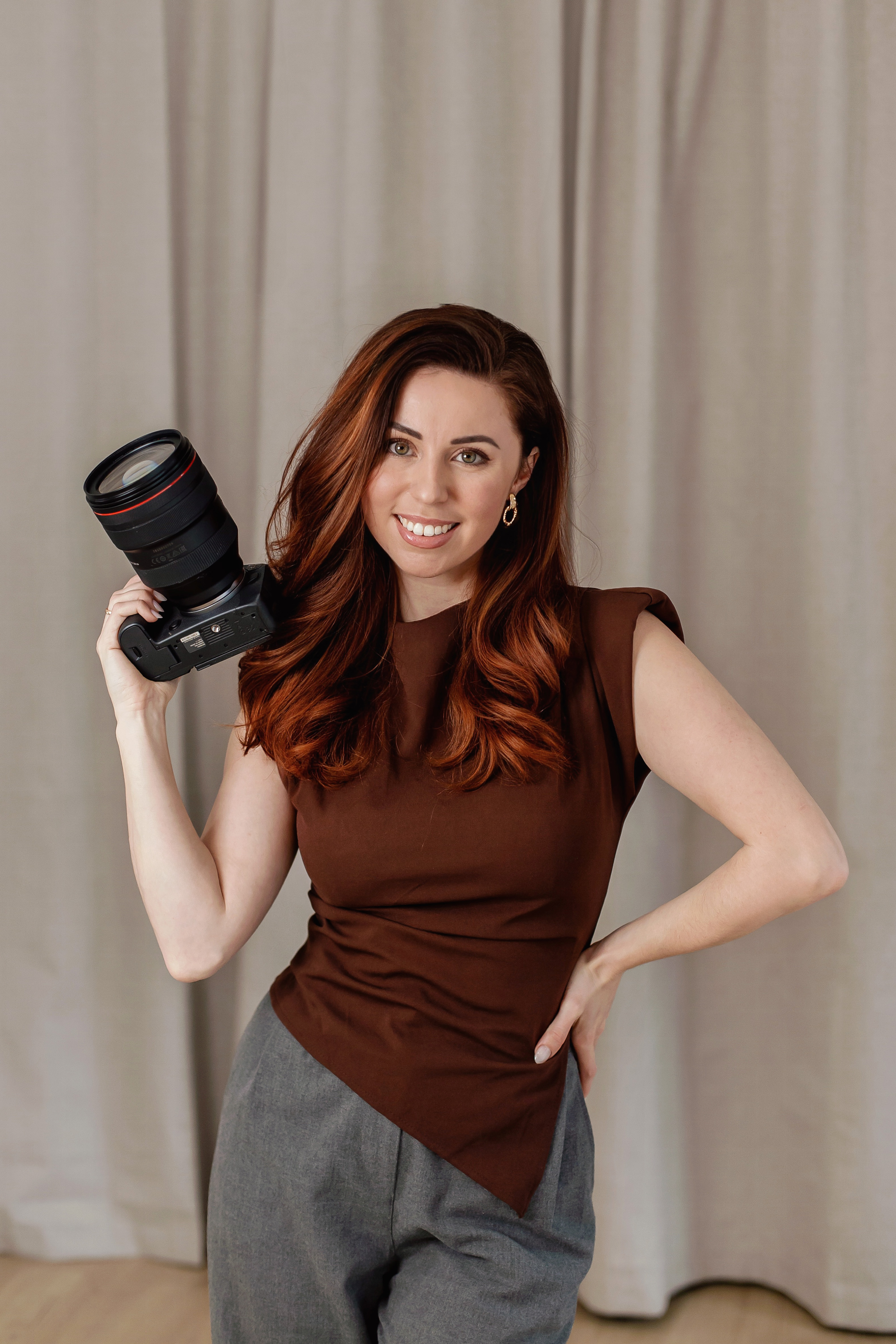
Yana Skakun
Photographer · England
Professional wedding, family and portrait photographer based in England. Passionate about capturing authentic emotions and timeless moments.
About Yana →brand photo shootsmall business photographyCambridge business photographerbrand photography for small businesspersonal branding photoshootbusiness photography Cambridge
Business Headshots — Corporate Headshot Photography in Cambridge & England
Corporate photography with Yana Skakun covers individual headshots, team portraits, and event documentation — all delivered with the same consistent quality and professional tone. Available in Cambridge and across England for businesses of all sizes. This guide — What Is a Brand Photo Shoot? Everything a Small Business Owner Needs to Know — is part of the photography journal: practical, experience-based advice drawn from real sessions across England. Whether you arrived searching for brand photo shoot or small business photography, the same care and attention shapes every session Yana photographs.
Corporate Headshot Photography sessions are available year-round, with bookings open across Cambridge, Ely, Huntingdon, Peterborough, and further afield — East England, London, the Midlands, and beyond. If you have specific questions about cambridge business photographer, mention it in your enquiry. Get in touch through the contact form above to check availability and discuss your session. Enquiries are welcomed from anywhere in the UK.
Frequently Asked Questions
What camera settings should I use for outdoor portraits?+
For outdoor portraits, shoot in aperture priority mode. Use a wide aperture (f/1.8–f/2.8) to blur the background and isolate your subject. Keep ISO as low as possible in good light. In bright conditions, use a neutral density filter or switch to manual to avoid overexposure at wide apertures.
What is the golden hour in photography?+
Golden hour is the period roughly 30–60 minutes after sunrise and before sunset. The sun is low in the sky, producing warm, soft, directional light that flatters skin tones and creates beautiful long shadows. It's widely considered the best natural light for portrait and outdoor photography.
How do you get sharp photos in low light?+
In low light, increase your ISO (accepting some grain), use the widest aperture your lens allows, and slow your shutter speed to the slowest you can hand-hold without camera shake (roughly 1/focal length as a guide). Use image stabilisation if available, and consider a tripod for static subjects.
What is the rule of thirds in photography?+
The rule of thirds divides the frame into a 3×3 grid. Placing your subject on one of the four intersection points — rather than dead centre — creates a more dynamic, visually interesting composition. It's a guideline, not a rule: some of the most powerful images break it deliberately.
How do you edit photos to look professional?+
Professional editing starts with shooting in RAW format. In Lightroom or similar software, correct exposure, white balance, and contrast first. Recover shadow and highlight detail. Apply gentle colour grading for mood. Be conservative with skin retouching — the goal is natural enhancement, not transformation. Consistency across a set of images is what separates professional from amateur editing.
Continue Reading
Related Articles
Business Headshots
Why professional business headshots are worth the investment in 2025
7 min read · Read Article
Business Headshots
The complete corporate headshot guide: What to expect and how to prepare
7 min read · Read Article
Business Headshots
LinkedIn headshot: What actually makes a profile photo work
7 min read · Read Article
Get in Touch
Ready to Book Your Session?
Get in touch to discuss your vision — I'll reply within 24 hours.