Yana Skakun

What Do You Wear to a Vow Renewal? (Dress Codes Explained)
By Yana Skakun·10 July 2026·8 min read
Vow renewals sit in an odd, wonderful space that has no fixed rulebook. You are not planning a first wedding, so the traditional guest-list logic and formal dress code conventions do not automatically apply. But you are still marking something significant — five years, twenty-five years, a return to each other after a hard chapter — and most brides I photograph want to feel that the day looks and feels like an occasion, not an ordinary Tuesday with paperwork. The question I am asked most often in the run-up to a renewal session is deceptively simple: what do I actually wear? The honest answer is that it depends entirely on the size, setting, and spirit of your renewal, and this guide works through each of those variables properly.
There Is No Rulebook — and That Is the Point
A first wedding tends to come with inherited expectations: a white dress, a particular kind of formality, a guest list shaped by family obligation as much as choice. A vow renewal has none of that baggage. You have already done the big traditional wedding, or perhaps you eloped originally and never had one, or perhaps you are renewing vows precisely because your first wedding did not go the way either of you wanted. Whatever the history, the renewal is yours to shape without deferring to anyone else's expectations of what a wedding outfit should look like.
That freedom can feel liberating or slightly disorientating in equal measure, because most of us are used to dress codes telling us what is appropriate. My advice, before getting into specifics, is to anchor your outfit decision to the feeling you want the day to have rather than to any external rule. A quiet renewal on a Cornish clifftop calls for something completely different from a renewal held at the same grand hotel where you married twenty years earlier. Decide on the feeling first, then let the outfit follow from that.
White Dress or Something Else?
Plenty of brides do choose to wear white again, and there is nothing wrong with that instinct. If white felt right the first time and still feels right now, a new white dress — or the original one, if it still fits and still feels like you — is a completely valid choice. Some women deliberately choose a style closer to their first wedding dress as a way of echoing that day; others go for something in a similar palette but a very different silhouette, which tends to photograph as familiar but distinctly grown-up.
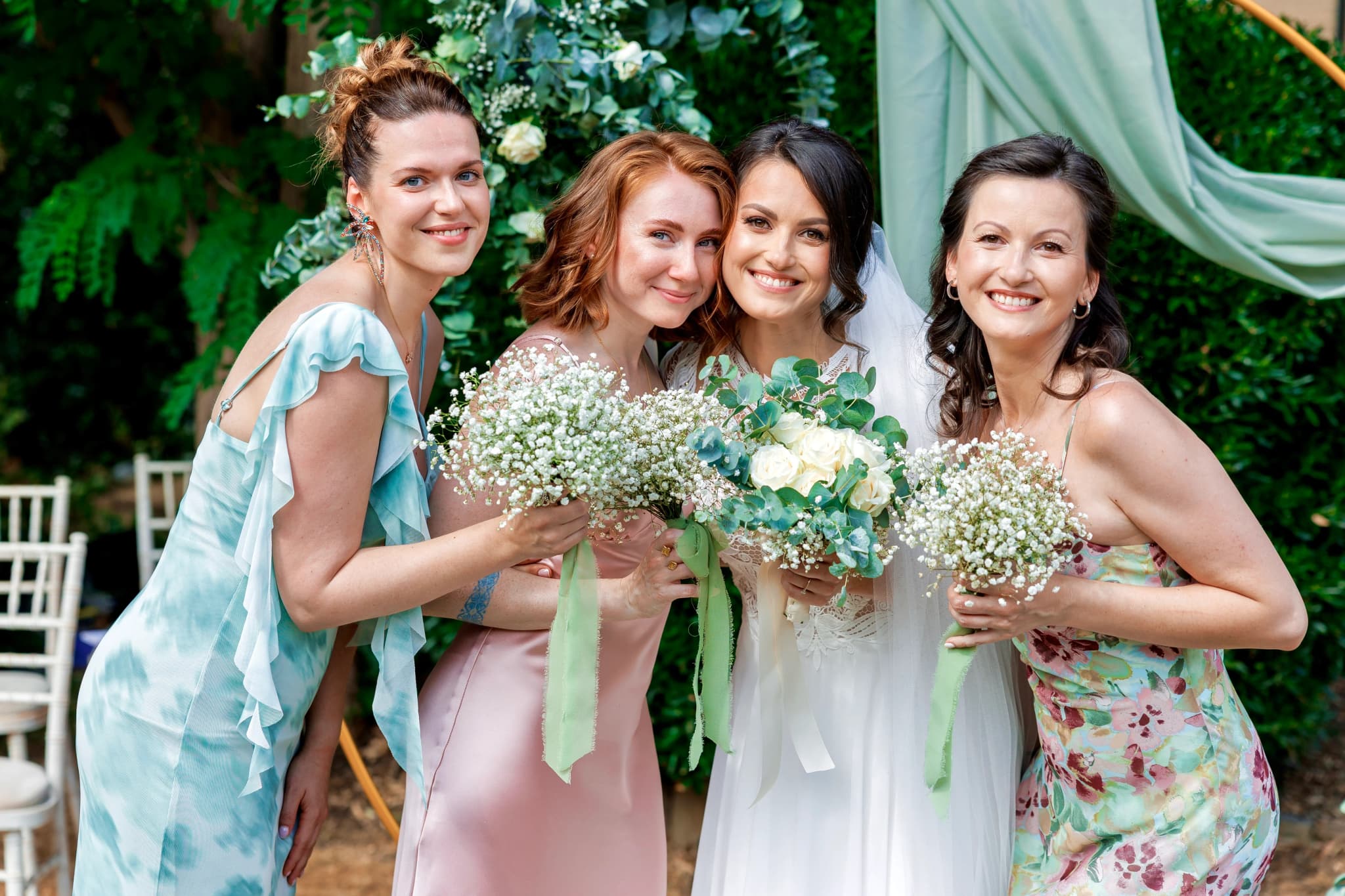
Just as many brides use the renewal as an opportunity to wear a colour they were never able to justify the first time round. Champagne, blush, sage green, dusty blue, and soft terracotta all photograph beautifully in natural light and read as celebratory without being a literal repeat of a first wedding dress. I have photographed renewal brides in floor-length emerald silk, in tea-length ivory lace, and in a tailored cream trouser suit, and every one of those choices worked because it suited the individual wearing it and the setting she chose. There genuinely is no wrong answer here as long as the dress feels considered rather than an afterthought.
One practical note: length matters more for renewals than it often does for first weddings, because renewal locations tend to be more varied — a beach, a garden, a hillside — and a dress that needs constant lifting out of mud or sand becomes a distraction rather than a joy to wear. If your setting is anything other than a formal indoor room, consider a tea-length or midi option, or a dress with a detachable overskirt you can remove for the more relaxed part of the day.
Reading the Formality of Your Own Occasion
The size and setting of your renewal will tell you almost everything you need to know about formality level, so it is worth being honest with yourself about what you are actually planning before you start dress shopping. A renewal with twenty close family members at a countryside restaurant sits at a different formality level than an intimate ceremony for just the two of you on a Scottish hillside, which sits differently again from a full re-creation of your original wedding with a hundred guests and a marquee.
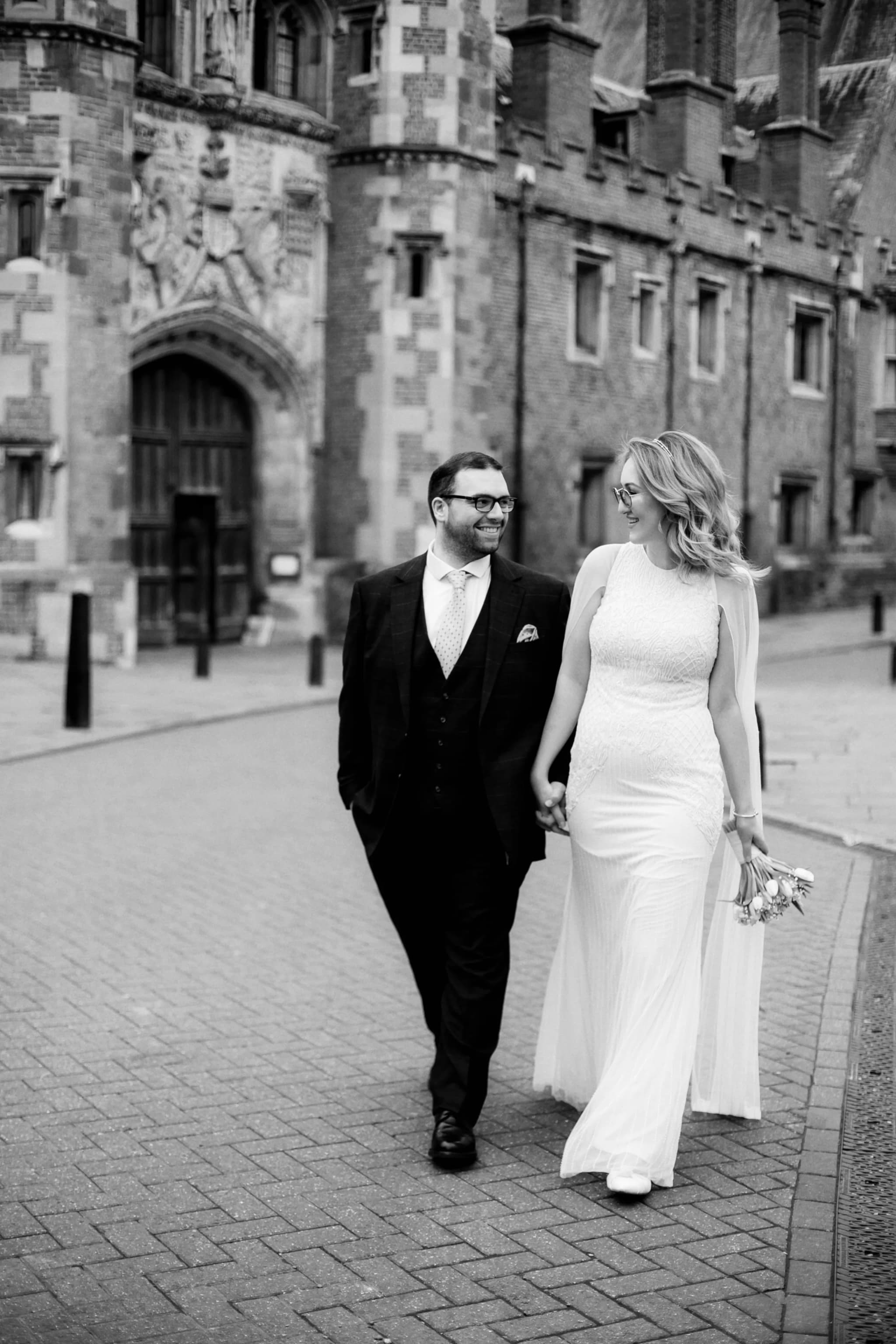
For larger, more traditional renewals, treating the dress code much like a wedding — formal daywear, a proper dress or suit, coordinated but not identical outfits between the couple — tends to match guest expectations and photographs with the gravity the occasion deserves. For small or elopement-style renewals, and particularly for couples renewing vows just the two of them or with only a handful of witnesses, I generally encourage a slightly more relaxed and personal approach: an outfit that says "special occasion" without needing to perform full wedding formality for an audience that is not really there.
If you are planning something intimate, it is worth having a look at how I approach similarly small, unscripted ceremonies on the weddings page — the same philosophy of letting the setting and the couple lead, rather than imposing a rigid formal structure, applies just as much to a renewal as it does to a first wedding.
What Grooms and Partners Should Wear
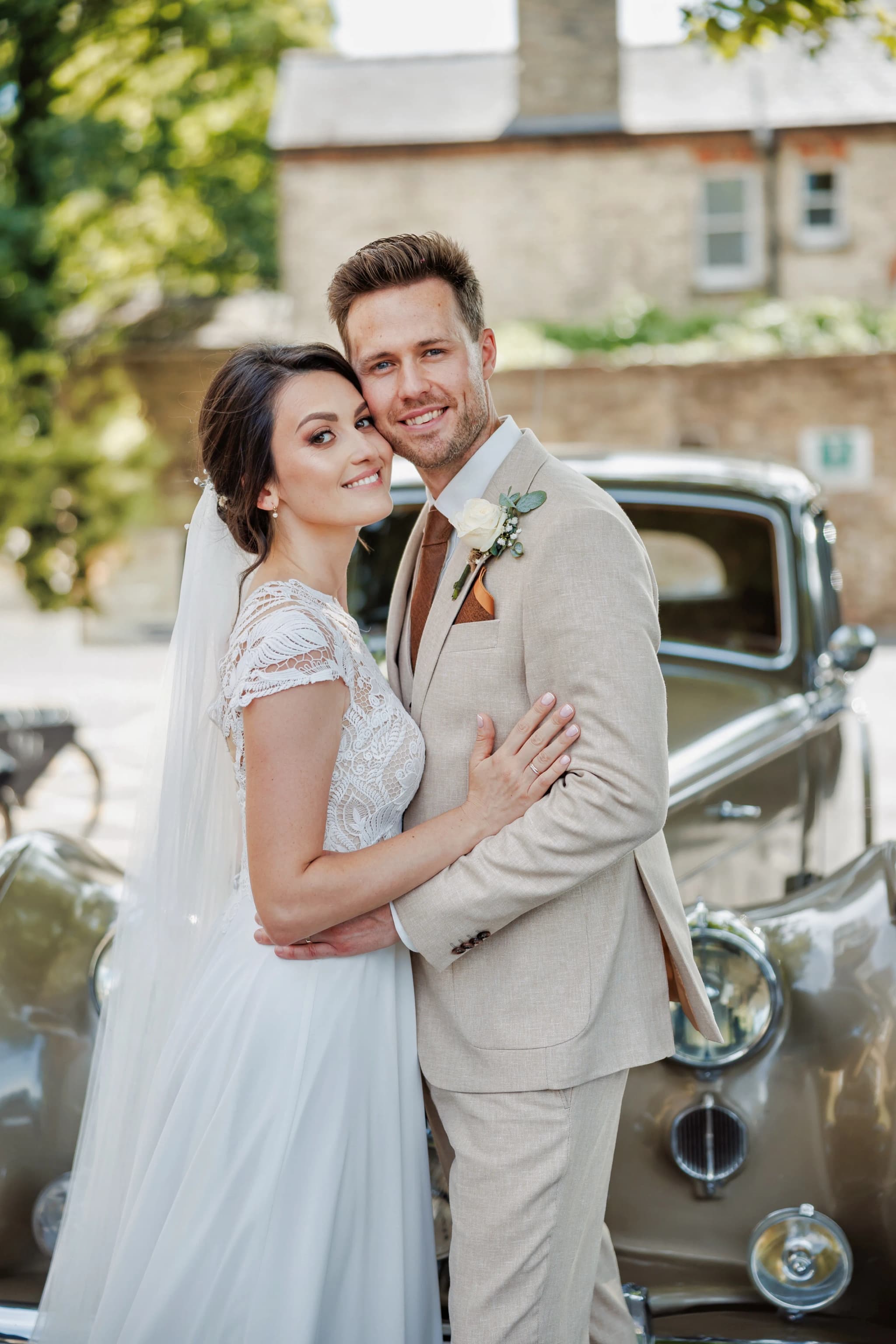
The other half of the couple often gets less attention in renewal planning than the bride, but coordinated outfits genuinely elevate the photographs. The goal is not matching in a literal sense — you do not need identical fabric swatches — but a shared formality level and a complementary palette. If the bride is in a champagne silk dress, a partner in a full black tie tuxedo will look mismatched in a way that is subtly jarring in photographs; a linen suit in warm stone or soft grey sits much better alongside that same dress.
For outdoor or countryside renewals, I regularly see partners choose a suit without a tie, sleeves rolled slightly, or a waistcoat over a linen shirt — formal enough to read as considered, relaxed enough to actually be comfortable for several hours outside. For renewals with a more traditional, indoor, larger-guest-list feel, a proper suit or tuxedo brings the formality back up to match. As with the bride's dress, the fabric matters as much as the cut: linen and lighter wool suits move better in wind and photograph with a softer texture than stiff, heavily structured fabric, which can look slightly costume-like in outdoor natural light.
A note on colour and light
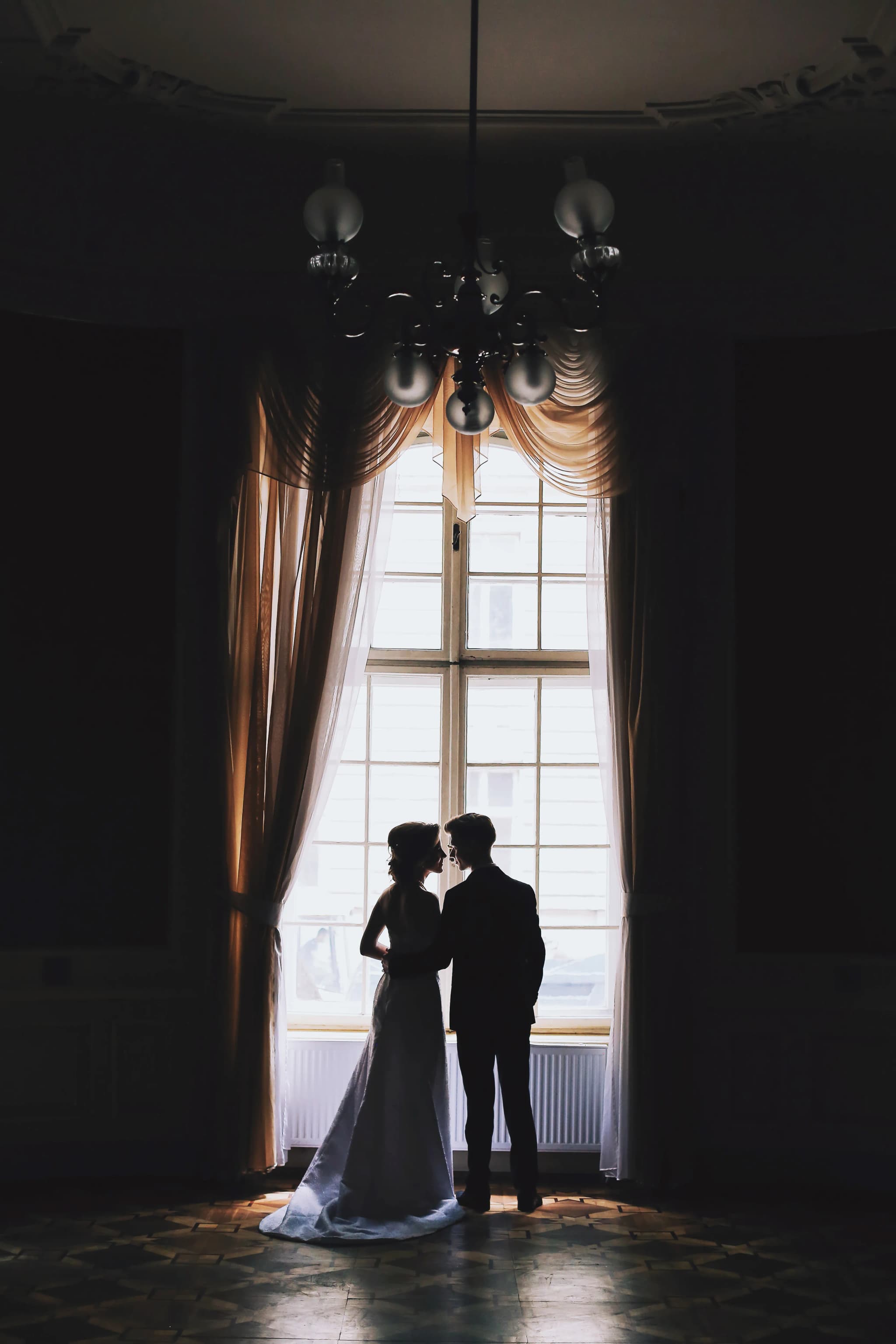
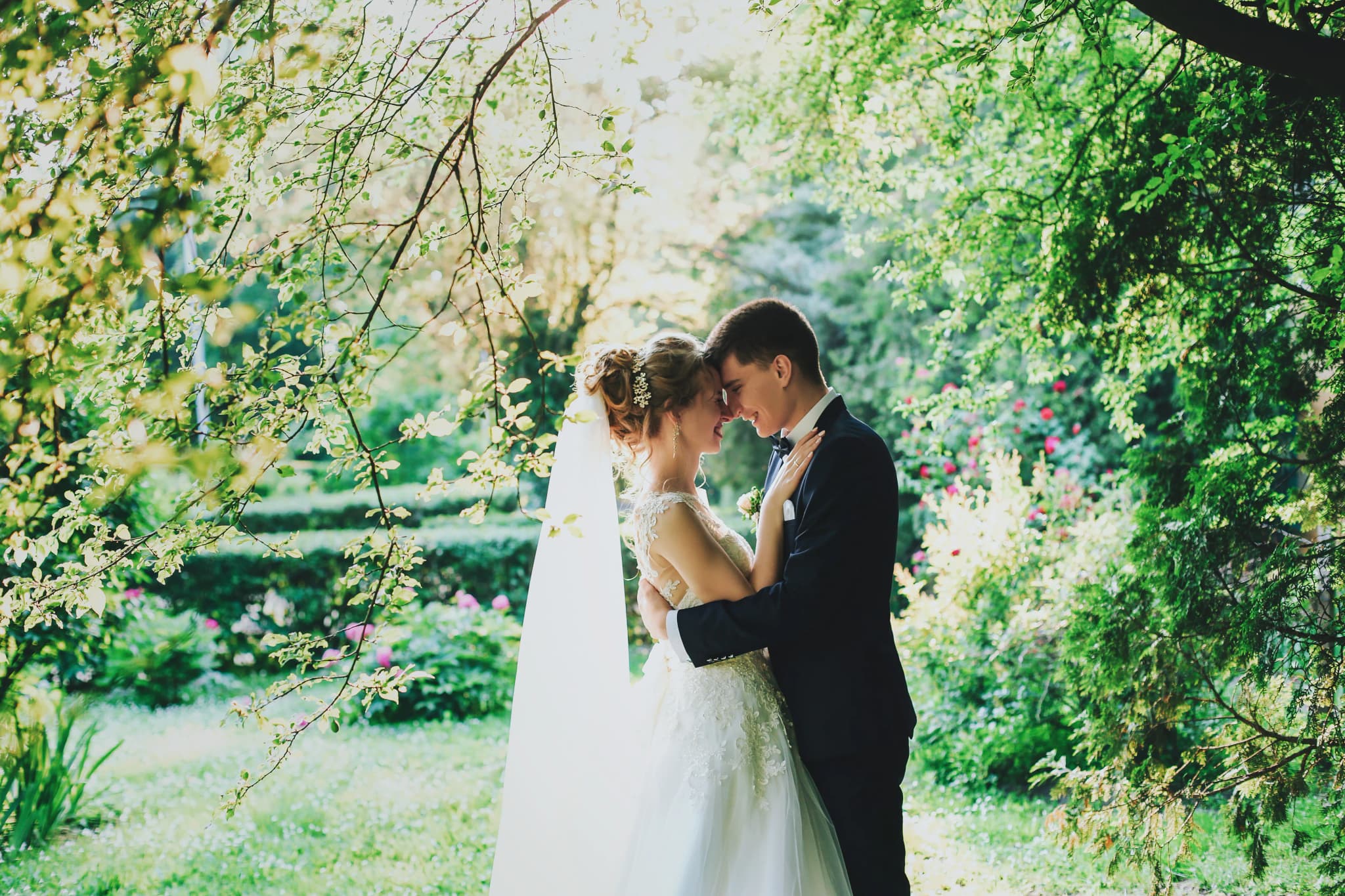
Whatever you choose, think about where you will actually be standing. Deep jewel tones and warm neutrals hold their richness in golden hour light and against green countryside backdrops, while very pale pastels can wash out under overcast British skies. If you are unsure how a colour will read in your specific setting, send me a fabric swatch or a photo of the outfit before the day — it is a small thing that makes a real difference to how the finished images look.
Get in touchSeasonal Considerations for UK Renewals
Weather planning matters more for renewals than for first weddings, largely because renewals are often held outdoors in locations chosen for their beauty rather than for guaranteed shelter. A spring renewal in Cambridgeshire can swing from bright and mild to genuinely cold within the same afternoon, so a beautiful coat or wrap is not an optional extra — it is part of the outfit, and it is worth choosing one that photographs as well as the dress underneath it. A faux fur stole, a tailored wool coat in a coordinating colour, or a simple pashmina in cashmere or silk all work well and read as intentional rather than a last-minute addition thrown on because you got cold.
Summer renewals bring their own practical questions — heat, potential rain, and long daylight hours that mean golden hour arrives late in the evening. Breathable natural fabrics matter enormously if you are getting married or renewing vows in June or July; a heavy structured dress in full sun for several hours is uncomfortable in a way that shows in your face by the afternoon portraits. Autumn and winter renewals, meanwhile, offer some of the richest photographic light of the year, and darker, richer colour palettes — burgundy, forest green, deep navy, chocolate brown — suit both the season and the shorter, softer daylight beautifully.
For couples considering a very small, private renewal — just the two of you, or with one or two witnesses, in a wild or remote setting — the practical clothing questions become even more important, since you may be walking some distance to a location with no shelter or changing facilities nearby. This is exactly the territory I work in regularly with intimate ceremonies, and it is worth reading through how those days typically unfold before you finalise an outfit that needs to survive a clifftop walk or a hillside scramble.
Accessories, Hair, and the Details That Photograph Well
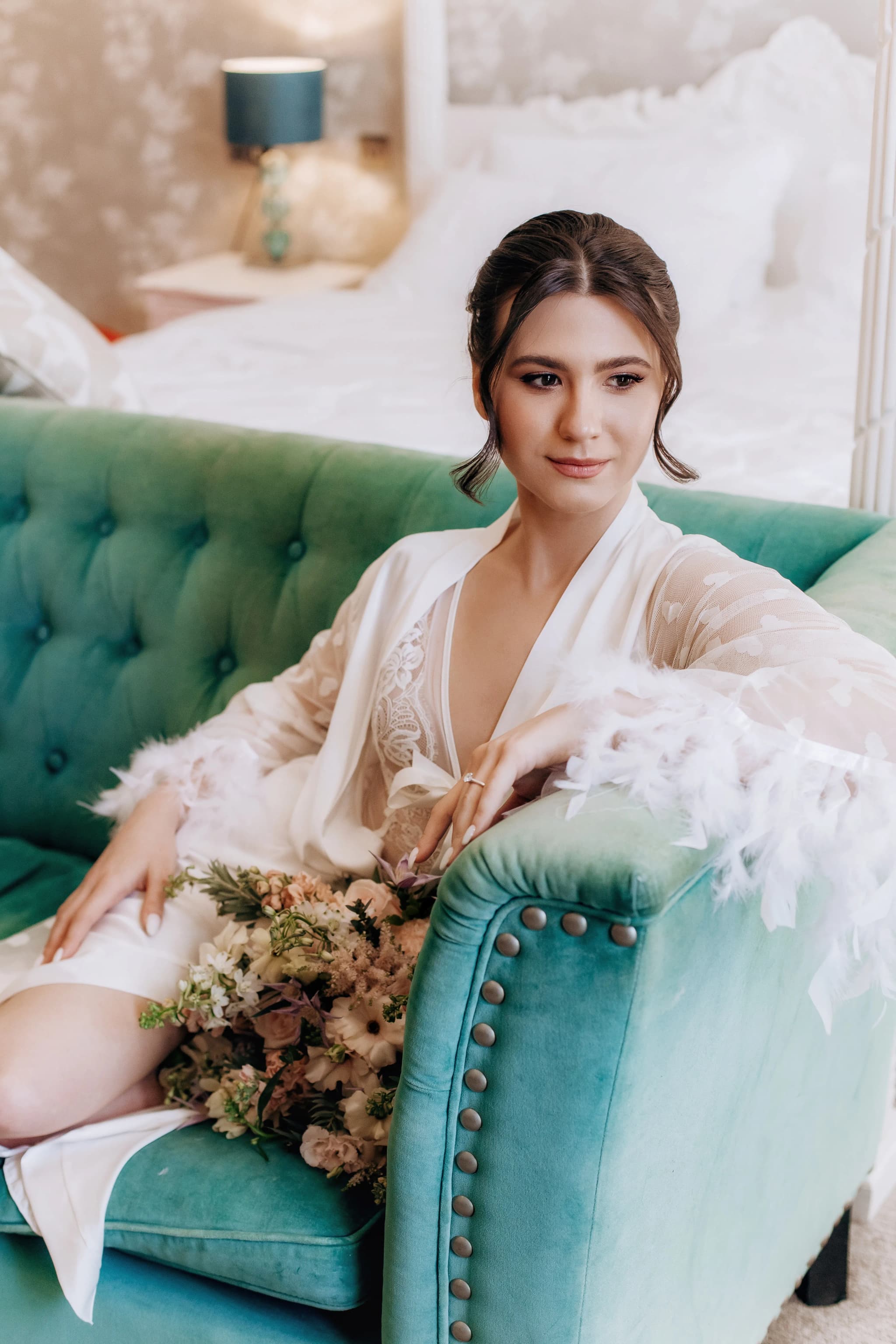
Accessories carry more weight in a renewal outfit than they often do in a first wedding, partly because many renewal brides deliberately choose a simpler dress and let jewellery, hair styling, or a statement veil or headpiece do more of the visual work. A veil is entirely optional at a renewal — plenty of brides skip it altogether and it is one of the areas where you genuinely get to decide what feels right rather than what tradition dictates. If you loved wearing one the first time, there is no reason not to wear one again; if it never felt like you, this is your chance to leave it out.
Flowers, whether a hand-tied bouquet or a simpler posy, photograph beautifully against most outfit choices and are worth including even for the smallest renewals, since they give your hands something natural to do during portraits and add a genuine pop of colour and texture to the images. Fresh flowers in your hair or a single stem tucked into a buttonhole achieve a similar effect with much less formality, which suits an intimate renewal particularly well.
Shoes deserve the same practical thought as they would for any wedding: if you are on grass, sand, or gravel for any part of the day, flat sandals, block heels, or even bare feet for beach ceremonies will serve you far better than the delicate heels that might have been right for an indoor venue the first time round. Comfort genuinely does translate into more relaxed, natural expressions in the final photographs.
Coordinating as a Couple Without Matching Too Literally
The most photogenic renewal couples I have worked with share a palette and a formality level rather than an identical look. Think in terms of two or three colours you both draw from — sage and cream, terracotta and stone, navy and champagne — and let each person interpret that palette through their own outfit rather than trying to match fabric or exact shade. This avoids the slightly stiff, costume-party feeling that comes from overly literal coordination, while still giving the images a cohesive, considered look when you stand side by side.
If children or other family members are joining the renewal, extending that same loose palette to them — without insisting on identical outfits — keeps family portraits looking natural and unified rather than staged. I always ask couples for a rough sense of their palette a few weeks ahead of the day, purely so I can plan locations and light that will complement it rather than fight against it.
Getting It Right on the Day
My final piece of practical advice is to do a proper trial run of your full outfit — dress, shoes, accessories, coat if needed — a few weeks before the renewal, ideally somewhere with similar terrain to your actual location. Walk in it, sit in it, raise your arms above your head in it. Renewal days involve more movement than most people expect: getting in and out of cars, walking to a ceremony spot, embracing family and friends, dancing if there is a reception afterwards. An outfit that looks perfect standing still in a mirror can behave very differently after two hours of real use, and it is much better to discover that during a trial than during the ceremony itself.
If you are still deciding on a venue or setting for your renewal and want a sense of how different locations and outfit choices come together in the final images, my wedding albums page has examples across a range of settings, and the pricing page sets out how a renewal session is typically structured and costed, which tends to be more flexible than a full wedding day.
Every renewal I photograph looks different, because every couple arrives at this milestone by a different route and wants to mark it in their own way. Whatever you decide to wear, the outfit that will photograph best is the one that lets you move, laugh, and feel completely like yourself for the whole day. If you are planning a vow renewal and want to talk through outfit ideas, timings, or locations, get in touch — I am Yana Skakun, and I would love to help you plan a day that feels exactly right for the two of you.
Yana Skakun
Photographer · England
Professional wedding, family and portrait photographer based in England. Passionate about capturing authentic emotions and timeless moments.
About Yana →what to wear to vow renewal bridevow renewal dress codevow renewal outfit ideasUK vow renewal photographervow renewal dressvow renewal groom outfit
Wedding Tips — Wedding Photography in Cambridge & England
Yana Skakun is a professional wedding photographer based in Cambridge, covering weddings across England — from intimate elopements to full-day ceremonies at country houses, barns, and city venues. Every couple receives a relaxed, documentary approach that captures the day as it truly unfolds. This guide — What Do You Wear to a Vow Renewal? (Dress Codes Explained) — is part of the photography journal: practical, experience-based advice drawn from real sessions across England. Whether you arrived searching for what to wear to vow renewal bride or vow renewal dress code, the same care and attention shapes every session Yana photographs.
Wedding Photography sessions are available year-round, with bookings open across Cambridge, Ely, Huntingdon, Peterborough, and further afield — East England, London, the Midlands, and beyond. If you have specific questions about vow renewal outfit ideas, mention it in your enquiry. Get in touch through the contact form above to check availability and discuss your session. Enquiries are welcomed from anywhere in the UK.
Frequently Asked Questions
How much does a wedding photographer cost in England?+
Wedding photography in England typically ranges from £1,500 to £4,000+ for a full day. Price depends on experience, coverage hours, and whether albums or engagement shoots are included. Most photographers charge between £2,000–£3,000 for 8–10 hours of coverage.
How early should you book a wedding photographer?+
For peak season (May–September), book 12–18 months in advance. For autumn and winter weddings, 9–12 months is usually sufficient. Popular photographers at popular venues fill up fast — as soon as you have a date and venue confirmed, start reaching out.
How many photos do you get from a wedding photographer?+
Most professional wedding photographers deliver 400–800 edited images for a full-day wedding. The exact number depends on coverage hours, how many guests there are, and the photographer's editing style. Quality matters more than quantity — a curated gallery of 500 images tells the story better than 1,500 unedited files.
Do you need a second photographer at your wedding?+
A second photographer is helpful if you want simultaneous coverage of getting-ready moments in different locations, multiple angles during the ceremony, or more candid coverage during the reception. It adds cost but significantly increases the variety and completeness of your gallery.
What is the difference between documentary and editorial wedding photography?+
Documentary (reportage) wedding photography captures moments as they happen — the photographer observes and doesn't intervene. Editorial photography involves deliberate direction: placing you in good light, shaping compositions, creating intentional portraits. Most photographers blend both styles throughout the day.
Continue Reading
Related Articles

Wedding Tips
Sustainable Eco-Friendly Wedding Guide — Planning a Green Celebration
15 min read · Read Article
Wedding Tips
Trash the Dress Session — Complete Planning and Photography Guide
14 min read · Read Article
Wedding Tips
Client Communication for Photographers — From Enquiry to Gallery Delivery
15 min read · Read Article
Get in Touch
Ready to Book Your Session?
Get in touch to discuss your vision — I'll reply within 24 hours.