Yana Skakun

Why I Bring Backup Cameras to Every Single Wedding
By Yana Skakun·10 July 2026·8 min read
Every piece of kit in my bag has a twin. Two camera bodies, two sets of lenses that overlap in focal length, two flashes, spare batteries for everything, and memory cards that get swapped out every twenty minutes rather than filled to capacity. None of this is because I expect disaster on any given Saturday. It is because a wedding day cannot be rescheduled if something goes wrong, and the only honest way to guarantee that is to remove single points of failure before they can matter. This is the unglamorous, mechanical side of wedding photography that nobody asks about at a venue viewing, but it is arguably as important as composition or light.
A Wedding Day Cannot Be Reshot
The single fact that shapes every decision I make about equipment is that a wedding happens exactly once. If a corporate headshot session goes wrong because of a camera fault, you rebook for the following week and nobody remembers the inconvenience. If a landscape shoot is ruined by a dead battery, you go back another morning when the light is good again. A wedding offers no such second chance. The bride will not walk down the aisle again for the sake of a photographer's equipment failure, the couple will not recreate their first kiss as newlyweds, and a grandmother who travelled from abroad for the day will not be there again next year if this was her only visit.
This permanence is what separates wedding photography from almost every other genre of the craft, and it is the reason experienced wedding photographers think about redundancy in a way that photographers in other fields often do not need to. It is not paranoia. It is simply an accurate response to the actual stakes involved.
What Actually Fails, and When
In my experience, and in the experience of most photographers I know who have shot for a decade or more, catastrophic full failures are rare, but they do happen, and they never announce themselves in advance. I have had a shutter mechanism die mid-ceremony on a camera that had performed flawlessly at four weddings the previous month. I have had a card reader corrupt a memory card during a venue changeover. I have seen a flash unit simply stop firing halfway through a reception, with no warning and no obvious cause. Batteries drain faster in cold weather than manufacturers' specifications suggest, which matters enormously for a winter wedding photographer working an outdoor ceremony in January.
More common than total failure is partial failure: a lens that develops a focusing fault, a camera body that starts producing a strange banding artefact under certain light, a flash that overheats after continuous use during an energetic reception. These faults are often intermittent, which makes them worse in some ways than a clean total failure, because you might not notice immediately that something is wrong. This is one of the reasons I check images on the back of the camera and, where possible, on a larger screen throughout the day rather than waiting until the evening to review everything at once.
Memory cards deserve their own mention. They are inexpensive, they are small, and they are the single most avoidable point of failure in the entire chain, because the fix costs almost nothing: buy more cards, and use more of them, in smaller increments, so that the loss from any one card failing is contained rather than catastrophic.
The Two-Body System Explained
On every wedding I shoot, I carry two full camera bodies, both loaded and ready, for the entire day. This is not one primary body and one emergency spare sitting untouched in a bag. Both bodies are in active use, typically with different lenses attached — one body might carry a wide-angle zoom for room shots and group photographs, the other a longer lens for candid, unposed moments captured from a distance during the ceremony itself, so I am not intruding into the couple's eyeline at the altar.
This dual-body approach means that if one camera fails completely during the day, I do not stop shooting. I do not need to explain to a couple why there is a gap in their coverage during the speeches. I simply continue with the second body, adjust my lens choices to compensate for the loss of one focal range, and keep working. The couple, in almost every case, never even knows anything went wrong. That invisibility is the entire point of redundancy done properly — the couple should never have to think about equipment at all, on the one day when their attention needs to be entirely elsewhere.
Carrying two bodies also solves a purely practical problem that has nothing to do with failure: lens-swapping speed. Weddings move fast. The gap between the register being signed and the couple being called back out to their guests might be ninety seconds. Having a wide lens on one body and a portrait lens on the other means I am never fumbling to change glass at the exact moment something worth photographing happens.
Dual Card Slots and How I Manage Memory Cards
Both of my primary bodies write simultaneously to two memory cards in-camera, meaning every single frame is recorded twice, to two physically separate cards, at the moment of capture. If one card fails, is lost, or is corrupted, an identical copy of every image already exists on the second card. This single feature, more than almost anything else in my kit, is what I would consider non-negotiable for wedding work. A camera without dual card slots is, in my view, not fully suited to being someone's only coverage of their wedding day.
I also keep cards small and rotate them frequently rather than using one very large card for the whole day. A single sixty-four or one hundred and twenty-eight gigabyte card might comfortably hold an entire wedding's worth of images, but if that card fails, the loss is total. Using several smaller cards and changing them at natural breaks in the day — after the ceremony, before the reception, partway through the evening — means that even in the unlikely event dual-slot redundancy somehow failed too, no single incident could wipe out more than a fraction of the coverage.
Cards are labelled, dated, and kept in a hard case that goes nowhere near water, magnets, or extreme temperature the moment they come out of the camera. Nothing gets formatted or reused until images have been backed up in at least two separate locations after the wedding, which typically means an onsite laptop backup the same evening and a second copy to cloud or external drive within a day or two.
Why this matters to you as a couple
None of this equipment detail is meant to be interesting on its own. It matters because it is the difference between a photographer who can promise full coverage of your day and one who is hoping nothing goes wrong. When you are choosing a wedding photographer, it is entirely reasonable to ask what backup systems they use — a photographer who has a clear, confident answer has thought about your day with the seriousness it deserves.
Get in touchBeyond Cameras: The Rest of the Redundancy Chain
Backup thinking does not stop at camera bodies. Every flash I use has a spare in the bag, along with fresh batteries for both, because a reception dance floor with no working flash is a reception dance floor with no usable photographs. Lenses that overlap in range mean that if one develops a fault mid-day, I am not left with an unworkable gap in focal length. I carry spare batteries for every single device that uses one, charged the night before and topped up again during any lull in the schedule, because a dead battery during the confetti exit is exactly as damaging to coverage as a dead camera.
I also think about physical redundancy in how I position myself during key moments. For a ceremony, I am rarely working from just one position throughout, partly for compositional variety and partly because if something obstructs one angle unexpectedly — an usher stepping into frame, a reflection off a window, a guest standing to take a photo on their phone right in my sightline — a second vantage point already covers the same moment from elsewhere. This is a different kind of backup to equipment redundancy, but it comes from the same underlying instinct: assume something could interfere with the shot, and have already arranged for that not to matter.
For couples planning an elopement or intimate wedding in a remote location, this equipment discipline matters even more, because there is often no possibility of driving to a shop for a replacement part if something fails. Everything needed for the day has to already be in the bag, checked and tested, before leaving for the location.
The Pre-Wedding Checks Nobody Sees
The redundancy on the day is only as good as the preparation before it. In the week leading up to every wedding, I test-fire both camera bodies through a full cycle, check that both card slots are writing correctly, run every flash through several bursts to confirm consistent output, and charge every battery from empty rather than topping up ones that were already mostly full. Batteries that are repeatedly topped up rather than properly cycled tend to develop reduced capacity over time, and a battery that reads as charged but underperforms under real load is a worse problem than one that is honestly flat, because it fails you without warning.
I also review the shot list and timeline with the couple beforehand, not purely for creative reasons but because knowing exactly when the key unrepeatable moments will happen — the first look, the ring exchange, the first dance — means I am at my most technically careful and most equipped for those precise minutes, rather than spreading effort evenly across a day where not every moment carries equal weight.
What to Ask a Photographer About Backup Equipment
If you are in the process of comparing photographers, whether for a country house wedding or a small wedding celebration with close family, it is worth asking a few direct questions: does the camera write to two cards simultaneously in-camera? Is there a genuine second camera body in active use throughout the day, not just packed in the car? How are images backed up after the wedding, and how many separate copies exist before cards are reformatted? A photographer who answers these questions readily, without hesitation, has almost certainly already thought them through properly, because these are not answers you improvise convincingly on the spot.
This is also worth bearing in mind when comparing pricing between photographers. Two full professional camera bodies, several lenses, multiple flashes, and a stock of memory cards represent a genuine and ongoing cost, and that investment is part of what a fair wedding photography fee is paying for, even though it is invisible in the final gallery of images you receive.
The Quiet Reassurance of Redundancy
The best outcome of all this preparation is that it is never mentioned on the day itself. Couples do not see the second camera body as a safety net; they see it as one of two tools being used to cover their wedding thoroughly and quickly. They do not know that a memory card is being changed every twenty minutes rather than left in for hours. They do not know that a spare flash sits charged in the bag in case the one in use develops a fault during the speeches. That invisibility is deliberate, and it is the goal. A wedding day already carries enough for a couple to think about without adding equipment anxiety to the list.
This is also part of what goes into the albums couples choose afterwards — a complete, unbroken record of the day, without gaps caused by a fault nobody could have anticipated, because the anticipation happened weeks in advance, quietly, before a single guest arrived.
Backup equipment is not the most exciting subject to write about, and it will never be the reason a couple falls in love with a set of wedding photographs. But it is the reason those photographs exist to fall in love with at all. If you would like to talk through how Yana Skakun Photography approaches coverage, equipment, and planning for your wedding day, get in touch — I am always happy to answer questions about how the day will actually be covered, cameras included.


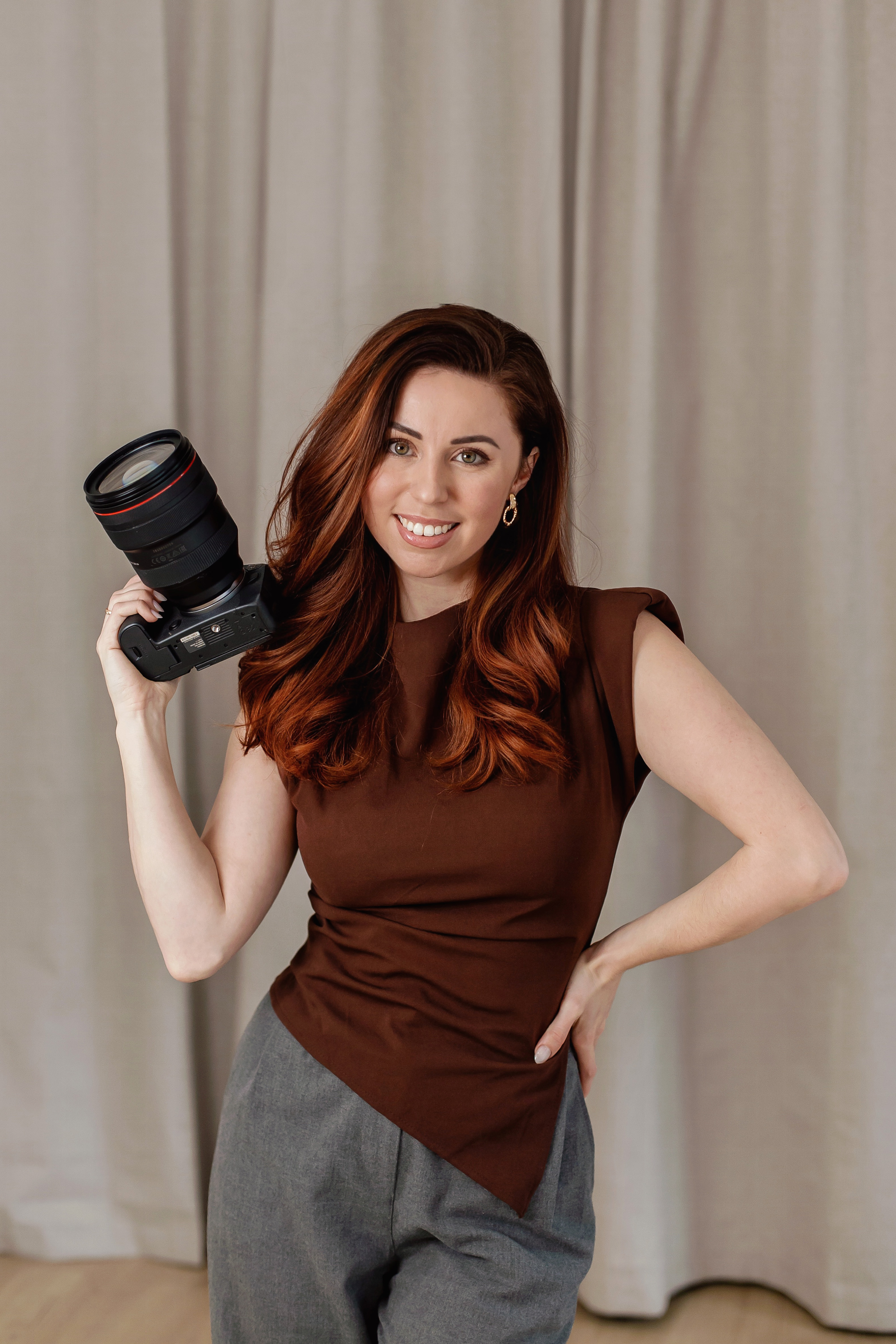
Yana Skakun
Photographer · England
Professional wedding, family and portrait photographer based in England. Passionate about capturing authentic emotions and timeless moments.
About Yana →backup camera wedding photographerwedding photography equipmentdual camera system weddingwedding photographer Cambridgecamera redundancychoosing a wedding photographer
Photography Tips — Professional Photography in Cambridge & England
Yana Skakun is a professional photographer based in Cambridge, specialising in wedding, family, and portrait photography across England. Every session is personal — planned around your story, your people, and the moments that matter most. This guide — Why I Bring Backup Cameras to Every Single Wedding — is part of the photography journal: practical, experience-based advice drawn from real sessions across England. Whether you arrived searching for backup camera wedding photographer or wedding photography equipment, the same care and attention shapes every session Yana photographs.
Professional Photography sessions are available year-round, with bookings open across Cambridge, Ely, Huntingdon, Peterborough, and further afield — East England, London, the Midlands, and beyond. If you have specific questions about dual camera system wedding, mention it in your enquiry. Get in touch through the contact form above to check availability and discuss your session. Enquiries are welcomed from anywhere in the UK.
Frequently Asked Questions
What camera settings should I use for outdoor portraits?+
For outdoor portraits, shoot in aperture priority mode. Use a wide aperture (f/1.8–f/2.8) to blur the background and isolate your subject. Keep ISO as low as possible in good light. In bright conditions, use a neutral density filter or switch to manual to avoid overexposure at wide apertures.
What is the golden hour in photography?+
Golden hour is the period roughly 30–60 minutes after sunrise and before sunset. The sun is low in the sky, producing warm, soft, directional light that flatters skin tones and creates beautiful long shadows. It's widely considered the best natural light for portrait and outdoor photography.
How do you get sharp photos in low light?+
In low light, increase your ISO (accepting some grain), use the widest aperture your lens allows, and slow your shutter speed to the slowest you can hand-hold without camera shake (roughly 1/focal length as a guide). Use image stabilisation if available, and consider a tripod for static subjects.
What is the rule of thirds in photography?+
The rule of thirds divides the frame into a 3×3 grid. Placing your subject on one of the four intersection points — rather than dead centre — creates a more dynamic, visually interesting composition. It's a guideline, not a rule: some of the most powerful images break it deliberately.
How do you edit photos to look professional?+
Professional editing starts with shooting in RAW format. In Lightroom or similar software, correct exposure, white balance, and contrast first. Recover shadow and highlight detail. Apply gentle colour grading for mood. Be conservative with skin retouching — the goal is natural enhancement, not transformation. Consistency across a set of images is what separates professional from amateur editing.
Continue Reading
Related Articles

Photography Tips
Photography Gift Vouchers: The Most Personal Present You Can Give
5 min read · Read Article
Photography Tips
Photo Books vs Photo Albums: What Is the Difference and Which Is Better?
5 min read · Read Article
Photography Tips
Photo Gift Ideas: Turning Professional Images into Meaningful Presents
5 min read · Read Article
Get in Touch
Ready to Book Your Session?
Get in touch to discuss your vision — I'll reply within 24 hours.