Yana Skakun

10 Most Beautiful Elopement Locations in England
By Yana Skakun·10 July 2026·8 min read
England does not have the scale of the Dolomites or the drama of an Icelandic waterfall, but what it does have is variety within a very small radius, a genuinely reliable network of registrars and licensed venues, and landscapes that shift from chalk cliffs to windswept moorland to honey-coloured stone villages within a couple of hours' drive. For couples planning an elopement, that combination matters more than raw grandeur. You want somewhere beautiful, yes, but also somewhere you can actually get married legally, somewhere that will not fight you on logistics, and somewhere the light and the landscape will still look extraordinary in the photographs you keep for the rest of your life. Below are ten of the locations I return to again and again with elopement couples, along with the practical detail that tends to get left out of the more romantic lists.
1. The Lake District
The Lake District remains the single most requested elopement location among the couples I work with, and it earns that reputation. Fells that rise almost vertically from still water, mist that sits in the valleys until mid-morning, and a scale of landscape that makes two people standing together look genuinely small against something vast — it is dramatic in a way few other parts of England can match. Buttermere and Wastwater are my two favourites for elopements specifically: both are quieter than Windermere or Derwentwater, both have short, manageable walks to genuinely spectacular viewpoints, and both photograph beautifully in the flat, moody light that Cumbria produces more often than sunshine. If you want the full picture of how a Lake District elopement actually comes together, from ceremony locations to weather contingency, I have written a dedicated guide for elopement photography in the Lake District.
2. The Peak District
The Peak District has an advantage the Lake District cannot claim: it sits within a couple of hours of Manchester, Sheffield, Birmingham, and Leeds, which makes it genuinely easy for guests to reach if you are having a handful of witnesses, and easy for you if you are travelling light with just each other. Stanage Edge and the gritstone escarpments above Hathersage give you that big-sky, high-moorland feeling without requiring a full day's hike to reach. Curbar Edge and Baslow Edge offer similar drama with easier access for anyone who is not confident on rougher terrain. The valleys around Padley Gorge add woodland texture if you want something softer for part of the day. I cover the specific logistics of eloping here in more depth in my guide to Peak District elopements.
3. Cornwall's North Coast and the Lizard Peninsula
Cornwall gives you the coastal drama that inland counties simply cannot, and the county has enough coastline that you can choose your character: the wild, cliff-lined north coast around Bedruthan Steps and Botallack for something rugged, or the softer, more sheltered coves of the Lizard Peninsula for something more intimate. Kynance Cove on the Lizard is genuinely one of the most beautiful stretches of coastline in the country, with serpentine rock stacks and turquoise water that looks almost implausible in an English photograph. Tide timing matters enormously here — several of the best coves are only accessible or photographable at certain states of tide, so this is a location where the planning has to happen well in advance. I have written specifically about working the Lizard for elopements in my piece on the Lizard Peninsula, and a broader overview of the county in my Cornwall elopement guide.
4. Land's End and the Far West of Cornwall
There is a reason Land's End carries the symbolic weight it does — it is, quite literally, the edge of England, and there is something genuinely moving about standing at the furthest point of the mainland to make a promise to each other. Away from the visitor centre itself, the coast path towards Sennen Cove and around to Nanjizal Bay gives you dramatic granite cliffs, huge Atlantic skies, and a sense of remoteness that is rare this far south in England. I generally recommend early morning for this stretch of coast, both for the light and to have the path largely to yourselves before day visitors arrive. More detail on making this work as an elopement is in my guide to Land's End elopements.
5. The Jurassic Coast, Dorset
The Jurassic Coast gives you a different kind of coastal drama to Cornwall — sweeping chalk and limestone cliffs, the natural arch at Durdle Door, and the near-perfect circle of Lulworth Cove, all set against a gentler, more rolling hinterland than the far southwest. It is also considerably easier to reach for couples travelling from London or the southeast, which matters if you are keeping the day simple and want to avoid a long drive on top of an early ceremony. Durdle Door itself gets busy, so I generally plan around either first light or the last hour before sunset to have the space to work properly. I go into the full route and timing in my guide to the Jurassic Coast.
6. Dartmoor
Dartmoor is the location I recommend most often to couples who want drama without coastline — granite tors rising out of open moorland, wild ponies, and a genuine sense of being somewhere ancient and untouched. Hound Tor and Haytor are the two most accessible tors and both give you sweeping views without a serious hike, while more remote spots further into the moor reward couples willing to walk for an hour or so with almost total solitude. Weather on Dartmoor changes fast, and that unpredictability is part of what makes it visually compelling — low cloud rolling across the tors produces some of the most atmospheric elopement photographs I have taken anywhere in England. I have written a full practical guide to eloping here at Dartmoor elopement photography.
Not sure which location suits your day?
I photograph elopements across all of these locations and can talk you through what each one is actually like to plan and shoot — ceremony logistics, weather contingency, permits where they apply, and how the light behaves at different times of year. If you are at the stage of narrowing down a shortlist, that conversation is often the most useful thing we can do before you book anything.
Get in touch7. The Cotswolds
If your vision of an elopement is softer and warmer than granite cliffs and moorland — honey-coloured stone, rolling hills, dry-stone walls, and villages that look untouched by the last two centuries — the Cotswolds is the obvious answer. It also has a practical advantage: the area is dense with small, licensed venues and registrars used to working with couples who want something low-key, so the administrative side tends to be more straightforward here than in more remote national parks. Naunton, the area around Broadway Tower, and the beech woodland at Winchcombe are all locations I use regularly, each giving a slightly different character to the same broad Cotswold palette. I cover this in detail, including specific villages and viewpoints, in my Cotswolds elopement guide.
8. The Yorkshire Dales
The Yorkshire Dales combine the drama of the Peak District with a rawer, wilder edge, particularly around Malham Cove and the limestone pavement above it, which is genuinely one of the strangest and most striking landscapes in England. Further north, the valleys around Swaledale and Wensleydale give you a softer, more pastoral option with drystone barns and rivers that photograph beautifully in low autumn or winter light. The Dales are quieter than the Lake District for tourism, which for elopement couples generally means more privacy and fewer scheduling headaches around access. I have a dedicated piece on working this landscape at Yorkshire Dales wedding and elopement locations.
9. The Norfolk Coast
Norfolk is the location I suggest most often to couples who want big skies and total openness rather than mountains or cliffs. The coastline around Holkham and Brancaster is famously flat and famously vast — wide beaches, dune grass, and a sense of scale created almost entirely by sky rather than land. It also tends to be considerably quieter than the southwest coast even in peak season, and the light along this stretch of coast, particularly in the hour either side of sunset, has a clarity that is hard to find further south. For couples marrying somewhere in the east of England who want coastline without a long drive to Cornwall, this is consistently the best option. More detail is in my Norfolk coast elopement guide.
10. Cambridge and the Surrounding Countryside
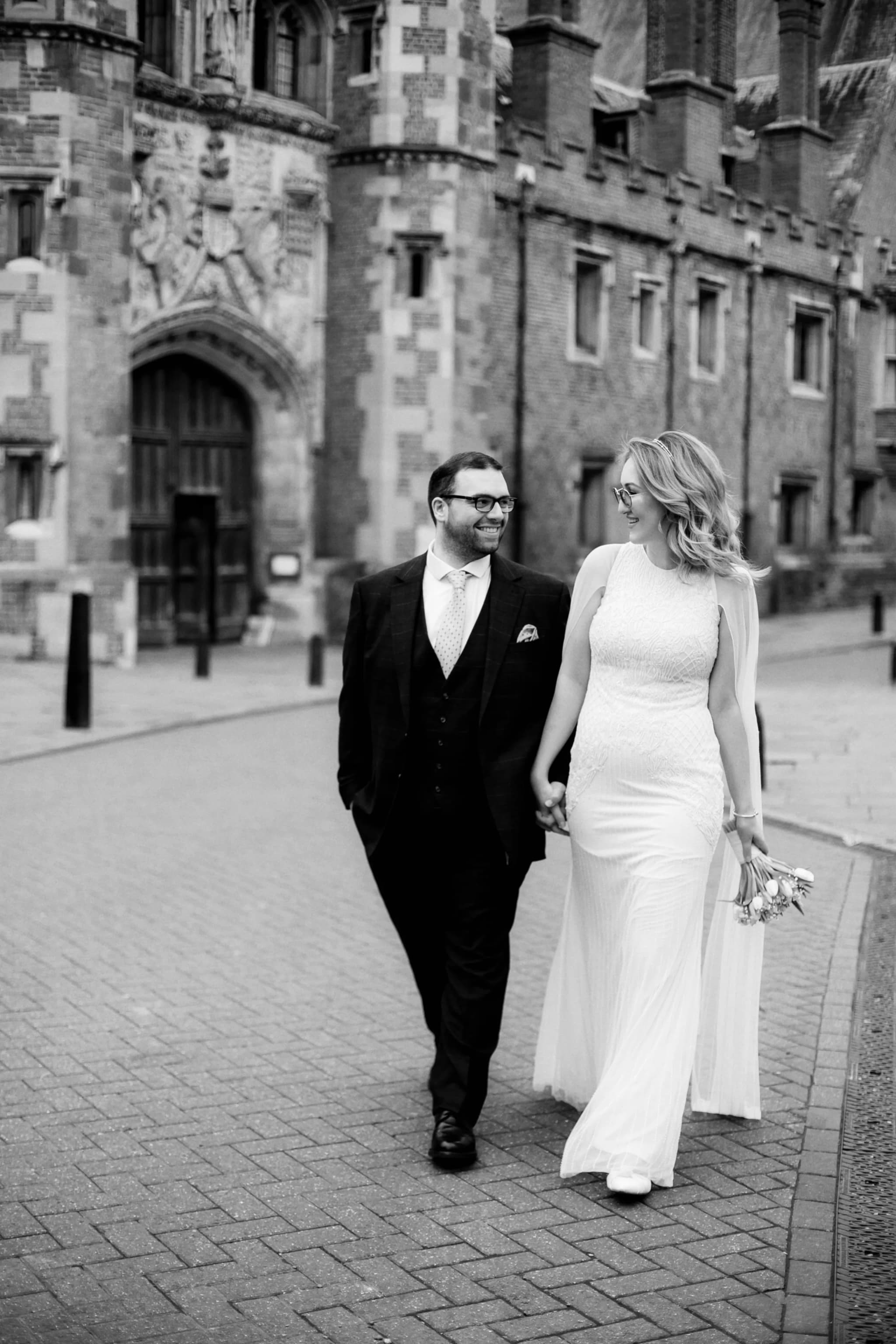
Not every elopement needs a national park, and Cambridge itself is a genuinely beautiful and often overlooked option, particularly for couples who want an intimate city ceremony with historic architecture rather than open landscape. The Backs in early morning light before the punts and crowds arrive, the Botanic Garden, and the countryside just outside the city — Wandlebury Country Park and the villages along the Cam — all give you variety within a very small radius. As a Cambridge-based photographer this is the area I know most intimately, and I have written more about how a Cambridge elopement actually runs, including timing around term dates and tourist flow, in my guide to eloping in Cambridge.
Choosing Between Them: A Practical Approach
With ten strong options, the temptation is to choose based purely on which photographs look best online. I would push back on that slightly. The location that actually serves your day well is the one that matches your appetite for travel and logistics, your tolerance for weather risk, and how many people, if any, are coming with you. A coastal elopement in Cornwall means factoring in tide times and a longer drive from most of the country; a Cotswolds or Cambridge elopement means easier access and more built-in infrastructure but less raw drama; a Lake District or Dartmoor elopement means committing to whatever the weather does on the day, which can produce either the best or the most testing photographs of your life. None of these are wrong choices — they are simply different trade-offs, and it is worth being honest with yourselves about which one you actually want before you commit to a venue and a registrar. My broader guide on how to elope in the UK goes through the legal and administrative side of that decision in more detail, and my elopement packages page sets out how a typical day is structured once you have picked somewhere.
Whichever of these ten locations you are drawn to, I would encourage you to visit, or at least look closely at recent photographs, before locking anything in — conditions change year to year, and a location that looked perfect in someone else's July photographs might be entirely different in your chosen November week. I photograph elopements across all of them as Yana Skakun Photography, and I am always glad to talk through what a specific location is actually like to work with before you commit to it. If you would like to discuss your elopement, get in touch and we can start working out what the day should look like.

Yana Skakun
Photographer · England
Professional wedding, family and portrait photographer based in England. Passionate about capturing authentic emotions and timeless moments.
About Yana →elopement locations englandelopement photographer uklake district elopementcornwall elopementcotswolds elopementbest places to elope england
Elopement — Professional Photography in Cambridge & England
Yana Skakun is a professional photographer based in Cambridge, covering weddings, families, and portraits across England. Every session is personal — planned around your story, your people, and the moments that matter most. This guide — 10 Most Beautiful Elopement Locations in England — is part of the photography journal: practical, experience-based advice drawn from real sessions across England. Whether you arrived searching for elopement locations england or elopement photographer uk, the same care and attention shapes every session Yana photographs.
Professional Photography sessions are available year-round, with bookings open across Cambridge, Ely, Huntingdon, Peterborough, and further afield — East England, London, the Midlands, and beyond. If you have specific questions about lake district elopement, mention it in your enquiry. Get in touch through the contact form above to check availability and discuss your session. Enquiries are welcomed from anywhere in the UK.
Frequently Asked Questions
What camera settings should I use for outdoor portraits?+
For outdoor portraits, shoot in aperture priority mode. Use a wide aperture (f/1.8–f/2.8) to blur the background and isolate your subject. Keep ISO as low as possible in good light. In bright conditions, use a neutral density filter or switch to manual to avoid overexposure at wide apertures.
What is the golden hour in photography?+
Golden hour is the period roughly 30–60 minutes after sunrise and before sunset. The sun is low in the sky, producing warm, soft, directional light that flatters skin tones and creates beautiful long shadows. It's widely considered the best natural light for portrait and outdoor photography.
How do you get sharp photos in low light?+
In low light, increase your ISO (accepting some grain), use the widest aperture your lens allows, and slow your shutter speed to the slowest you can hand-hold without camera shake (roughly 1/focal length as a guide). Use image stabilisation if available, and consider a tripod for static subjects.
What is the rule of thirds in photography?+
The rule of thirds divides the frame into a 3×3 grid. Placing your subject on one of the four intersection points — rather than dead centre — creates a more dynamic, visually interesting composition. It's a guideline, not a rule: some of the most powerful images break it deliberately.
How do you edit photos to look professional?+
Professional editing starts with shooting in RAW format. In Lightroom or similar software, correct exposure, white balance, and contrast first. Recover shadow and highlight detail. Apply gentle colour grading for mood. Be conservative with skin retouching — the goal is natural enhancement, not transformation. Consistency across a set of images is what separates professional from amateur editing.
Continue Reading
Related Articles


Get in Touch
Ready to Book Your Session?
Get in touch to discuss your vision — I'll reply within 24 hours.