Yana Skakun

Lab & Science Photography: Documenting Research Teams, Facilities & Breakthroughs
By Yana Skakun·10 July 2026·7 min read
Cambridge is one of the densest concentrations of biotech, pharma, and deep-tech research in Europe, and yet a huge proportion of the science happening inside its labs is represented online by whatever stock photography came bundled with the website template — a stranger in a lab coat holding a pipette at an implausible angle, lit like a shampoo advert. It is a strange mismatch. The actual work is precise, hard-won, and often genuinely important, and the imagery representing it to funders, recruits, and the public is generic and interchangeable with a thousand other companies' sites. Lab and science photography exists to close that gap: real researchers, real equipment, real spaces, photographed in a way that is accurate to the work and still visually compelling enough to use on a homepage, in a grant application, or in a press release.
Why Lab Photography Is Its Own Discipline
Photographing a laboratory is not the same job as photographing an open-plan office, and treating it that way tends to produce images that feel wrong to the people who actually work there. Labs have their own visual grammar: specific equipment that needs to be shown accurately rather than dressed up, safety requirements that constrain where a photographer can stand and what they can touch, lighting environments dominated by fluorescent overheads and equipment displays rather than daylight, and a culture of precision that makes a badly composed or technically inaccurate photograph obvious to anyone in the field within about two seconds.
There is also a credibility dimension that matters more here than in most corporate photography. A biotech startup's Series A pitch deck, an academic department's recruitment page, or a CRO's capability statement for a prospective client all rely on the imagery looking authentic rather than staged. Scientists and investors alike are good at spotting a photograph where someone has clearly been told to stand at a bench holding a beaker they would never actually use in that context. The goal of a good lab shoot is images that would pass inspection from someone who actually works in that lab — correct PPE, correct posture, correct use of equipment, nothing performative.
What Gets Photographed: Teams, Facilities, and Moments
A lab and science shoot usually covers three overlapping categories, and a good brief will specify roughly how much time to allocate to each. The first is individual and small-group portraits of researchers — usable for team pages, author bios, press coverage, and LinkedIn, ideally photographed in their actual working environment rather than against a plain backdrop, so the image still reads as authentically theirs rather than a generic corporate headshot dropped into a science context. This overlaps with the kind of environmental headshot work I cover on the professional headshots page, but with the added complexity of a technical setting.
The second category is facility and equipment photography: the bench itself, key instruments, cleanrooms, bioreactors, sequencing equipment, microscopy setups, storage and cold-chain infrastructure — whatever a company or department wants to show as evidence of its capability. These images tend to have a longer shelf life than people photography because equipment doesn't change jobs or age visibly, and they are disproportionately useful for grant applications, facility tours, investor materials, and website capability pages.
The third category, and usually the most interesting to shoot, is process and moment photography: a researcher actually mid-task, hands on an instrument, two colleagues genuinely discussing a result at a whiteboard, the specific choreography of a wet lab in motion. These are harder to get right because they need to be candid enough to feel true but composed enough to actually work as usable images, and they are what separates a lab photography set that feels alive from one that feels like a facilities inventory. For companies also thinking about how this fits alongside broader employer branding and team documentation, this sits close to what I cover for general corporate photography in Cambridge, just adapted to a technical environment.
Preparing for a Lab Shoot: Access, Safety, and Sensitivity
Lab environments come with genuine constraints that need to be worked through before a shoot date is even set, and being upfront about them makes for a much smoother day. Access is the first issue: many labs have controlled entry, visitor logging, and induction requirements, and I build time into the planning process to complete whatever site induction or NDA process a company needs before I set foot on the bench floor. Biosafety level, cleanroom protocols, and any work with hazardous materials or live cultures all affect what equipment I can bring in and where I can physically stand, and I would always rather have that conversation two weeks before the shoot than discover it on the day.
Confidentiality is the second major consideration, and it is often the thing that makes companies hesitate to commission photography at all. Whiteboards get wiped or blurred, screens showing proprietary data get turned off or covered before I shoot in that direction, unpublished results and specific chemical formulations stay out of frame, and I am always happy to work from a pre-agreed "do not photograph" list covering specific equipment, documents, or areas. Most labs I have worked with have found that once this is planned properly, the confidentiality risk is entirely manageable and does not meaningfully limit what we can capture.
The third consideration is genuinely practical: PPE. If the lab requires lab coats, gloves, safety glasses, or hair coverings, I wear them too, both because it is required and because it means I can get physically closer to the work without being the one person in the room who looks like they shouldn't be there. It is a small thing, but it changes how comfortable the team is with a camera in the room.
Working around your research schedule
Labs rarely stop for photography, and I don't expect them to. Shoots are usually built around natural pauses — between experiments, during a scheduled team meeting, or across a half-day where different researchers rotate in for fifteen or twenty minutes each rather than the whole team standing around waiting. If you're weighing up whether a shoot is even feasible around your team's workload, it's worth just talking it through.
Get in touchLighting a Lab: The Technical Reality
Most labs are lit for accurate work, not for photography, which means overhead fluorescent or LED panel lighting that is flat, often slightly green or blue in colour temperature, and largely fixed in place because rearranging it isn't an option. Bringing in obtrusive photographic lighting is usually impractical too — large light stands and modifiers don't belong in a working bench area, and setting them up eats into time the team doesn't have to give.
In practice, I work with small, unobtrusive lighting where it genuinely helps — a compact flash bounced off a ceiling or wall to lift the flatness of overhead fluorescents, or a portable LED panel for facility shots where I have a bit more control over timing. Colour correction in post-processing does a lot of the remaining work, since fluorescent and LED lab lighting can otherwise push skin tones toward green or images toward an unflattering cool cast. Equipment with its own displays and indicator lights — a fume hood, a PCR machine, a microscope's eyepiece glow — often becomes a genuinely useful part of the composition rather than a problem to work around, because it reads as authentic in a way that studio lighting never could.
Directing Scientists Who Have Never Been Photographed at Work
Most researchers are not used to being photographed doing their job, and the instinct when a camera appears is either to freeze into an unnatural pose or to perform a slightly exaggerated version of "doing science" that looks staged the moment it's printed. My approach is to ask people to talk me through what they are actually doing, in their own words, while I photograph the explaining rather than a posed reenactment. Someone describing their process to a curious visitor moves and holds themselves completely differently than someone told to "look like you're working", and the resulting images are almost always better.
For genuinely sensitive or slow processes — something that takes forty minutes and cannot be repeated for the camera — I ask in advance whether there is a similar, non-critical task that can be photographed instead, or whether I can shoot a real run without interrupting anything, working quietly around the actual pace of the work. Group shots of a research team benefit enormously from being taken somewhere other than a stiff line-up in front of the door: gathered around a result on a screen, mid-conversation at a whiteboard, or walking together through the corridor between labs tends to produce something a lot more usable than a formal group photo, though I always capture a clean, straightforward group shot as well since departments and companies genuinely need one for their team page.
Where These Images Get Used
The practical value of a good lab photography set becomes obvious once you start listing where the images actually go: grant and funding applications, where a facility photograph adds credibility that a paragraph of text cannot; investor decks and due diligence materials, where photographs of real capability carry weight; university and company websites, on team and research pages; press releases and media coverage, where journalists almost always ask for imagery and default to whatever stock photo is easiest to find if nothing better is available; recruitment pages and job adverts, where candidates researching a role want to see what the actual working environment looks like; and internal communications, annual reports, and conference materials. A single well-planned shoot can supply usable imagery across all of these for a year or more, which is generally a better return than commissioning separate small shoots each time a specific need comes up.
Usage rights are worth agreeing clearly at the outset, particularly for academic departments and companies that will want to use images across multiple platforms, in press materials, and potentially in future funding applications. I typically license images for the organisation's ongoing marketing, recruitment, and communications use, which covers the vast majority of what labs and research teams need without requiring a fresh negotiation every time a new use case comes up.
Planning a Shoot: What I Need to Know Before the Day
A good brief for a lab shoot covers a handful of practical questions: how many people need individual portraits versus how much time should go to facility and process shots; whether there are specific pieces of equipment, milestones, or grant-funded facilities that need to be featured; what confidentiality restrictions apply and whether there's a do-not-photograph list; what PPE or induction is required for me to attend; and what the images are ultimately for, since a set intended for a grant application has a different emphasis to one intended for recruitment marketing. I usually have a short call or email exchange with whoever is coordinating the shoot beforehand to work through these details, which means the day itself runs efficiently and nobody's time gets wasted standing around while logistics get sorted out on the spot.
For departments or companies without a strong sense of what they actually need, I'm happy to suggest a shot list based on what has worked well for similar research groups — a mix of individual and small-group portraits, two or three facility or equipment features, and a handful of candid process shots is a reliable starting point that covers most of the common uses without over-committing anyone's time on the day.
A Few Honest Notes on What This Can and Can't Do
Photography can make a real lab and a real team look genuinely good, but it cannot manufacture a story that isn't there, and I would rather say that plainly than oversell it. If a facility is genuinely impressive, the photographs will show that. If a team is early-stage and working out of a shared bench in someone else's building, the honest version of that story — small, focused, resourceful — usually photographs better and reads more credibly to investors and candidates than trying to make a modest setup look like something it isn't. The aim throughout is accuracy with craft, not fabrication.
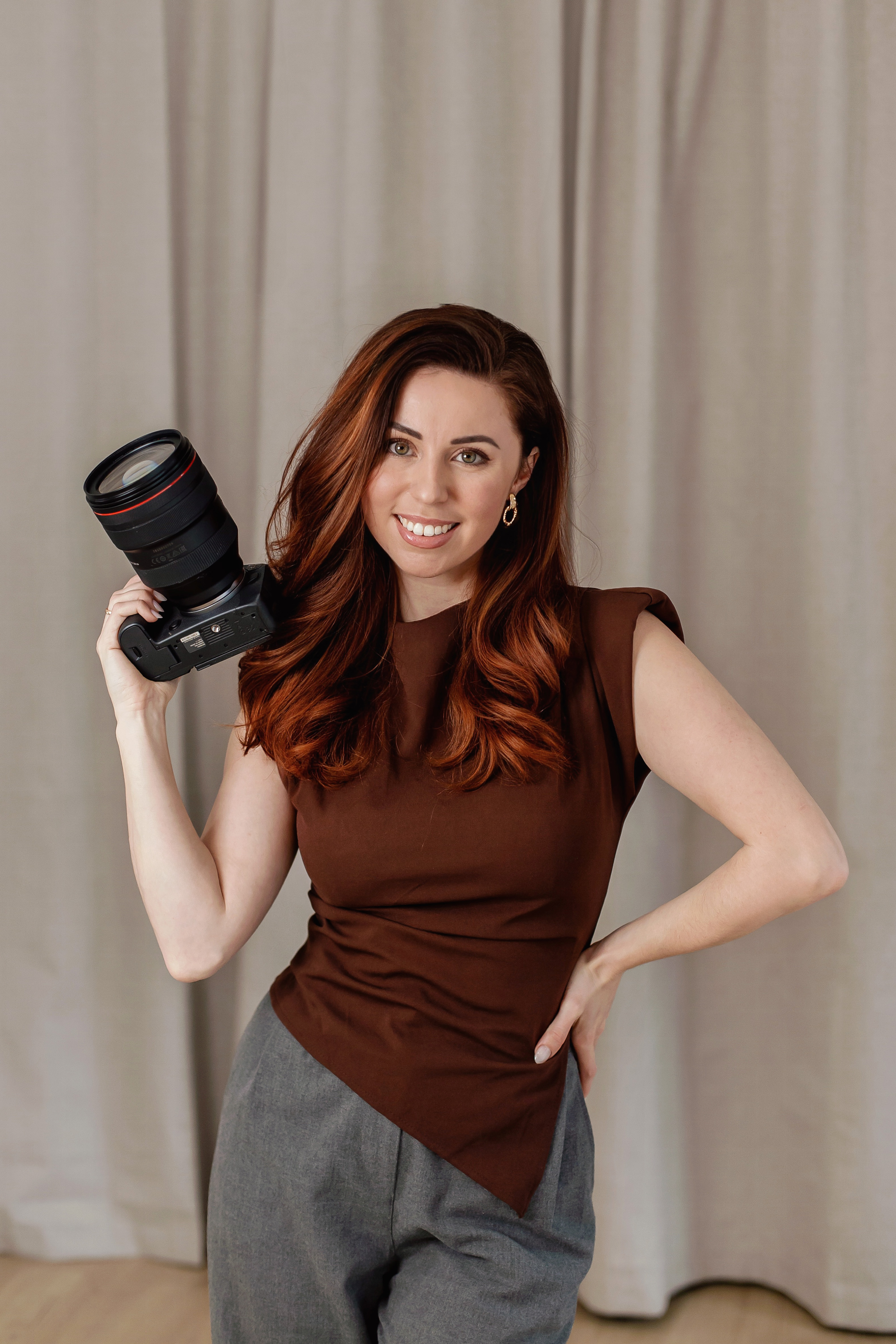
If you run a lab, research group, or science-led company in or around Cambridge and want photography that actually represents the work rather than standing in for it, I would be glad to talk through what a shoot might look like for your team. I'm Yana Skakun, a Cambridge-based photographer working across portrait, corporate, and headshot photography for clients throughout the UK, and lab and research photography is one of the technical niches I particularly enjoy because it rewards paying close attention to what a team actually does. You can see more about my approach on the about page, check general rates on the pricing page, or simply get in touch to talk through your facility, your team, and what you need the images for.
Yana Skakun
Photographer · England
Professional wedding, family and portrait photographer based in England. Passionate about capturing authentic emotions and timeless moments.
About Yana →lab photographyscience photography Cambridgeresearch team photographybiotech corporate photographyfacility photographycorporate photographer Cambridge
Headshot Tips — Professional Headshot Photography in Cambridge & England
Professional headshot sessions with Yana Skakun are clean, efficient, and designed to produce images that represent you authentically across every professional context — LinkedIn, company websites, speaker profiles, and press. Sessions available in Cambridge and across England. This guide — Lab & Science Photography: Documenting Research Teams, Facilities & Breakthroughs — is part of the photography journal: practical, experience-based advice drawn from real sessions across England. Whether you arrived searching for lab photography or science photography cambridge, the same care and attention shapes every session Yana photographs.
Professional Headshot Photography sessions are available year-round, with bookings open across Cambridge, Ely, Huntingdon, Peterborough, and further afield — East England, London, the Midlands, and beyond. If you have specific questions about research team photography, mention it in your enquiry. Get in touch through the contact form above to check availability and discuss your session. Enquiries are welcomed from anywhere in the UK.
Frequently Asked Questions
What should I wear for a professional headshot?+
Solid colours photograph better than patterns. Navy, grey, charcoal, and burgundy are universally flattering. Avoid white (creates exposure issues), black (can look flat), and bright neons. Make sure your clothing fits well and is freshly pressed. Bring 2–3 outfit options to give yourself variety.
How do I prepare for a headshot session?+
Get a good night's sleep. Stay hydrated in the days before. If you're having hair and makeup done, schedule it for the morning of the shoot. Bring the clothes you plan to wear on a hanger. Arrive 10 minutes early to settle in before the camera comes out. Most importantly — don't stress. A good photographer will guide you.
How long does a professional headshot session take?+
A standard headshot session takes 30–60 minutes. This covers 2–3 outfits and multiple expressions and angles. Corporate team headshots at a single location can be scheduled at 15–20 minutes per person.
How often should you update your professional headshot?+
Every 2–3 years, or whenever your appearance changes significantly — new hairstyle, weight change, or notable ageing. Your headshot should look like you when you walk into a meeting, not like you five years ago. Outdated headshots undermine trust, particularly in client-facing roles.
What is the difference between a headshot and a business portrait?+
A headshot is a tight crop of the face and upper chest, focused entirely on professional presence and approachability. A business portrait typically includes more of the body and often incorporates environment or context — an office setting, equipment, or a workspace that communicates your profession.
Continue Reading
Related Articles

Headshot Tips
LinkedIn Headshots for Cambridge Graduates: Start Your Career With the Right First Impression
7 min read · Read Article
Headshot Tips
Professional Photography for Small Businesses: The Complete Guide
12 min read · Read Article
Headshot Tips
Corporate Team Photography: Professional Headshots for Your Entire Organisation
9 min read · Read Article
Get in Touch
Ready to Book Your Session?
Get in touch to discuss your vision — I'll reply within 24 hours.