Yana Skakun

Remote Team Photography: How to Create Cohesive Visual Branding When Your Team Is Distributed
By Yana Skakun·10 July 2026·9 min read
Remote and hybrid teams have solved most of the practical problems of working apart — shared documents, video calls, async updates — but one problem quietly persists on almost every distributed company's website and LinkedIn page: the team photo grid that looks like it was assembled from twelve different decades. One person's headshot is a phone selfie against a bookshelf. Another is a wedding photo cropped down to a face. A third is a professional shot taken at a conference three years and one haircut ago. Individually none of these is a disaster. Together, they undermine the polish a growing company has worked hard to build everywhere else.
Cohesive visual branding for a distributed team is achievable, but it takes a different approach than photographing a team that all sits in the same office. There is no single day when everyone can be gathered in a studio. The team is spread across cities, sometimes across countries, joining and leaving the company on a rolling basis rather than all at once. The solution is not to force distributed people into artificial togetherness, but to build a repeatable, consistent photography system that works regardless of where someone is when their turn comes round.
Why Mismatched Headshots Cost More Than They Seem To
A mismatched team page is easy to dismiss as a minor cosmetic issue, but it has a real effect on how a company is perceived, particularly for remote-first businesses that do not have a physical office to reassure visitors that this is a real, established organisation. When potential clients, candidates, or investors land on an About page, the team photos are doing a specific job: signalling that this is a coherent, professional operation and not a loose collection of individuals working from their own laptops with their own conventions.
Inconsistent lighting, backgrounds, and framing scatter that signal. A photo shot in warm indoor lighting next to one shot in cool daylight next to one shot with heavy phone-camera flash creates visual noise that a viewer registers even if they could not articulate why the page feels unpolished. For companies that hire in competitive markets, this matters at recruitment stage too — candidates researching a company before an interview form impressions from exactly this kind of detail, and a scrappy team page reads as a scrappy company, whether or not that is accurate.
The fix does not require flying everyone to one location. It requires a photography brief that can be executed consistently by different photographers in different cities, or delivered remotely by one photographer working with each team member wherever they happen to be based.
Two Approaches: Coordinated Remote Sessions or a Central Hub Day
There are two workable models for photographing a distributed team, and the right one depends on your team's geography and budget. The first is coordinating individual sessions with a single photographer, or a small trusted network of photographers, who each work to the same brief in the city where each team member lives. I do this regularly for companies with people scattered around the UK — I shoot the Cambridge-based staff myself and coordinate with photographers I trust in other cities, all working from an identical shot list, lighting approach, and background specification, so the final images sit together as if they were taken on the same day even though they were taken over several weeks.
The second model is a central hub day: bringing the team together for an all-hands, offsite, or company retreat, and using that single gathering to photograph everyone in one place. This is more efficient per person and gives genuinely consistent light and background because it is, literally, the same session. The trade-off is that it only captures people who attend, and remote teams rarely get 100% attendance at any single gathering. Most distributed companies end up using a hybrid of both: a hub day for whoever is present, plus individual remote sessions to fill in the gaps for new hires and people who could not travel.
For companies with a genuine hub — London, Cambridge, or another single office that most staff pass through occasionally — a corporate photographer who knows the space can build a small in-house set that gets reused every time someone new joins, which keeps costs down and consistency high over time.
Building a Brief That Travels
The single most important document in any distributed team photography project is the brief, because it is the thing that stands in for being in the same room. A good brief specifies far more than most people expect: the exact crop (head and shoulders versus half-length), the camera angle (straight-on versus slightly above), the background treatment (solid colour, blurred office, blurred outdoor, or a specific branded backdrop colour with a hex code), the lighting style (soft and even, versus more directional and dramatic), and the expression brief (approachable smile, neutral confident, or a mix depending on role).
I also specify clothing guidance in the brief — not a strict dress code, but guardrails. Solid colours photograph more consistently than patterns across different photographers and locations. Avoiding pure white and pure black keeps skin tones and exposure more predictable. If the company has brand colours, I will sometimes suggest team members wear a colour from that palette or avoid a clashing one, though I am cautious about being too prescriptive here since forcing people into a uniform can read as impersonal rather than professional.
The brief should include reference images, not just written description. A written instruction like "soft, even lighting" means something different to every photographer who reads it. Two or three example photographs pinned to the brief remove that ambiguity almost entirely, and I always send a short reference set before booking sessions with any external photographer joining the project.
Onboarding new hires without breaking consistency
One detail distributed companies often overlook is what happens six months after the original team shoot, when three new people join. If there is no standing brief and no easy way to book a matching session, new hires end up submitting a phone photo just to have something live on the site, and the consistency you paid for starts eroding within a quarter. I set companies up with a reusable brief and, where useful, an ongoing arrangement so new starters can book a quick matching session as they join rather than the team page drifting out of sync one hire at a time.
Get in touchBackgrounds: Solving the Problem of Everyone's Home Office
Background consistency is usually the hardest part of remote team photography because everyone's home, coworking space, or local studio looks different. There are a few reliable ways to handle it. The simplest is a plain, solid-colour backdrop — a portable fabric or paper backdrop that a photographer brings to each individual session regardless of location, so the background is identical for every team member no matter where in the country the photo was taken. This is the approach I recommend most often for fully remote teams because it removes background variation entirely and gives a designer complete flexibility to place people into a consistent grid layout afterwards.
Where a branded or environmental background is preferred — team members photographed in their own workspace to convey a sense of a real distributed company rather than a studio-manufactured one — the consistency comes from lighting and treatment rather than the literal background. Shallow depth of field blurs each unique background into a soft, similar-feeling wash of colour, and a consistent post-production treatment (the same colour grade, the same crop ratio, the same white balance approach) ties the images together even though the underlying rooms are all different.
A middle path some companies choose is a simple, cheap, physically identical prop shipped to each remote team member ahead of their session — a specific coloured backdrop panel, for instance — which guarantees a literal match without requiring a studio visit. It is a small logistics overhead but it removes the single biggest variable in remote photography.
Lighting Consistency Without a Shared Studio
Lighting is where remote sessions most often go wrong, because natural light varies wildly by time of day, weather, and window orientation, and different photographers bring different equipment and habits. The way to control for this is to specify the lighting setup in the brief as precisely as the background: for example, a single large softbox positioned at roughly forty-five degrees to the subject with a reflector on the opposite side to fill shadow, rather than leaving it to whatever ambient light happens to be available in someone's spare room that day.
For sessions I run personally, I bring a small, consistent lighting kit to every individual sitting, whether that is in a client's office, a rented studio space, or a team member's home, specifically so the quality of light matches across the whole set regardless of the physical environment. This matters more than people expect — two photographs with identical crops and expressions can still look mismatched if one is lit with warm window light and the other with a cool LED panel, and that mismatch shows up immediately once the images sit next to each other on a website.
Editing and Post-Production as the Final Glue
Even with an identical brief, identical backdrop, and matched lighting, the final layer of consistency comes from editing. A single, consistent colour grade and retouching style applied across every image in the set — regardless of which photographer captured it or where — is what makes a distributed team's photos read as one coherent set rather than several separate photoshoots stitched together. I keep a written editing preset and reference for every ongoing team account, so that a new hire's photo edited eighteen months after the original shoot still matches the tone of the founding team's images.
Crop and export specifications deserve the same attention. If the team page needs a square crop for the website grid and a different aspect ratio for LinkedIn, that should be defined once and applied identically to every person's images rather than each team member or department cropping their own photo differently when they upload it. Small inconsistencies here — slightly different head sizes within the frame, a mixture of centred and off-centre framing — are exactly the kind of thing that makes a team grid look unplanned even when every individual photo is technically good.
What This Costs and How to Budget It
Distributed team photography is typically priced per person for individual sessions, with a modest reduction for volume once a company is booking beyond eight or ten people, and a different structure for a single hub-day shoot priced as a half or full day rate. UK corporate headshot sessions commonly run from around £150 to £350 per person depending on location, session length, and number of final edited images, with hub-day group rates usually working out more economical per head if the whole team can be gathered in one place and one day. I always encourage companies budgeting for this to build in an ongoing allowance for new hires rather than treating it as a single one-off spend, since the real value is in the set staying consistent over years, not just looking good on launch day. A detailed breakdown of typical UK pricing structures is covered on the corporate photography cost guide, and I am always happy to put together a specific quote once I know team size and locations.
It is worth treating this as an investment in the company's personal branding as much as a website content task. Headshots get reused constantly — on LinkedIn, in press mentions, in speaker bios, in investor decks — well beyond the team page they were originally commissioned for, so a consistent, well-executed set pays for itself many times over across every place a team member's photo eventually appears.
A Practical Checklist Before You Book
Before commissioning a distributed team shoot, it helps to settle a handful of decisions in advance: whether you are aiming for a studio-clean look or a warmer, environmental one; what your background and colour treatment will be; whether you will run a hub day, individual sessions, or a mix; how new hires will be onboarded into the set going forward; and what crop ratios and file formats you actually need for the website, LinkedIn, and any print material. Settling these before the first session, rather than discovering the gaps after three team members have already been photographed differently, is what keeps the whole project from needing to be redone.
It is also worth deciding early who owns the brief internally — someone in marketing, ops, or people operations who can hold the reference document, coordinate scheduling across time zones, and be the point of contact for photographers whether that is one person shooting everyone or several photographers working in different cities. Distributed teams that treat this as a proper small project, rather than an afterthought squeezed in around other work, consistently end up with better and more durable results.
Yana Skakun Photography is based in Cambridge and works with distributed and hybrid teams across the UK, either coordinating individual remote sessions to a shared brief or photographing everyone in one sitting when a company gathers for an offsite or all-hands. If your team is spread across several cities and your current headshots do not quite match, get in touch to talk through the best approach for your team's size and geography.


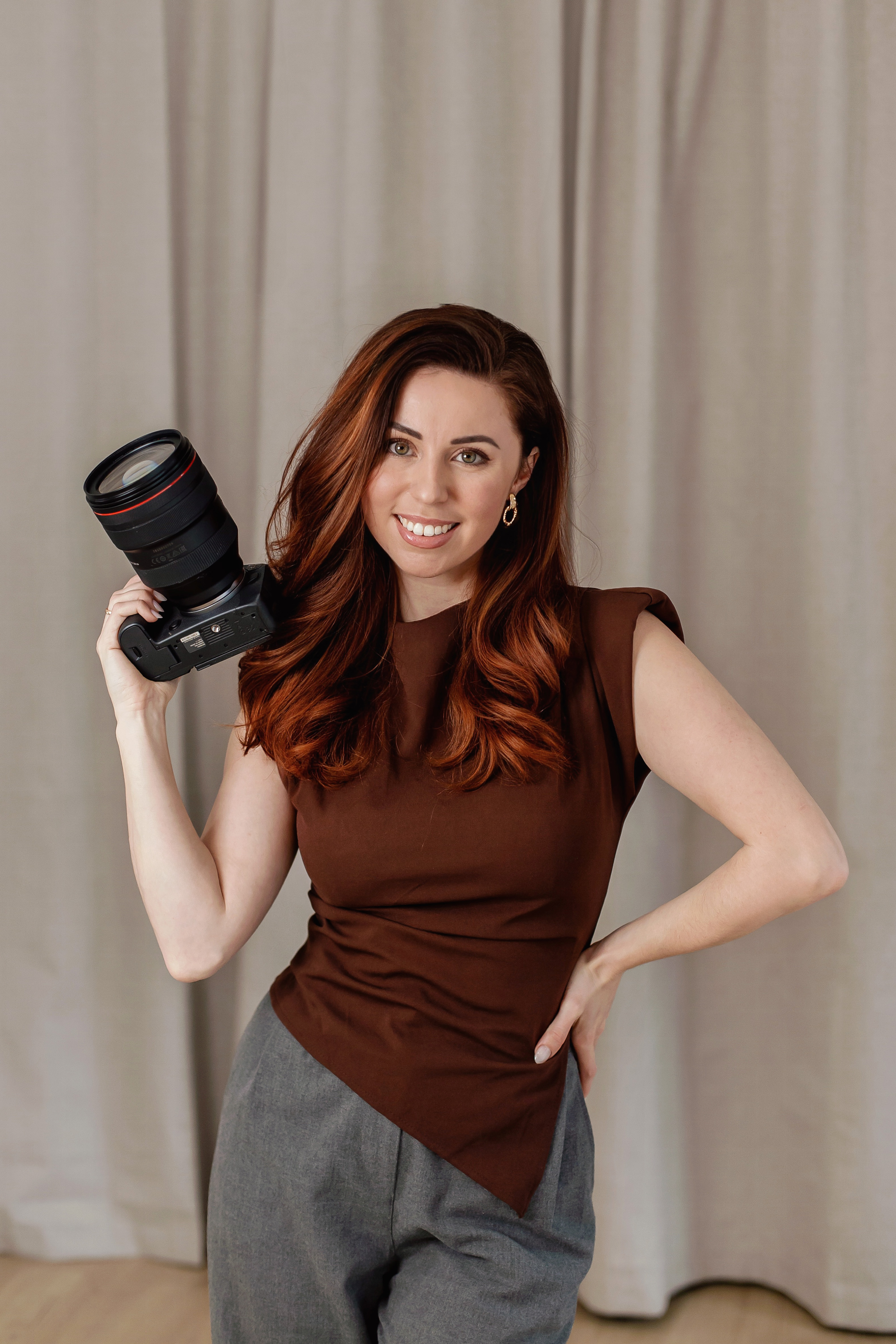
Yana Skakun
Photographer · England
Professional wedding, family and portrait photographer based in England. Passionate about capturing authentic emotions and timeless moments.
About Yana →remote team photographycohesive visual brandingdistributed team headshotscorporate headshot consistencyremote team headshots UKteam photography brief
Headshot Tips — Professional Headshot Photography in Cambridge & England
Professional headshot sessions with Yana Skakun are clean, efficient, and designed to produce images that represent you authentically across every professional context — LinkedIn, company websites, speaker profiles, and press. Sessions available in Cambridge and across England. This guide — Remote Team Photography: How to Create Cohesive Visual Branding When Your Team Is Distributed — is part of the photography journal: practical, experience-based advice drawn from real sessions across England. Whether you arrived searching for remote team photography or cohesive visual branding, the same care and attention shapes every session Yana photographs.
Professional Headshot Photography sessions are available year-round, with bookings open across Cambridge, Ely, Huntingdon, Peterborough, and further afield — East England, London, the Midlands, and beyond. If you have specific questions about distributed team headshots, mention it in your enquiry. Get in touch through the contact form above to check availability and discuss your session. Enquiries are welcomed from anywhere in the UK.
Frequently Asked Questions
What should I wear for a professional headshot?+
Solid colours photograph better than patterns. Navy, grey, charcoal, and burgundy are universally flattering. Avoid white (creates exposure issues), black (can look flat), and bright neons. Make sure your clothing fits well and is freshly pressed. Bring 2–3 outfit options to give yourself variety.
How do I prepare for a headshot session?+
Get a good night's sleep. Stay hydrated in the days before. If you're having hair and makeup done, schedule it for the morning of the shoot. Bring the clothes you plan to wear on a hanger. Arrive 10 minutes early to settle in before the camera comes out. Most importantly — don't stress. A good photographer will guide you.
How long does a professional headshot session take?+
A standard headshot session takes 30–60 minutes. This covers 2–3 outfits and multiple expressions and angles. Corporate team headshots at a single location can be scheduled at 15–20 minutes per person.
How often should you update your professional headshot?+
Every 2–3 years, or whenever your appearance changes significantly — new hairstyle, weight change, or notable ageing. Your headshot should look like you when you walk into a meeting, not like you five years ago. Outdated headshots undermine trust, particularly in client-facing roles.
What is the difference between a headshot and a business portrait?+
A headshot is a tight crop of the face and upper chest, focused entirely on professional presence and approachability. A business portrait typically includes more of the body and often incorporates environment or context — an office setting, equipment, or a workspace that communicates your profession.
Continue Reading
Related Articles

Headshot Tips
LinkedIn Headshots for Cambridge Graduates: Start Your Career With the Right First Impression
7 min read · Read Article
Headshot Tips
Professional Photography for Small Businesses: The Complete Guide
12 min read · Read Article
Headshot Tips
Corporate Team Photography: Professional Headshots for Your Entire Organisation
9 min read · Read Article
Get in Touch
Ready to Book Your Session?
Get in touch to discuss your vision — I'll reply within 24 hours.